 France licence
  Algeria
Can you drive in Algeria with a France license?
Short answer: to drive in Algeria with a France license you need an International Driving Permit in the 1968 Vienna format, carried together with your France license.
Yes — to drive in Algeria on a France licence you should carry an International Driving Permit together with your France licence. Algeria expects foreign drivers to hold an IDP.
French drivers should carry an International Driving Permit with their licence when driving outside the EU and EEA. Your International Driving Permit is a certified multilingual translation of your existing licence, prepared in the 1968 Vienna Convention format that Algeria recognises and carried alongside your national licence.


What driving in Algeria is like
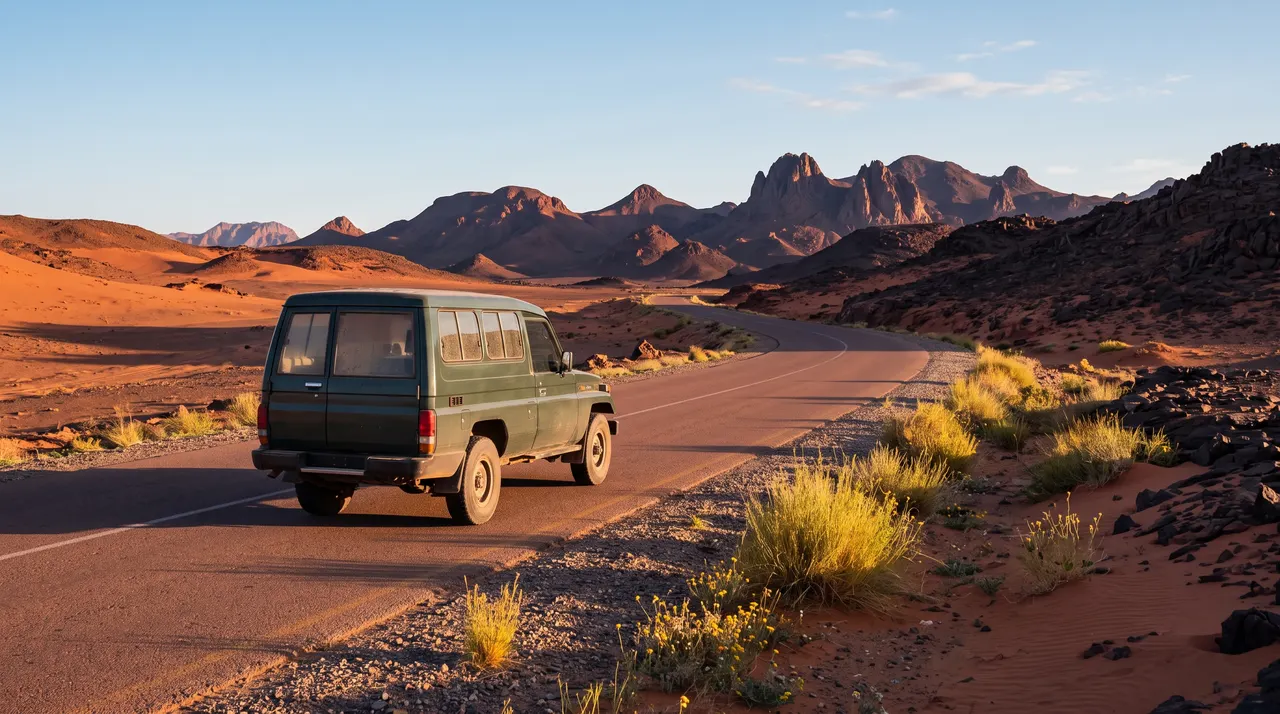
The drive south through the Sahara toward Tamanrasset and the volcanic Hoggar (Ahaggar) mountains is Algeria's iconic scenic route. For most visitors the real draw is the freedom to reach places trains and tours don't, on your own schedule, with the open road generally capped around 120 km/h autoroutes. Getting behind the wheel is the easy part: your International Driving Permit is a certified translation of your France licence, carried alongside it, so rental staff and officials in Algeria can read your credentials at a glance.
What applies to France licence holders in Algeria
| France licence in Algeria | |
|---|---|
| Do you need an IDP? | Yes — carry one alongside your licence |
| IDP format required | 1968 Vienna |
| Your France licence script | Roman (Latin) alphabet |
| France is party to | 1949 Geneva and 1968 Vienna |
| Drives on the | Right-hand side |
| Minimum driving age | 18 |
| Emergency number | 17 (police), 14 (ambulance) |
| Top speed limit | 120 km/h autoroutes |
| Currency | DZD |
Driving rules in Algeria you should know
- Drive on the right.
- Zero alcohol tolerance for driving.
- Checkpoints common between cities.
- Carry passport, IDP and home licence.
Local driving facts in Algeria
Emergency number: 17 (police), 14 (ambulance) (112 also connects from most mobiles). Typical maximum for cars on the fastest road class: 120 km/h autoroutes. Posted limits always take precedence.
Tolls & road charges in Algeria
Most Algerian roads are toll-free; the main exception is the East-West Highway (Autoroute Est-Ouest) linking the Tunisian and Moroccan borders, where booths take cash in Algerian dinar, so carry small notes. There is no vignette or electronic-tag system to buy in advance.
Parking in Algeria
In Algiers, parking is informal: roving attendants (gardiens/parkingueurs) in reflective vests direct you into street spaces and expect a small dinar tip to watch the car. Formal enforcement is light and ticketing/towing mainly happens when you obstruct traffic; use guarded hotel parking overnight where possible.
Penalties & enforcement in Algeria
An overhauled traffic code (190 articles) sharply increased penalties; speeding, red-light running, phone use and seatbelt offences draw graduated fines that can include licence points or bans, and minor fines are often collected on the spot in cash. Alcohol behind the wheel is heavily penalised. Rental firms recover camera/checkpoint fines from the renter.
If you have an accident in Algeria
Stop, do not move the vehicles, and call police on 17 (or 1548) in towns or the Gendarmerie on 1055 on rural roads; the unified mobile emergency number is 112. Photograph the scene and obtain a police report (constat) for your insurer or rental company before vehicles are moved.
City driving in Algeria
Algiers traffic is dense and assertive with frequent jams on the seafront and approaches; police and Gendarmerie checkpoints are routine, so keep your IDP, passport and rental papers handy and expect to stop and present them.
Winter driving in Algeria
No specific winter-tyre law nationwide; snow and ice can close higher routes in the northern Atlas and Kabylie mountains in winter, where caution or chains may be needed, while the Sahara south has no winter rules at all.
Fuel in Algeria
Fuel is among the cheapest in the world: petrol (essence) around 47 DA (about USD 0.36) and diesel (gasoil) around 31 DA (about USD 0.25) per litre, sold mainly through state operator Naftal. Stations are common in cities but sparse in the south, so plan refuelling and carry cash, as card acceptance is unreliable.
Sources: gov.uk, rhinocarhire.com, globalpetrolprices.com, dzair-tube.dz