 France licence
  Angola
Can you drive in Angola with a France license?
Short answer: to drive in Angola with a France license you need an International Driving Permit in the 1949 Geneva format, carried together with your France license.
Yes — to drive in Angola on a France licence you should carry an International Driving Permit together with your France licence. Angola expects foreign drivers to hold an IDP.
French drivers should carry an International Driving Permit with their licence when driving outside the EU and EEA. Your International Driving Permit is a certified multilingual translation of your existing licence, prepared in the 1949 Geneva format and carried alongside your national licence.


What driving in Angola is like
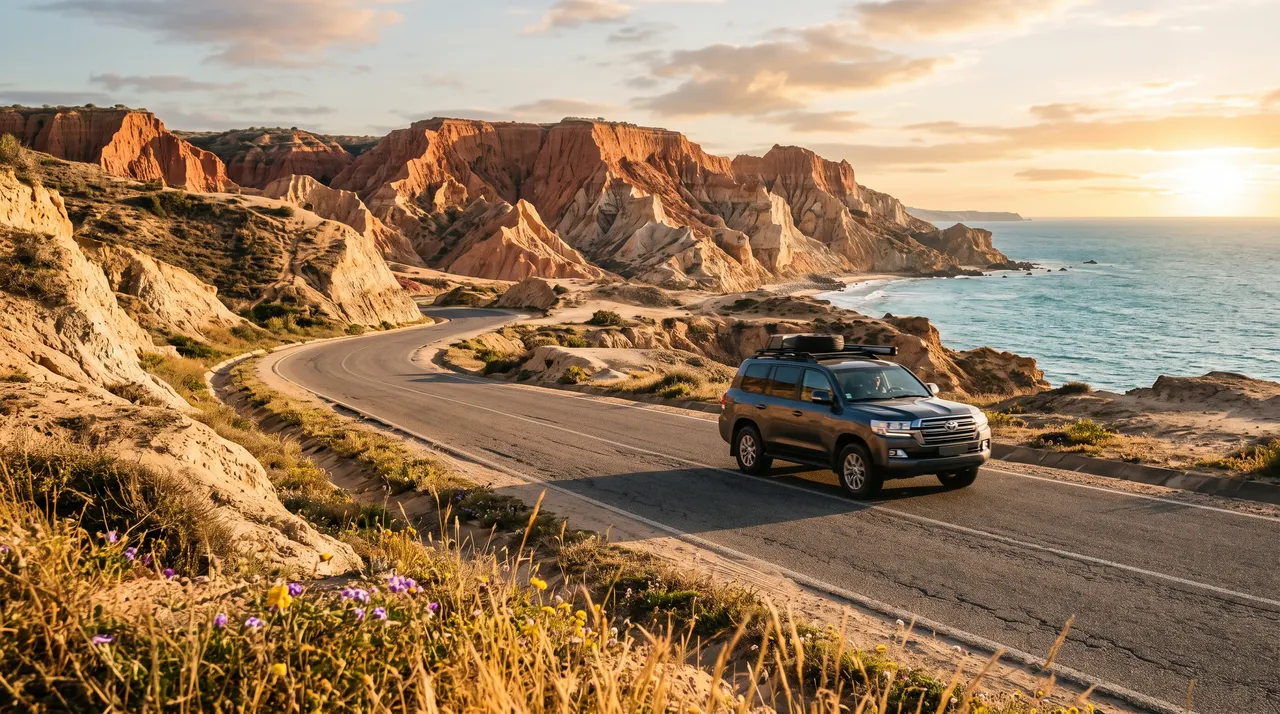
The coastal drive south from Luanda to the lunar sandstone formations of Miradouro da Lua is Angola's best-known scenic route. For most visitors the real draw is the freedom to reach places trains and tours don't, on your own schedule, with the open road generally capped around 120 km/h expressways where signed. Getting behind the wheel is the easy part: your International Driving Permit is a certified translation of your France licence, carried alongside it, so rental staff and officials in Angola can read your credentials at a glance.
What applies to France licence holders in Angola
| France licence in Angola | |
|---|---|
| Do you need an IDP? | Yes — carry one alongside your licence |
| IDP format required | 1949 Geneva |
| Your France licence script | Roman (Latin) alphabet |
| France is party to | 1949 Geneva and 1968 Vienna |
| Drives on the | Right-hand side |
| Minimum driving age | 18 |
| Emergency number | 113 (police), 112 (ambulance) |
| Top speed limit | 120 km/h expressways where signed |
| Currency | AOA |
Driving rules in Angola you should know
- Drive on the right.
- Heavy congestion in Luanda.
- 0.06% alcohol limit.
- Carry passport, IDP and home licence.
Local driving facts in Angola
Emergency number: 113 (police), 112 (ambulance) (112 also connects from most mobiles). Typical maximum for cars on the fastest road class: 120 km/h expressways where signed. Posted limits always take precedence.
Tolls & road charges in Angola
Angola has no developed toll-road or vignette system, so tourists do not buy tolls in advance; budget instead for high fuel and rental costs and for informal police stops. Carry small cash for any unofficial requests at checkpoints.
Parking in Angola
In Luanda parking is scarce, streets are narrow and congested, and there are no formal paid zones or apps; use guarded hotel or shopping-centre parking. Never leave a car parked overnight on the street, as theft and break-ins are common; informal attendants will watch a car for a tip.
Penalties & enforcement in Angola
Speeding, seatbelt and phone-use offences carry graduated fines and, for serious cases, points or bans; urban limits are typically 60 km/h. Fines are often handled on the spot, sometimes informally in cash, so insist on official documentation, and any camera or checkpoint fines are passed on by rental firms.
If you have an accident in Angola
Drive on the right; after a crash stop and do not move the vehicles, and call police on 113 (ambulance 112, fire 115). Get a police report for your insurer or rental firm, and be aware that response can be slow and English is rarely spoken.
City driving in Angola
Luanda traffic (the local 'confusão') is heavy, aggressive and loosely rule-bound, with narrow streets, frequent jams and little lane discipline; expect police checkpoints where you must show your IDP, licence and vehicle papers.
Winter driving in Angola
No winter-tyre rules - tropical climate; the relevant hazard is the wet season (roughly October-April) when unpaved and pothole-ridden roads flood and wash out, making a 4x4 advisable outside the cities.
Fuel in Angola
Fuel is heavily subsidised and very cheap: petrol around USD 0.28 and diesel around USD 0.18 per litre. Stations are reliable in Luanda and larger towns but can run short in rural areas, so fill up before long trips and carry cash (kwanza), as card acceptance is limited.
Sources: gov.uk, tyremap.com, rhinocarhire.com, internationaldriversassociation.com