 UAE licence
  Azerbaijan
Can you drive in Azerbaijan with a UAE license?
Short answer: to drive in Azerbaijan with a UAE license you need an International Driving Permit in the 1968 Vienna format, carried together with your UAE license.
Yes — to drive in Azerbaijan on a UAE licence you should carry an International Driving Permit together with your UAE licence. Azerbaijan expects foreign drivers to hold an IDP.
UAE drivers should carry an International Driving Permit alongside their licence when driving abroad. Your International Driving Permit is a certified multilingual translation of your existing licence, prepared in the 1968 Vienna format and carried alongside your national licence.


What driving in Azerbaijan is like
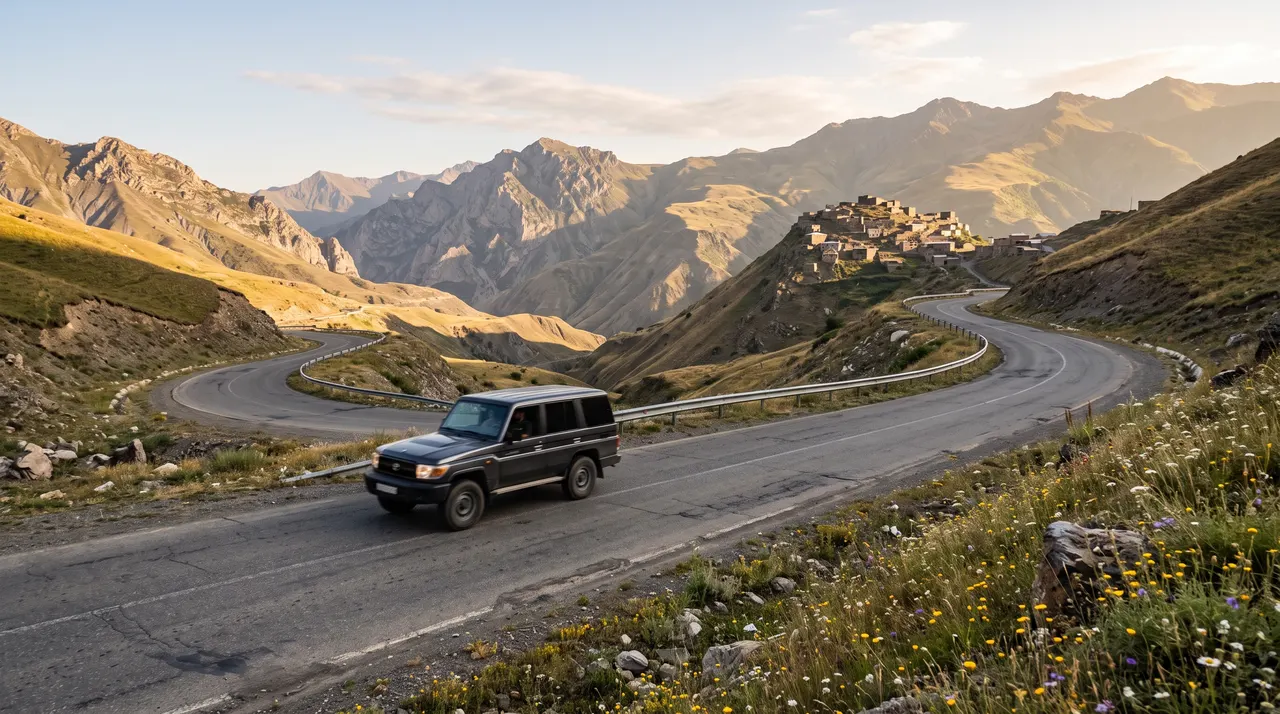
The mountain road up to the village of Xinaliq in the Greater Caucasus is a renowned scenic drive. For most visitors the real draw is the freedom to reach places trains and tours don't, on your own schedule, with the open road generally capped around 110 km/h motorways. Getting behind the wheel is the easy part: your International Driving Permit is a certified translation of your UAE licence, carried alongside it, so rental staff and officials in Azerbaijan can read your credentials at a glance.
What applies to UAE licence holders in Azerbaijan
| UAE licence in Azerbaijan | |
|---|---|
| Do you need an IDP? | Yes — carry one alongside your licence |
| IDP format required | 1968 Vienna |
| Your UAE licence script | Roman (Latin) alphabet |
| United Arab Emirates is party to | 1968 Vienna |
| Drives on the | Right-hand side |
| Minimum driving age | 18 |
| Emergency number | 112 |
| Top speed limit | 110 km/h motorways |
| Currency | AZN |
Driving rules in Azerbaijan you should know
- Drive on the right.
- Zero-tolerance alcohol limit (0.0%).
- Seatbelts mandatory.
- Carry passport, IDP and home licence.
Local driving facts in Azerbaijan
Emergency number: 112 (112 also connects from most mobiles). Typical maximum for cars on the fastest road class: 110 km/h motorways. Posted limits always take precedence.
Tolls & road charges in Azerbaijan
Azerbaijan has no general vignette or nationwide toll-road system for tourists; the main highways are free to use. Drivers should still budget for fuel rather than tolls when planning long routes.
Parking in Azerbaijan
Baku has paid on-street parking zones with metered and app/SMS-based payment, and designated lots; signage indicates time limits and charges. Illegally parked or obstructing vehicles risk fines and towing in the city centre.
Penalties & enforcement in Azerbaijan
An extensive fixed and mobile speed-camera network enforces limits, and rental companies pass camera fines to the renter; typical fines run from around 40 AZN for speeding to higher amounts for phone use or seatbelt violations. Fines are generally not paid in cash to officers but via the official system.
If you have an accident in Azerbaijan
Call 102 for the traffic police; do not move the vehicles until officers document the scene, and obtain the police report needed for insurance. For injuries call the 112 unified emergency line.
City driving in Azerbaijan
In Baku, traffic is dense and aggressive, with the seafront and central streets monitored by extensive camera networks; lane discipline is loose and pedestrians cross unexpectedly. Many central streets have paid-parking enforcement.
Winter driving in Azerbaijan
There is no fixed-date winter-tyre mandate, but mountainous regions and northern routes get snow and ice in winter, so all-season or winter tyres are recommended for those areas. Lowland Baku rarely sees snow.
Fuel in Azerbaijan
Petrol (benzin, by octane grade) and diesel are sold at attended stations branded mainly Socar; most accept major cards in towns. In rural and mountain areas keep the tank above half as stations can be far apart.
Sources: internationaldriversassociation.com, tyremap.com, grandrent.az, dyp.gov.az