 Japan licence
  Bangladesh
Can you drive in Bangladesh with a Japan license?
Short answer: to drive in Bangladesh with a Japan license you need an International Driving Permit in the 1949 Geneva format, carried together with your Japan license.
Yes — to drive in Bangladesh on a Japan licence you should carry an International Driving Permit together with your Japan licence. Bangladesh expects foreign drivers to hold an IDP.
Japanese drivers should carry an International Driving Permit (1949 Convention) with their licence when driving abroad. Your International Driving Permit is a certified multilingual translation of your existing licence, prepared in the 1949 Geneva format and carried alongside your national licence.


What driving in Bangladesh is like
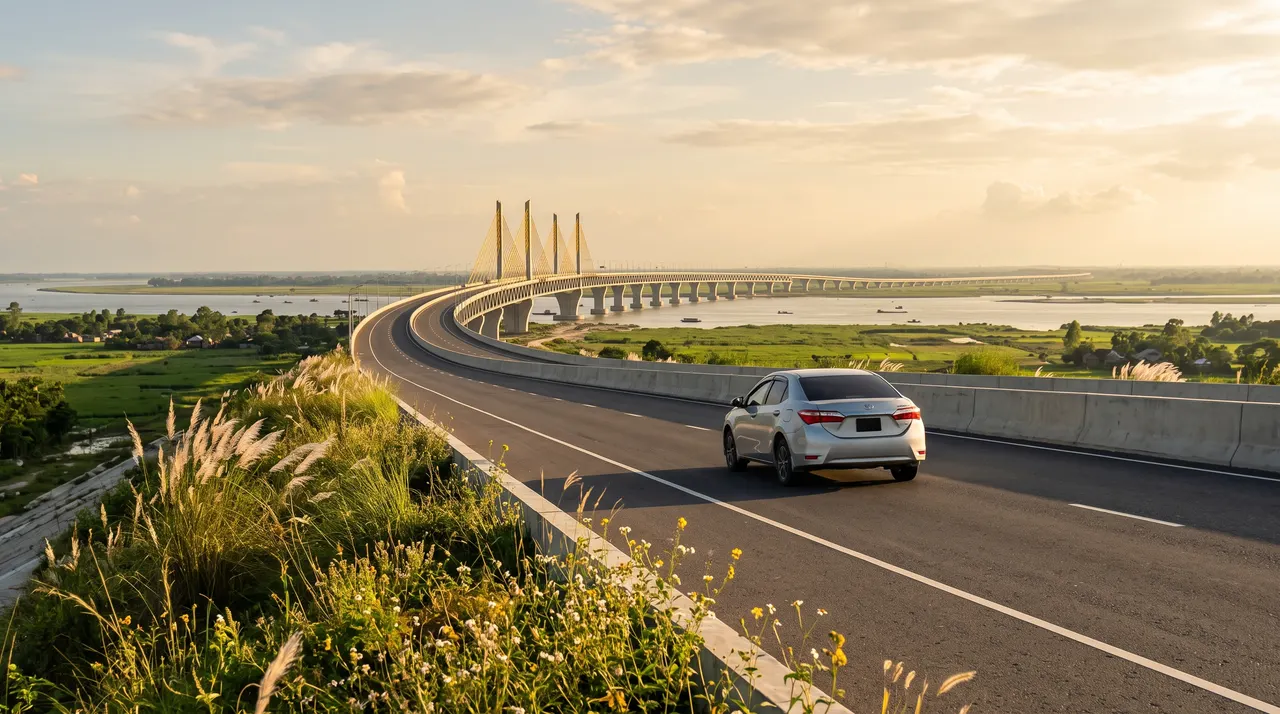
The Dhaka-Mawa highway to the Padma Bridge and on toward Khulna is a popular modern drive across the country's longest bridge over the Padma River. For most visitors the real draw is the freedom to reach places trains and tours don't, on your own schedule, with the open road generally capped around 80 km/h highways. Getting behind the wheel is the easy part: your International Driving Permit is a certified translation of your Japan licence, carried alongside it, so rental staff and officials in Bangladesh can read your credentials at a glance.
What applies to Japan licence holders in Bangladesh
| Japan licence in Bangladesh | |
|---|---|
| Do you need an IDP? | Yes — carry one alongside your licence |
| IDP format required | 1949 Geneva |
| Your Japan licence script | Not in the Roman alphabet — an IDP translation is expected |
| Japan is party to | 1949 Geneva |
| Drives on the | Left-hand side |
| Minimum driving age | 18 |
| Emergency number | 999 |
| Top speed limit | 80 km/h highways |
| Currency | BDT |
Driving rules in Bangladesh you should know
- Drive on the left.
- Heavy, mixed urban traffic — drive defensively.
- Horn use is constant.
- Carry passport, IDP and home licence.
Local driving facts in Bangladesh
Emergency number: 999 (112 also connects from most mobiles). Typical maximum for cars on the fastest road class: 80 km/h highways. Posted limits always take precedence.
Tolls & road charges in Bangladesh
There is no national vignette; tolls are collected per crossing at booths on major bridges and highways such as the Padma Bridge and Bangabandhu (Jamuna) Bridge, paid in cash (taka) at the plaza, typically a few hundred taka for a car.
Parking in Bangladesh
Dhaka has very little formal street parking; use guarded paid lots at malls and hotels, as roadside parking is heavily congested and illegally parked cars are ticketed or towed by traffic police and DNCC/DSCC authorities.
Penalties & enforcement in Bangladesh
Using a hand-held phone while driving, no seatbelt and speeding draw fines under the Road Transport Act 2018; traffic sergeants issue case slips (mamla) rather than taking cash on the spot, and rental firms pass any tickets back to the renter.
If you have an accident in Bangladesh
Dial the national emergency line 999 for police and ambulance; do not move vehicles after a serious crash and wait for police, as a police report is needed for any insurance claim. Crowds can gather quickly, so in a serious incident drivers are advised to drive to the nearest police station rather than confront a mob.
City driving in Bangladesh
Dhaka traffic is among the world's most congested, with cars, rickshaws, CNG auto-rickshaws and buses weaving constantly; lane discipline is minimal and most tourists hire a local driver rather than self-drive.
Winter driving in Bangladesh
No winter-tyre rules - tropical climate.
Fuel in Bangladesh
Stations sell petrol, high-octane (octane), diesel and CNG; pumps are attendant-served. Roughly USD 1.00-1.05 per litre for petrol; many rural stations are cash-only, so carry taka.
Sources: tyremap.com, bd.usembassy.gov, globalpetrolprices.com, internationaldriversassociation.com