 South Africa licence
  Benin
BeninCan you drive in Benin with a South Africa license?
Short answer: to drive in Benin with a South Africa license you need an International Driving Permit in the 1949 Geneva format, carried together with your South Africa license.
Yes — to drive in Benin on a South Africa licence you should carry an International Driving Permit together with your South Africa licence. Benin expects foreign drivers to hold an IDP.
South African drivers should carry an International Driving Permit alongside their licence when driving abroad. Your International Driving Permit is a certified multilingual translation of your existing licence, prepared in the 1949 Geneva format and carried alongside your national licence.


What driving in Benin is like
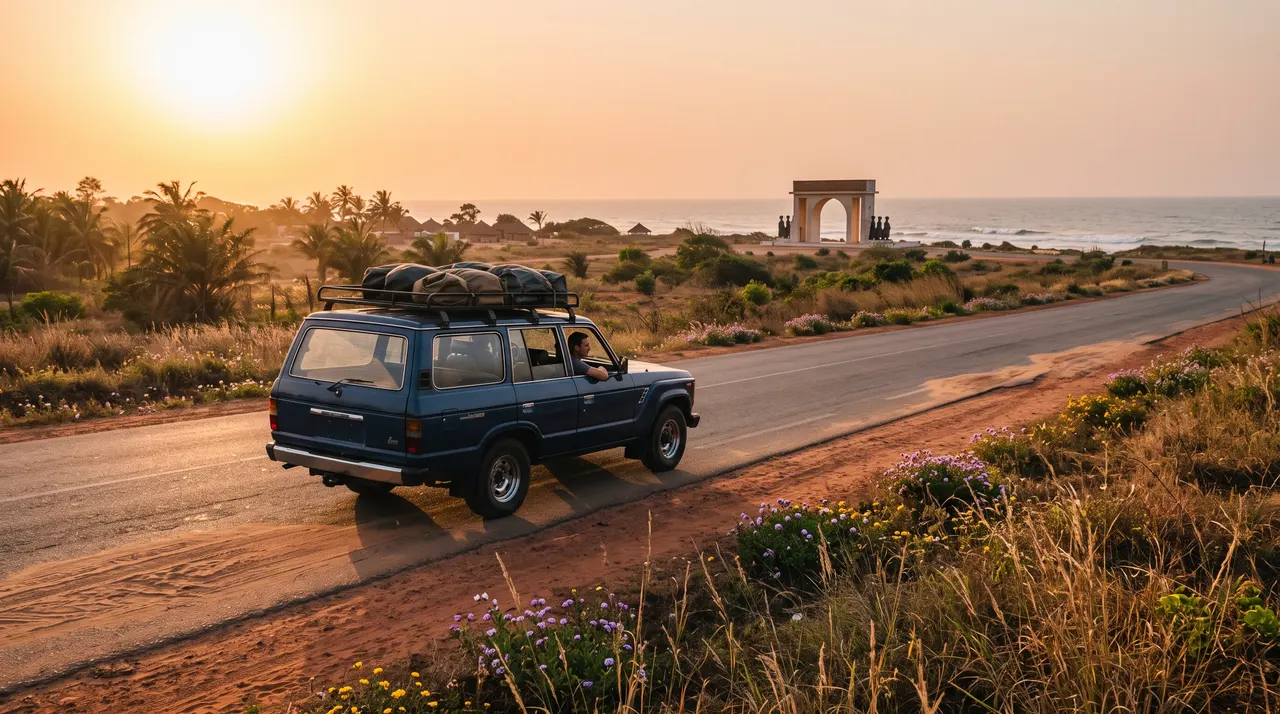
The coastal Route des Pêches between Cotonou and Ouidah, passing the Door of No Return slave-trade memorial, is the country's signature scenic drive. For most visitors the real draw is the freedom to reach places trains and tours don't, on your own schedule, with the open road generally capped around 90 km/h highways. Getting behind the wheel is the easy part: your International Driving Permit is a certified translation of your South Africa licence, carried alongside it, so rental staff and officials in Benin can read your credentials at a glance.
What applies to South Africa licence holders in Benin
| South Africa licence in Benin | |
|---|---|
| Do you need an IDP? | Yes — carry one alongside your licence |
| IDP format required | 1949 Geneva |
| Your South Africa licence script | Roman (Latin) alphabet |
| South Africa is party to | 1949 Geneva and 1968 Vienna |
| Drives on the | Right-hand side |
| Minimum driving age | 18 |
| Emergency number | 117 (police), 118 (fire/ambulance) |
| Top speed limit | 90 km/h highways |
| Currency | XOF |
Driving rules in Benin you should know
- Drive on the right.
- Watch for swarms of motorbike taxis.
- 0.05% alcohol limit.
- Carry passport, IDP and home licence.
Local driving facts in Benin
Emergency number: 117 (police), 118 (fire/ambulance) (112 also connects from most mobiles). Typical maximum for cars on the fastest road class: 90 km/h highways. Posted limits always take precedence.
Tolls & road charges in Benin
Benin has no motorway-style toll network; the main paid road infrastructure is the port/border corridor and there are no electronic tags for tourists. Budget instead for frequent informal 'fees' at police and gendarmerie checkpoints rather than formal tolls.
Parking in Benin
Cotonou has no organised paid-zone system; parking is informal, often on packed-earth lots where attendants ('gardiens') expect a small CFA-franc tip to watch the car. Avoid leaving a vehicle unattended on busy streets where zemidjan motorbike traffic and theft are concerns.
Penalties & enforcement in Benin
Traffic enforcement is largely on-the-spot by police/gendarmerie at the many roadside checkpoints, where licence, IDP, registration and insurance are checked and fines or 'arrangements' are paid in cash CFA francs. Seatbelt and phone-use rules exist but are loosely enforced; carry documents at all times to avoid delays.
If you have an accident in Benin
After a crash you must stop, not move the vehicles, and call the police/gendarmerie (commonly 117 for police, 118 for fire/rescue) and obtain a report (constat) for any insurance or rental claim. In serious or injury cases wait for the gendarmerie; do not flee the scene as crowds can gather quickly.
City driving in Benin
Cotonou's defining hazard is its estimated 70,000+ zemidjan motorbike taxis that weave unpredictably through every junction and ignore lanes, so drive slowly and expect bikes on all sides. The Étoile Rouge and Dantokpa market roundabouts are notoriously chaotic.
Winter driving in Benin
No winter-tyre rules - tropical climate.
Fuel in Benin
Petrol (essence) and diesel (gasoil) are sold at branded stations in cities, but much fuel in the interior is sold informally in glass bottles smuggled from Nigeria ('kpayo'), which can damage engines. Keep the tank topped up, carry CFA-franc cash, and do not rely on card acceptance outside major Cotonou stations.
Sources: countryreports.org, en.wikipedia.org, internationaldriversassociation.com, tyremap.com