 France licence
  Bulgaria
Can you drive in Bulgaria with a France license?
Short answer: to drive in Bulgaria with a France license you need an International Driving Permit in the 1949 Geneva or 1968 Vienna format, carried together with your France license.
Yes — to drive in Bulgaria on a France licence you should carry an International Driving Permit together with your France licence. Bulgaria expects foreign drivers to hold an IDP.
French drivers should carry an International Driving Permit with their licence when driving outside the EU and EEA. Your International Driving Permit is a certified multilingual translation of your existing licence, prepared in the 1949 Geneva & 1968 Vienna format and carried alongside your national licence.


What driving in Bulgaria is like
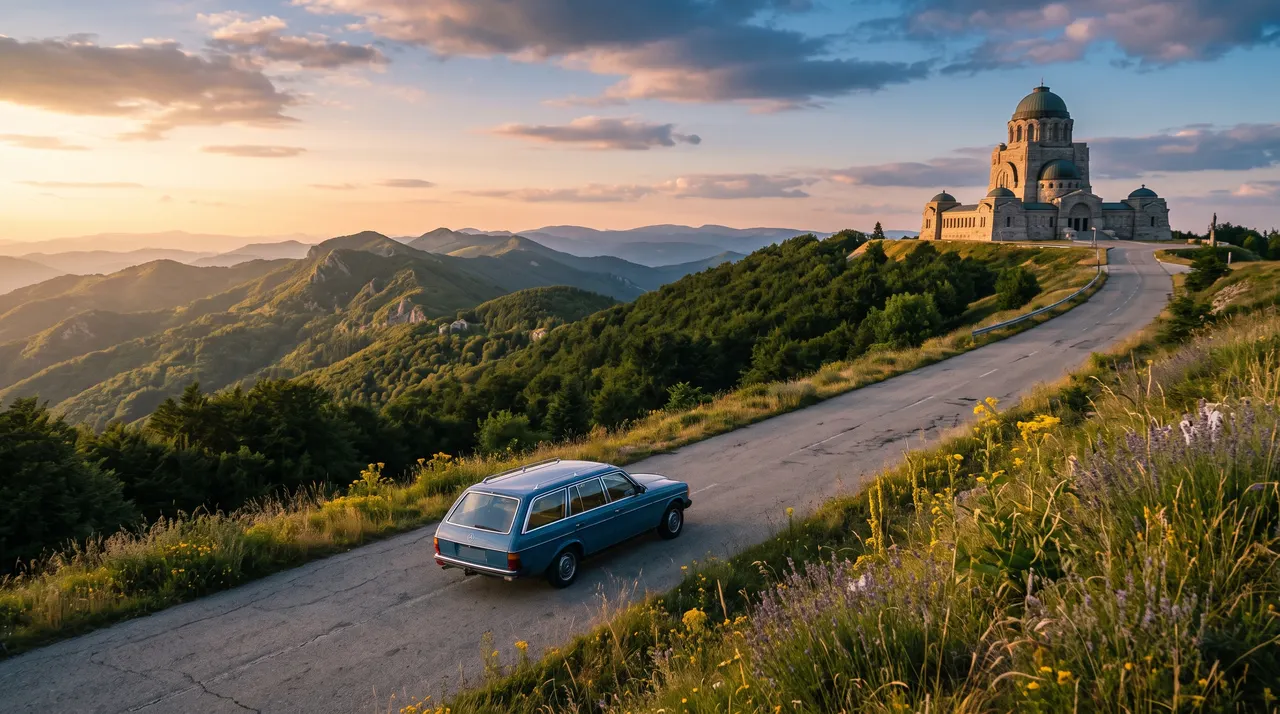
The climb over the Shipka Pass through the Balkan Mountains, past the Shipka monument and memorial, is Bulgaria's best-known scenic drive. For most visitors the real draw is the freedom to reach places trains and tours don't, on your own schedule, with the open road generally capped around 140 km/h motorways. Getting behind the wheel is the easy part: your International Driving Permit is a certified translation of your France licence, carried alongside it, so rental staff and officials in Bulgaria can read your credentials at a glance.
What applies to France licence holders in Bulgaria
| France licence in Bulgaria | |
|---|---|
| Do you need an IDP? | Yes — carry one alongside your licence |
| IDP format required | 1949 Geneva or 1968 Vienna |
| Your France licence script | Roman (Latin) alphabet |
| France is party to | 1949 Geneva and 1968 Vienna |
| Drives on the | Right-hand side |
| Minimum driving age | 18 |
| Emergency number | 112 |
| Top speed limit | 140 km/h motorways |
| Currency | BGN |
Driving rules in Bulgaria you should know
- Electronic vignette required on national roads.
- Headlights on day and night.
- 0.05% alcohol limit.
- Reflective vest and triangle mandatory.
Local driving facts in Bulgaria
Emergency number: 112 (112 also connects from most mobiles). Typical maximum for cars on the fastest road class: 140 km/h motorways. Posted limits always take precedence.
Tolls & road charges in Bulgaria
Motorways and main roads require an electronic e-vignette tied to the number plate (no sticker); buy it online at bgtoll.bg, via app or at terminals/petrol stations before driving. Cars up to 3.5t pay about 15 leva weekend/weekly, 30 leva monthly or 97 leva annually, and a few bridges/tunnels have separate tolls.
Parking in Bulgaria
Sofia uses Blue Zone (centre, ~2 euros/hr) and Green Zone (~1 euro/hr) paid parking, payable by SMS to 1302 (blue) or 1303 (green) with the plate, or via apps like URBO; overstaying risks a wheel clamp or tow, so confirm coverage of foreign-plated cars.
Penalties & enforcement in Bulgaria
Police impose on-the-spot fines for speeding, phone use and no seatbelt; electronic speed-camera tickets carry a discount if paid within 14 days, and rental firms pass camera fines to the hirer along with an admin fee.
If you have an accident in Bulgaria
Call 112. For anything beyond trivial damage Bulgarian police (KAT) should attend and issue a report (protokol), which insurers and rental firms require; do not leave the scene, and use the warning triangle and hazard lights.
City driving in Bulgaria
Sofia's central Blue Zone parking and tram-shared boulevards plus the busy multi-lane Tsarigradsko Shose entering the city demand care; lane discipline is loose and trams have priority.
Winter driving in Bulgaria
Winter tyres (or all-season M+S) are mandatory from 15 November to 1 March, and minimum tread is enforced; chains should be carried for mountain passes such as the Balkan and Rila ranges.
Fuel in Bulgaria
Petrol (A95/A98) and diesel are sold at chains like OMV, Shell, Lukoil and Petrol; stations are mostly self-service with widely accepted cards, and prices are among the lowest in the EU.
Sources: bgtoll.bg, sofiatraffic.bg, speedycars.eu, guidebg.com