 UAE licence
  Cambodia
Can you drive in Cambodia with a UAE license?
Short answer: to drive in Cambodia with a UAE license you need an International Driving Permit in the 1968 Vienna format, carried together with your UAE license.
Yes — to drive in Cambodia on a UAE licence you should carry an International Driving Permit together with your UAE licence. Cambodia expects foreign drivers to hold an IDP.
UAE drivers should carry an International Driving Permit alongside their licence when driving abroad. Your International Driving Permit is a certified multilingual translation of your existing licence, prepared in the 1968 Vienna format and carried alongside your national licence.


What driving in Cambodia is like
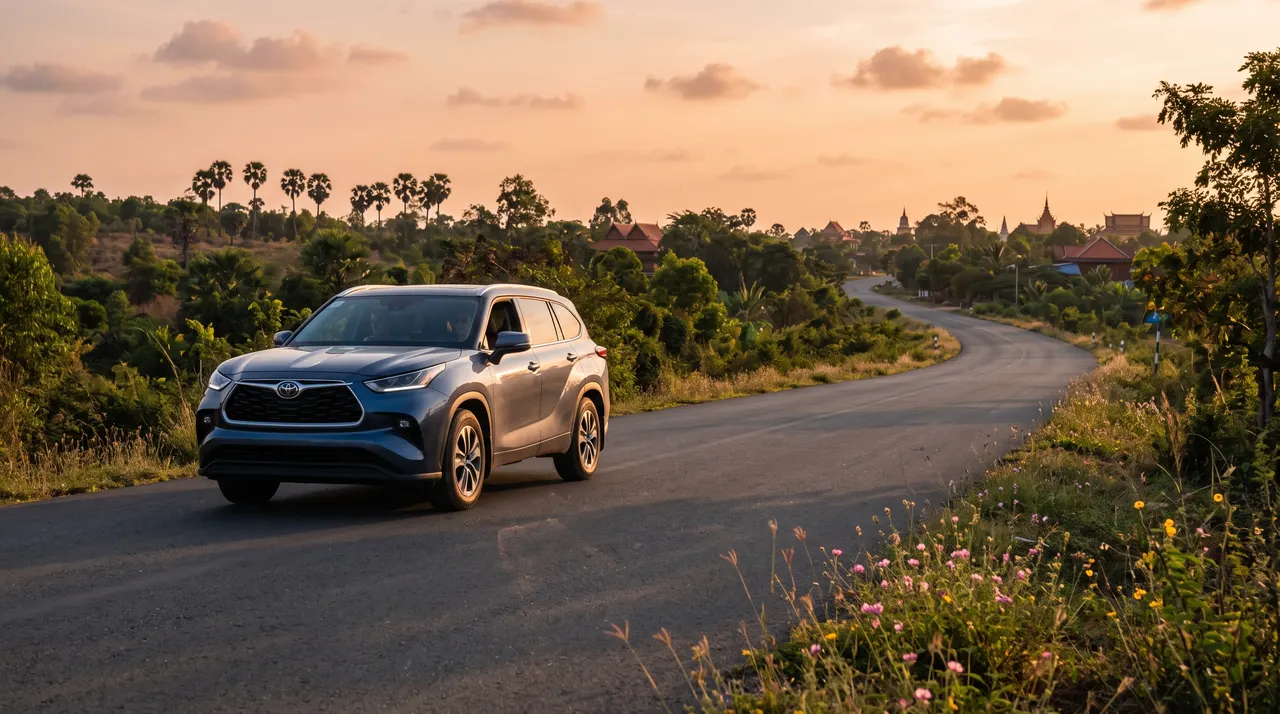
The new Phnom Penh-Sihanoukville Expressway gives a fast, smooth run to the southern coast, while National Road 6 toward Siem Reap and Angkor is the classic tourist route. For most visitors the real draw is the freedom to reach places trains and tours don't, on your own schedule, with the open road generally capped around 90 km/h highways (120 on new expressway). Getting behind the wheel is the easy part: your International Driving Permit is a certified translation of your UAE licence, carried alongside it, so rental staff and officials in Cambodia can read your credentials at a glance.
What applies to UAE licence holders in Cambodia
| UAE licence in Cambodia | |
|---|---|
| Do you need an IDP? | Yes — carry one alongside your licence |
| IDP format required | 1968 Vienna |
| Your UAE licence script | Roman (Latin) alphabet |
| United Arab Emirates is party to | 1968 Vienna |
| Drives on the | Right-hand side |
| Minimum driving age | 18 |
| Emergency number | 117 (police), 119 (ambulance) |
| Top speed limit | 90 km/h highways (120 on new expressway) |
| Currency | KHR |
Driving rules in Cambodia you should know
- Drive on the right.
- Helmets mandatory for motorbikes.
- 0.05% alcohol limit.
- Carry passport, IDP and home licence.
Local driving facts in Cambodia
Emergency number: 117 (police), 119 (ambulance) (112 also connects from most mobiles). Typical maximum for cars on the fastest road class: 90 km/h highways (120 on new expressway). Posted limits always take precedence.
Tolls & road charges in Cambodia
National Road tolls and the country's first expressway, the Phnom Penh-Sihanoukville Expressway, use distance-based tolls (about USD 12 each way for a car), paid in cash, by ANPR plate-billing, or via an ETC on-board unit topped up through local banking apps.
Parking in Cambodia
In Phnom Penh park in guarded paid lots at malls and markets, where attendants give a ticket and may chock motorbikes; street parking is informal and congested, and illegally parked cars risk clamping or removal by district authorities.
Penalties & enforcement in Cambodia
Speeding (the leading crash cause), no seatbelt/helmet and phone use draw fines that traffic police frequently collect on the spot in cash; enforcement and amounts vary, and fines were even temporarily suspended in 2025 amid fuel-price pressure.
If you have an accident in Cambodia
Dial 112 (or 117/119 for police/ambulance); do not move vehicles after a serious crash and wait for traffic police, as a report is needed and at-fault foreign drivers are often expected to negotiate on-the-spot compensation.
City driving in Cambodia
Phnom Penh traffic is dense and unpredictable, dominated by motorbikes and tuk-tuks that filter from all sides; vehicles often ignore lane markings and turn across traffic, so defensive driving is essential.
Winter driving in Cambodia
No winter-tyre rules - tropical climate.
Fuel in Cambodia
Stations (Total, PTT, Caltex) sell EA92/EA95 petrol and diesel and are attendant-served; expect roughly USD 1.10-1.15 per litre for petrol, with cards accepted at branded city stations but cash needed in rural areas.
Sources: cambodia.embassy.gov.au, tyremap.com, tollguru.com, cambodianess.com