 NZ licence
  Canada
Can you drive in Canada with an NZ license?
Short answer: you can drive in Canada with an NZ license; an International Driving Permit is recommended and is carried alongside your NZ license.
An International Driving Permit is recommended (not strictly required) for NZ licence holders driving in Canada. Your NZ licence is in the Roman alphabet, but carrying one alongside it can help at rental desks and roadside checks. Carry both.
New Zealand drivers should carry an International Driving Permit alongside their licence when driving abroad. Your International Driving Permit is a certified multilingual translation of your existing licence, prepared in the 1949 Geneva Convention format that Canada recognises and carried alongside your national licence.


What driving in Canada is like
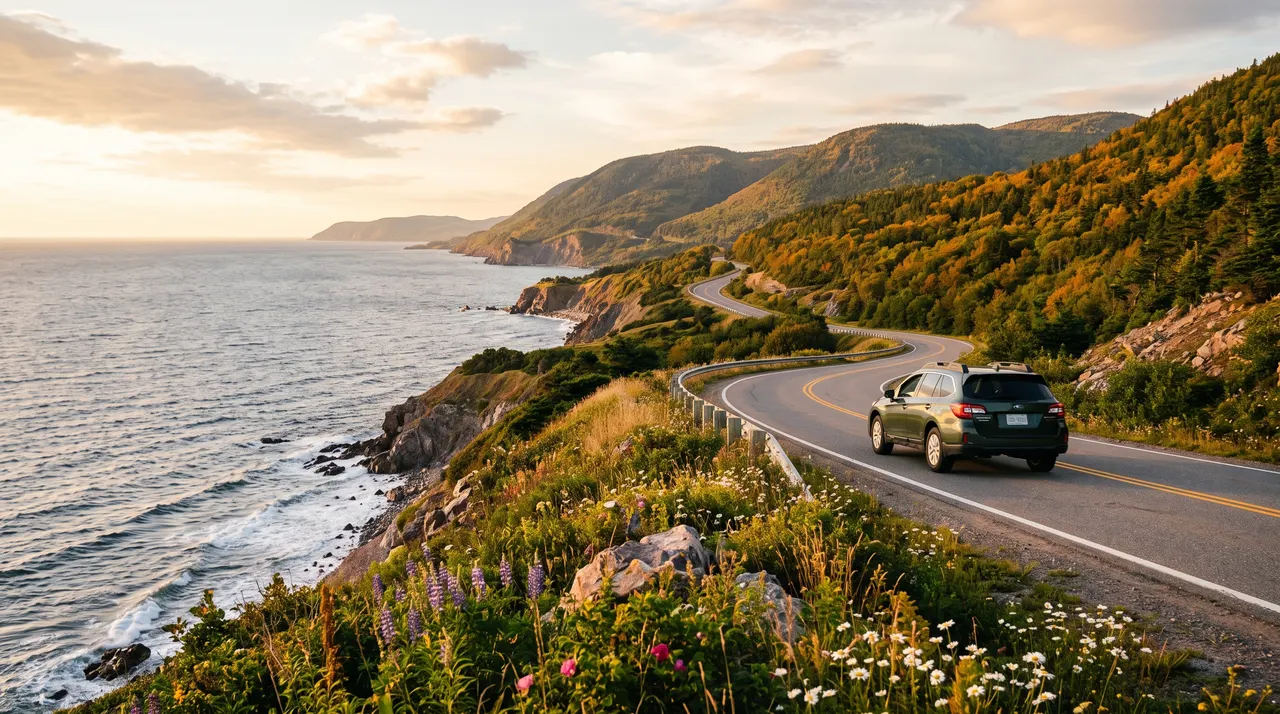
The Cabot Trail looping around Cape Breton Island in Nova Scotia is one of Canada's most celebrated coastal drives. For most visitors the real draw is the freedom to reach places trains and tours don't, on your own schedule, with the open road generally capped around 100–110 km/h highways by province. Getting behind the wheel is the easy part: your International Driving Permit is a certified translation of your NZ licence, carried alongside it, so rental staff and officials in Canada can read your credentials at a glance.
What applies to NZ licence holders in Canada
| NZ licence in Canada | |
|---|---|
| Do you need an IDP? | Recommended, not legally mandatory |
| IDP format required | 1949 Geneva |
| Your NZ licence script | Roman (Latin) alphabet |
| New Zealand is party to | 1949 Geneva |
| Drives on the | Right-hand side |
| Minimum driving age | 16 |
| Emergency number | 911 |
| Top speed limit | 100–110 km/h highways by province |
| Currency | CAD |
Driving rules in Canada you should know
- Right turn on red permitted unless signed otherwise (except Montreal Island).
- Winter tyres mandatory in Quebec in winter.
- Seatbelts mandatory.
- Alcohol limit 0.08% federally; provinces add warn-range penalties.
Local driving facts in Canada
Emergency number: 911 (112 also connects from most mobiles). Typical maximum for cars on the fastest road class: 100–110 km/h highways by province. Posted limits always take precedence.
Tolls & road charges in Canada
Canada has very few toll roads; the main one is Toronto's 407 ETR, an all-electronic highway that photographs the plate and bills the vehicle owner, so rental firms pass the charge plus an admin fee. The parallel toll-free Highway 401 avoids it; Nova Scotia's Cobequid Pass and some bridges also toll.
Parking in Canada
Cities use paid on-street zones via app (e.g. Toronto's Green P, HONK, PayByPhone) or meters; watch posted permit-only residential blocks and rush-hour 'no stopping' lanes. Winter snow-route bans and street-cleaning hours trigger towing.
Penalties & enforcement in Canada
Speeding, handheld-phone and seatbelt fines are set provincially and are steep (Ontario distracted-driving starts around C$615 plus demerit points); Ontario also has 'stunt driving' impoundment for 40+ km/h over. Camera and toll/parking fines are forwarded to renters with a surcharge.
If you have an accident in Canada
Call 911 for injuries. Report any collision causing injury or damage over the provincial threshold (commonly C$2,000) to police; exchange details, notify the rental company, and in many cities minor crashes are reported at a Collision Reporting Centre rather than at the scene.
City driving in Canada
In Toronto, streetcars rule the core: it is illegal to pass an open streetcar door, you must stop behind it, and the Gardiner Expressway/DVP corridor jams hard at rush hour. Many downtown lefts are banned in peak periods.
Winter driving in Canada
Quebec legally mandates winter tyres on all cars from December 1 to March 15. British Columbia requires winter tyres or chains on many mountain highways October 1-April 30; elsewhere they are strongly recommended but not law.
Fuel in Canada
Petrol is sold by the litre as Regular (87), Mid (89) and Premium (91+ octane), plus diesel; most stations are self-serve and card-friendly, though some require prepay at night. Prices vary by province and include carbon levies.
Sources: brokerlink.ca, voyage.caaquebec.com, aaainternationaldrivingpermit.com, onthemovecanada.com