 Japan licence
  Cuba
CubaCan you drive in Cuba with a Japan license?
Short answer: to drive in Cuba with a Japan license you need an International Driving Permit in the 1949 Geneva format, carried together with your Japan license.
Yes — to drive in Cuba on a Japan licence you should carry an International Driving Permit together with your Japan licence. Cuba accepts foreign licences, but an IDP is needed because Japan licences are not in the local alphabet.
Japanese drivers should carry an International Driving Permit (1949 Convention) with their licence when driving abroad. Your International Driving Permit is a certified multilingual translation of your existing licence, prepared in the 1949 Geneva format and carried alongside your national licence.


What driving in Cuba is like
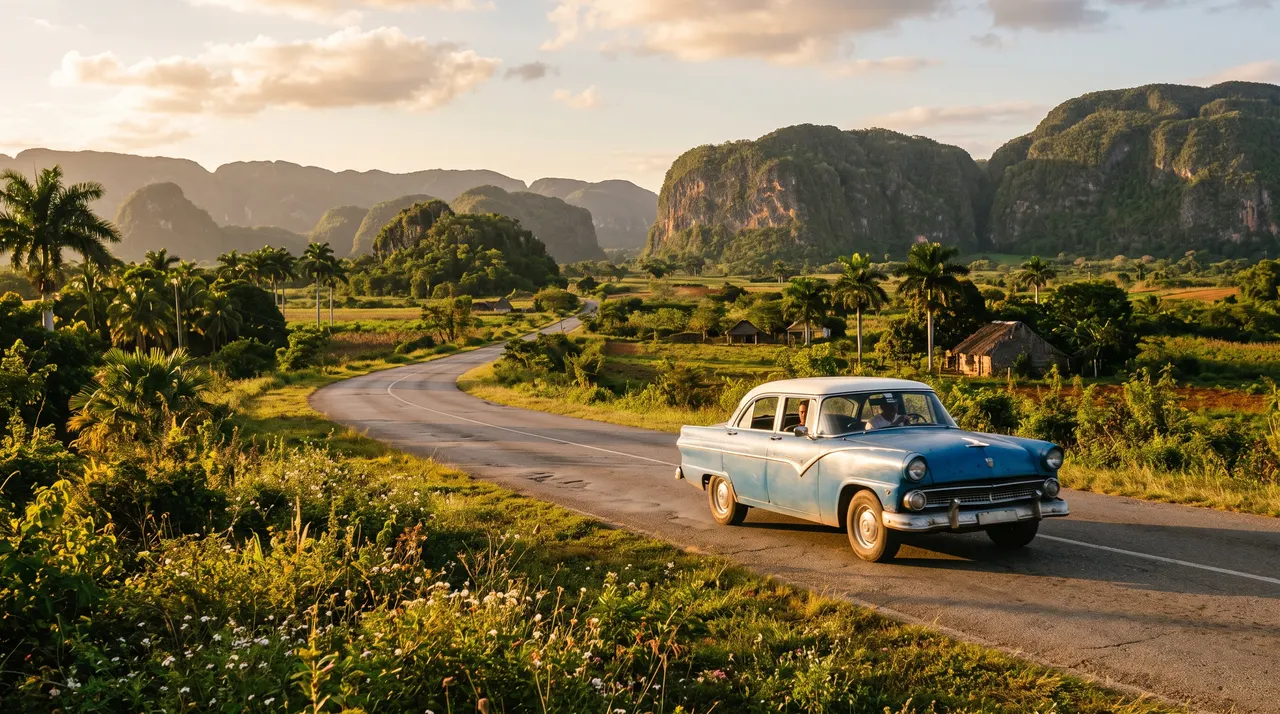
The drive west from Havana into the tobacco-country limestone valleys around Vinales is the iconic Cuban road trip. For most visitors the real draw is the freedom to reach places trains and tours don't, on your own schedule, with the open road generally capped around 100 km/h Autopista Nacional. Getting behind the wheel is the easy part: your International Driving Permit is a certified translation of your Japan licence, carried alongside it, so rental staff and officials in Cuba can read your credentials at a glance.
What applies to Japan licence holders in Cuba
| Japan licence in Cuba | |
|---|---|
| Do you need an IDP? | Yes — carry one alongside your licence |
| IDP format required | 1949 Geneva |
| Your Japan licence script | Not in the Roman alphabet — an IDP translation is expected |
| Japan is party to | 1949 Geneva |
| Drives on the | Right-hand side |
| Minimum driving age | 21 |
| Emergency number | 106 (police) |
| Top speed limit | 100 km/h Autopista Nacional |
| Currency | CUP |
Driving rules in Cuba you should know
- Drive on the right.
- Watch for cyclists, carts and pedestrians on highways.
- 0.05% alcohol limit.
- Fuel can be hard to find — fill up when you can.
Local driving facts in Cuba
Emergency number: 106 (police) (112 also connects from most mobiles). Typical maximum for cars on the fastest road class: 100 km/h Autopista Nacional. Posted limits always take precedence.
Tolls & road charges in Cuba
Cuba's autopistas (such as the A1 Havana-Santiago and the short A3) are toll-free, so there is no toll system for tourists to pay; roads are free but often poorly lit and shared with cyclists, livestock and horse carts.
Parking in Cuba
In Havana use guarded 'parqueo' lots or pay an informal attendant ('parqueador') a few CUP/USD to watch the car; 'tourist' red plates draw attention, so leave nothing visible and avoid unlit street parking overnight.
Penalties & enforcement in Cuba
Traffic fines are issued on the spot by police who note the violation against the rental contract/licence; speeding, phone use and seatbelt breaches draw fines, and because of strict liability rules foreign drivers face serious legal exposure after any collision causing injury.
If you have an accident in Cuba
Call police and the rental company and do NOT leave the scene or move the car until both arrive; in any injury accident you may be barred from leaving the country until the investigation concludes, so a foreign driver should never admit fault or settle informally.
City driving in Cuba
In Havana the seafront Malecon and the unmarked, fast-merging junctions around the Tunel de la Bahia confuse visitors; street signage is sparse, one-way streets in Habana Vieja are tight, and a working GPS or offline map is essential.
Winter driving in Cuba
No winter-tyre rules - tropical climate.
Fuel in Cuba
Fuel is sold as Especial (higher octane) and Regular plus diesel through state CUPET/Servi-Cupet stations, but a severe 2025-2026 shortage means long multi-hour queues, frequent dry pumps and black-market prices of several USD per litre; carry cash and fill up whenever a station has supply.
Sources: cuba.com, cubasbest.com, travel.gc.ca, globalpetrolprices.com