 Australia licence
  Cyprus
Can you drive in Cyprus with an Australia license?
Short answer: you can drive in Cyprus with an Australia license; an International Driving Permit is recommended and is carried alongside your Australia license.
An International Driving Permit is recommended (not strictly required) for Australia licence holders driving in Cyprus. Your Australia licence is in the Roman alphabet, but an IDP removes any doubt at rental desks and roadside checks. Carry both.
Australian drivers should carry an International Driving Permit (1949 Convention) alongside their state licence when driving abroad. Your International Driving Permit is a certified multilingual translation of your existing licence, prepared in the 1949 Geneva & 1968 Vienna format and carried alongside your national licence.


What driving in Cyprus is like
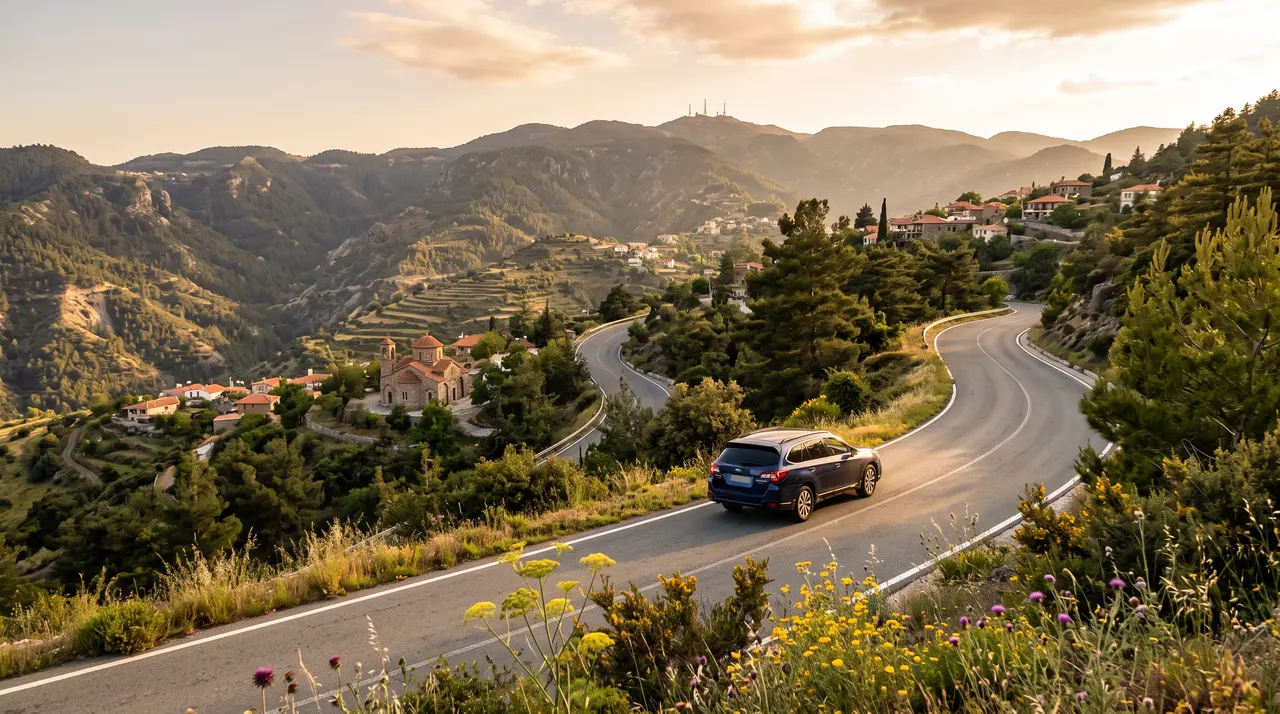
The winding climb through the Troodos Mountains toward Mount Olympus, passing hill villages and Byzantine churches, is the island's standout drive. For most visitors the real draw is the freedom to reach places trains and tours don't, on your own schedule, with the open road generally capped around 100 km/h motorways. Getting behind the wheel is the easy part: your International Driving Permit is a certified translation of your Australia licence, carried alongside it, so rental staff and officials in Cyprus can read your credentials at a glance.
What applies to Australia licence holders in Cyprus
| Australia licence in Cyprus | |
|---|---|
| Do you need an IDP? | Recommended, not legally mandatory |
| IDP format required | 1949 Geneva or 1968 Vienna |
| Your Australia licence script | Roman (Latin) alphabet |
| Australia is party to | 1949 Geneva |
| Drives on the | Left-hand side |
| Minimum driving age | 18 |
| Emergency number | 112 |
| Top speed limit | 100 km/h motorways |
| Currency | EUR |
Driving rules in Cyprus you should know
- Drive on the left.
- Seatbelts mandatory; no phone use while driving.
- 0.05% alcohol limit; 0.02% for new drivers.
- Speed limits in km/h.
Local driving facts in Cyprus
Emergency number: 112 (112 also connects from most mobiles). Typical maximum for cars on the fastest road class: 100 km/h motorways. Posted limits always take precedence.
Tolls & road charges in Cyprus
Cyprus has no toll roads or vignette system - all motorways, including the A1 Nicosia-Limassol and routes to Paphos and Larnaca, are free to use.
Parking in Cyprus
Town centres use metered/paid parking (often EUR 1-2 per hour, typically free evenings and Sundays) and pay-and-display lots; a double yellow line on the kerb means no parking at any time. Municipal parking fines are issued separately from police fines.
Penalties & enforcement in Cyprus
A fixed camera network (with about a 5 km/h tolerance) posts speeding fines to the registered keeper, usually payable within 30 days; phone use and no seatbelt also carry fines plus penalty points. Rental companies forward camera fines to the renter, and drivers can reach 16 points before a court hearing.
If you have an accident in Cyprus
Drive on the LEFT here. Call 112 for emergencies and report the accident to the police; for any injury, or where drivers disagree on fault, wait for police - do not move vehicles until they attend, and exchange details and photograph the scene.
City driving in Cyprus
Nicosia (Lefkosia) has a tight, partly pedestrianised old town inside the Venetian walls with one-way streets and scarce parking; the city is also split by the UN buffer zone, so you cannot drive straight across to the north without using a designated crossing.
Winter driving in Cyprus
No winter-tyre rules - Mediterranean climate; only the Troodos mountains see occasional snow in winter, where chains may be advisable on the highest roads during a snowfall.
Fuel in Cyprus
Stations sell unleaded 95 and 98 petrol and diesel and are common in towns and on highways; cards are widely accepted. Many pumps switch to automated self-service after hours requiring a chip-and-PIN card, so carry one or some cash.
Sources: autoeurope.co.uk, cyprus-mail.com, tyremap.com, getmancar.com