 NZ licence
  Democratic Republic of the Congo
Can you drive in Democratic Republic of the Congo with an NZ license?
Short answer: to drive in Democratic Republic of the Congo with an NZ license you need an International Driving Permit in the 1949 Geneva format, carried together with your NZ license.
Yes — to drive in Democratic Republic of the Congo on an NZ licence you should carry an International Driving Permit together with your NZ licence. Democratic Republic of the Congo expects foreign drivers to hold an IDP.
New Zealand drivers should carry an International Driving Permit alongside their licence when driving abroad. Your International Driving Permit is a certified multilingual translation of your existing licence, prepared in the 1949 Geneva format and carried alongside your national licence.


What driving in Democratic Republic of the Congo is like
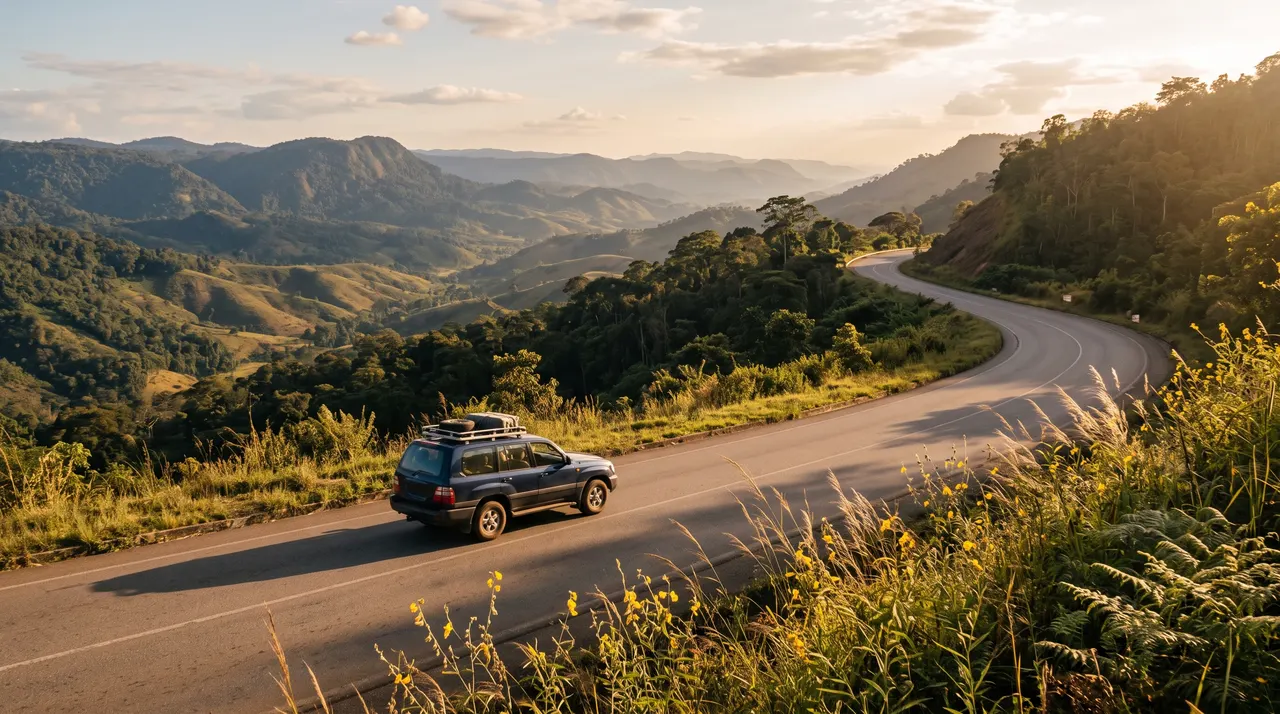
The Kinshasa-to-Matadi road (RN1) down to the Atlantic port through the Crystal Mountains is the country's best-known long-distance drive. For most visitors the real draw is the freedom to reach places trains and tours don't, on your own schedule, with the open road generally capped around 80 km/h highways. Getting behind the wheel is the easy part: your International Driving Permit is a certified translation of your NZ licence, carried alongside it, so rental staff and officials in Democratic Republic of the Congo can read your credentials at a glance.
What applies to NZ licence holders in Democratic Republic of the Congo
| NZ licence in Democratic Republic of the Congo | |
|---|---|
| Do you need an IDP? | Yes — carry one alongside your licence |
| IDP format required | 1949 Geneva |
| Your NZ licence script | Roman (Latin) alphabet |
| New Zealand is party to | 1949 Geneva |
| Drives on the | Right-hand side |
| Minimum driving age | 18 |
| Emergency number | 112 |
| Top speed limit | 80 km/h highways |
| Currency | CDF |
Driving rules in Democratic Republic of the Congo you should know
- Drive on the right.
- Poor roads outside major cities.
- Frequent checkpoints.
- Carry passport, IDP and home licence.
Local driving facts in Democratic Republic of the Congo
Emergency number: 112 (112 also connects from most mobiles). Typical maximum for cars on the fastest road class: 80 km/h highways. Posted limits always take precedence.
Tolls & road charges in Democratic Republic of the Congo
There are no nationwide electronic tolls or vignettes, though péage barriers exist on some upgraded routes such as sections around Kinshasa and the Matadi road, paid in cash (Congolese francs or USD). Carry small cash for these and for frequent checkpoints.
Parking in Democratic Republic of the Congo
In Kinshasa some central zones have regulated/paid parking and informal attendants ('parking boys') who expect a tip to guard the car. Avoid leaving vehicles unattended on the street; use guarded hotel or compound parking where possible.
Penalties & enforcement in Democratic Republic of the Congo
Traffic police frequently stop foreign drivers and may demand on-the-spot cash payments; insist on official fines and a receipt where possible. Phone use while driving and missing documents are common pretexts, so keep licence, IDP, passport copy and vehicle papers ready.
If you have an accident in Democratic Republic of the Congo
After a crash do NOT stop to aid injured parties or linger if a hostile crowd gathers - drive directly to the nearest police station or gendarmerie to report it. If safe, stay in the vehicle until police arrive; the general emergency line is 112, though response is slow.
City driving in Democratic Republic of the Congo
Kinshasa traffic is dense and chaotic, with the Boulevard du 30 Juin and major roundabouts gridlocked at peak hours and informal 'roulage' traffic police directing flow. Cell-phone use while driving is prohibited.
Winter driving in Democratic Republic of the Congo
No winter-tyre rules - tropical climate.
Fuel in Democratic Republic of the Congo
Petrol (essence) and diesel (gasoil) are available in cities but stations thin out sharply upcountry, where shortages occur; carry a jerrycan for long trips. Payment is usually cash, often in US dollars or Congolese francs.
Sources: internationaldriversassociation.com, countryreports.org, gov.uk, smartraveller.gov.au