 UAE licence
  Ecuador
Can you drive in Ecuador with a UAE license?
Short answer: to drive in Ecuador with a UAE license you need an International Driving Permit in the 1968 Vienna format, carried together with your UAE license.
Yes — to drive in Ecuador on a UAE licence you should carry an International Driving Permit together with your UAE licence. Ecuador expects foreign drivers to hold an IDP.
UAE drivers should carry an International Driving Permit alongside their licence when driving abroad. Your International Driving Permit is a certified multilingual translation of your existing licence, prepared in the 1968 Vienna format and carried alongside your national licence.


What driving in Ecuador is like
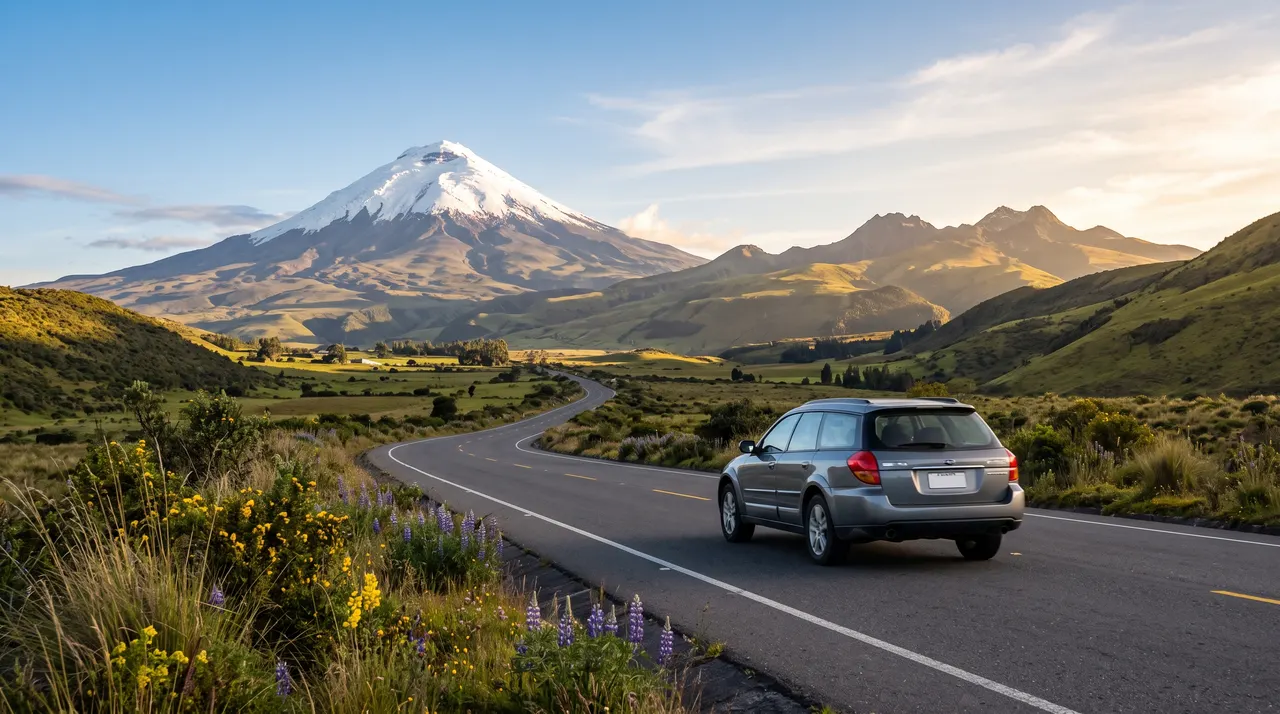
The 'Avenue of the Volcanoes' stretch of the Panamericana south of Quito, passing Cotopaxi, is the classic scenic drive visitors search for. For most visitors the real draw is the freedom to reach places trains and tours don't, on your own schedule, with the open road generally capped around 100 km/h straight highway sections. Getting behind the wheel is the easy part: your International Driving Permit is a certified translation of your UAE licence, carried alongside it, so rental staff and officials in Ecuador can read your credentials at a glance.
What applies to UAE licence holders in Ecuador
| UAE licence in Ecuador | |
|---|---|
| Do you need an IDP? | Yes — carry one alongside your licence |
| IDP format required | 1968 Vienna |
| Your UAE licence script | Roman (Latin) alphabet |
| United Arab Emirates is party to | 1968 Vienna |
| Drives on the | Right-hand side |
| Minimum driving age | 18 |
| Emergency number | 911 |
| Top speed limit | 100 km/h straight highway sections |
| Currency | USD |
Driving rules in Ecuador you should know
- Drive on the right.
- Pico y placa plate restrictions in Quito.
- 0.03% alcohol limit.
- Steep Andean roads with switchbacks.
Local driving facts in Ecuador
Emergency number: 911 (112 also connects from most mobiles). Typical maximum for cars on the fastest road class: 100 km/h straight highway sections. Posted limits always take precedence.
Tolls & road charges in Ecuador
Major highways (e.g. the Panamericana and routes around Quito and Guayaquil) have toll booths (peajes) charging roughly USD 1 or less per car; pay in US dollars cash, as the country uses the USD.
Parking in Ecuador
Quito's centre uses the municipal 'Zona Azul' paid-parking scheme during business hours; parking in restricted spots risks fines or removal, so guarded lots are safer in the historic centre.
Penalties & enforcement in Ecuador
Pico y Placa or serious traffic violations draw heavy fines (around USD 130-260 plus possible points), while speeding, phone use and no seatbelt are penalised; rental firms recharge camera fines to the driver's card.
If you have an accident in Ecuador
Call 911 (the national ECU 911 emergency line) for police and ambulance; leave vehicles in place and wait for the transit authority, as an official report is needed for insurance, and do not admit fault on the spot.
City driving in Ecuador
Quito enforces Pico y Placa weekday plate restrictions (roughly 06:00/07:00-09:30 and 16:00-19:30) banning cars by last plate digit on set days, and rental cars are not exempt.
Winter driving in Ecuador
No winter-tyre rules - equatorial climate, though high Andean passes can bring fog, rain and occasional ice, demanding caution rather than special tyres.
Fuel in Ecuador
Stations sell Extra and Ecopais regular petrol (~USD 3.31/gal as of June 2026), Super premium (over USD 5.60/gal) and Diesel (~USD 3.25/gal); prices are in USD and are adjusted monthly under a subsidy-reform band.
Sources: fastidp.com, en.wikipedia.org, primicias.ec, expatecuador.com