 South Africa licence
  Egypt
EgyptCan you drive in Egypt with a South Africa license?
Short answer: to drive in Egypt with a South Africa license you need an International Driving Permit in the 1968 Vienna format, carried together with your South Africa license.
Yes — to drive in Egypt on a South Africa licence you should carry an International Driving Permit together with your South Africa licence. Egypt expects foreign drivers to hold an IDP.
South African drivers should carry an International Driving Permit alongside their licence when driving abroad. Your International Driving Permit is a certified multilingual translation of your existing licence, prepared in the 1968 Vienna format and carried alongside your national licence.


What driving in Egypt is like
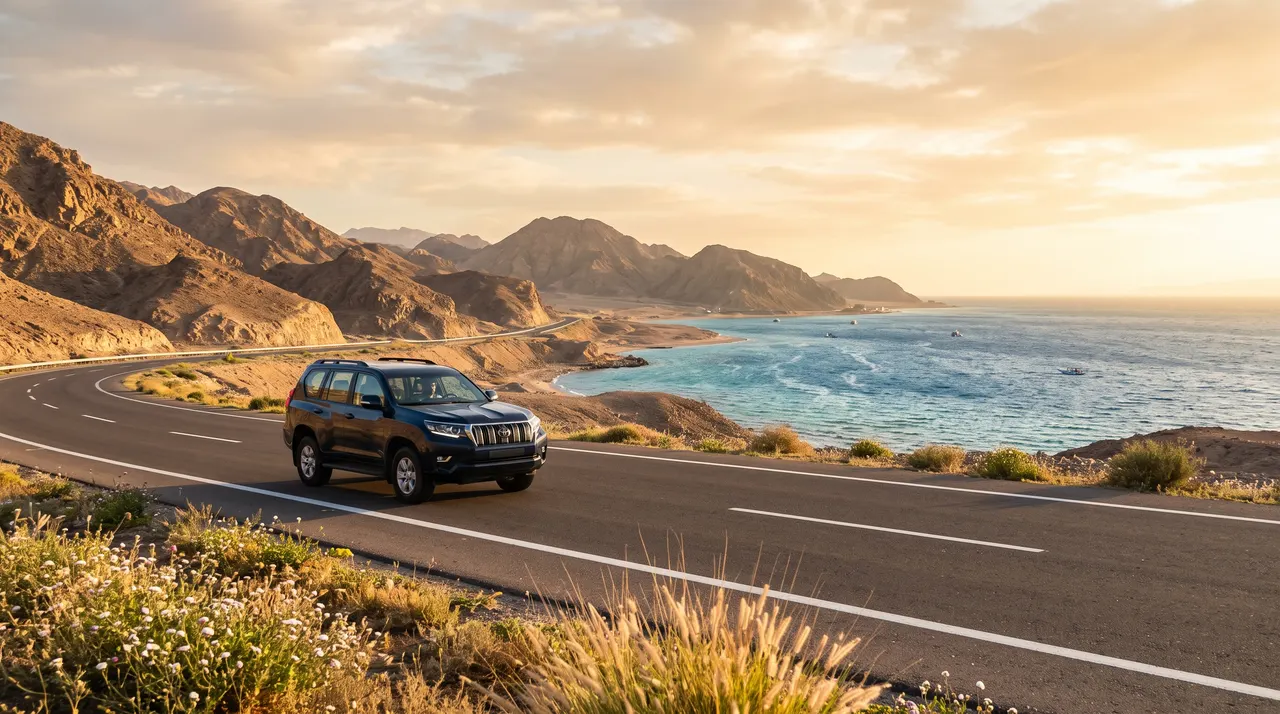
The Cairo-to-Alexandria Desert Road and the coastal road toward Ain Sokhna and the Red Sea are the classic long drives visitors search for. For most visitors the real draw is the freedom to reach places trains and tours don't, on your own schedule, with the open road generally capped around 100–120 km/h desert highways. Getting behind the wheel is the easy part: your International Driving Permit is a certified translation of your South Africa licence, carried alongside it, so rental staff and officials in Egypt can read your credentials at a glance.
What applies to South Africa licence holders in Egypt
| South Africa licence in Egypt | |
|---|---|
| Do you need an IDP? | Yes — carry one alongside your licence |
| IDP format required | 1968 Vienna |
| Your South Africa licence script | Roman (Latin) alphabet |
| South Africa is party to | 1949 Geneva and 1968 Vienna |
| Drives on the | Right-hand side |
| Minimum driving age | 18 |
| Emergency number | 122 (police), 123 (ambulance) |
| Top speed limit | 100–120 km/h desert highways |
| Currency | EGP |
Driving rules in Egypt you should know
- Dense, assertive urban traffic.
- Headlights used sparingly at night by locals — drive defensively.
- Checkpoints common between cities.
- Carry passport, licence and IDP.
Local driving facts in Egypt
Emergency number: 122 (police), 123 (ambulance) (112 also connects from most mobiles). Typical maximum for cars on the fastest road class: 100–120 km/h desert highways. Posted limits always take precedence.
Tolls & road charges in Egypt
Major intercity roads (Cairo-Alexandria Desert Road, Cairo-Suez, Cairo-Ain Sokhna, the Regional Ring Road) are tolled via overhead ANPR cameras and a smart electronic system, with cash booths still in use; tourists in rentals normally just pay the small cash toll at the gate.
Parking in Egypt
In central Cairo parking is chaotic and largely informal, with 'sayes' (freelance attendants) directing cars and expecting a few pounds; illegally parked or obstructing vehicles can be ticketed or have plates removed by traffic police.
Penalties & enforcement in Egypt
Under the 2025/26 tightened traffic law, speeding and lane violations carry fines of roughly EGP 2,000-10,000; seatbelt and handheld-phone offences are enforced, and radar cameras issue plate-based fines that rental companies later charge to your card.
If you have an accident in Egypt
Call 122 for police or 128 for the traffic police, and 123 for an ambulance; do not move the vehicles unless they block traffic dangerously, as a police report ('mahdar') is mandatory for any insurance claim.
City driving in Egypt
Cairo's Ring Road and downtown corridors are gridlocked with lane markings widely ignored; expect aggressive merging, constant horn use and pedestrians crossing motorways.
Winter driving in Egypt
No winter-tyre rules - tropical/desert climate, though sand and sudden fog on the desert roads are the real seasonal hazards.
Fuel in Egypt
Stations sell 80, 92 and 95 octane petrol plus diesel ('solar'), are attended (no self-serve) and cheap by global standards; many smaller stations are cash-only in Egyptian pounds, so do not rely on cards.
Sources: rac.co.uk, sixt.co.uk, tollguru.com, dailynewsegypt.com