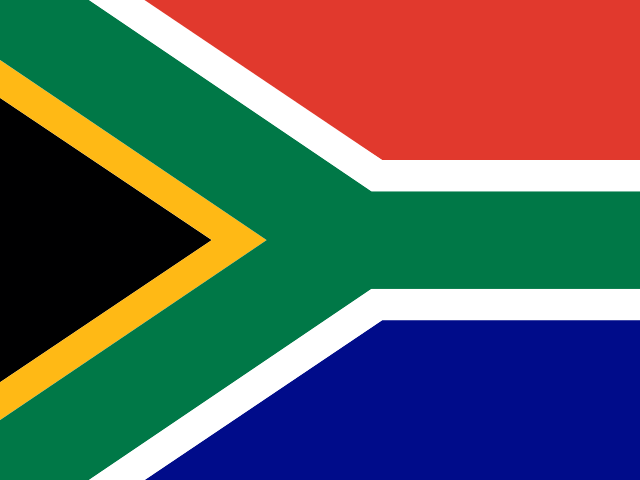
 South Africa licence
 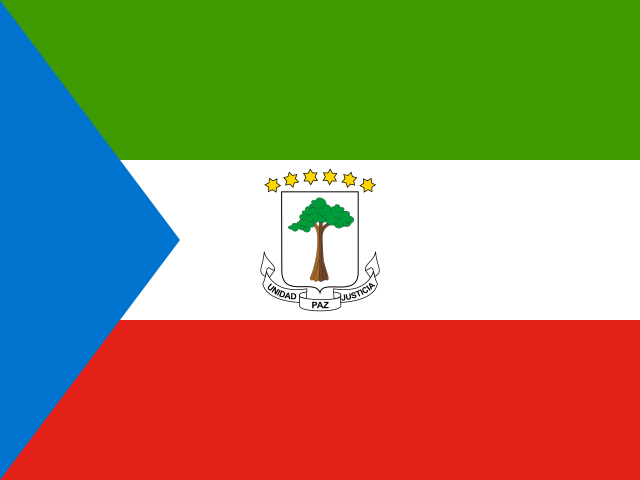 Equatorial Guinea
Can you drive in Equatorial Guinea with a South Africa license?
Short answer: you cannot drive in Equatorial Guinea on a South Africa license or an International Driving Permit alone — Equatorial Guinea requires a local or temporary licence.
An International Driving Permit is not sufficient to drive in Equatorial Guinea. Equatorial Guinea does not accept the IDP for foreign visitors — a local or temporary licence is required. Always confirm the current rule before you travel.
South African drivers should carry an International Driving Permit alongside their licence when driving abroad. Your International Driving Permit is a certified multilingual translation of your existing licence, prepared in the Local rules format and carried alongside your national licence.


What driving in Equatorial Guinea is like
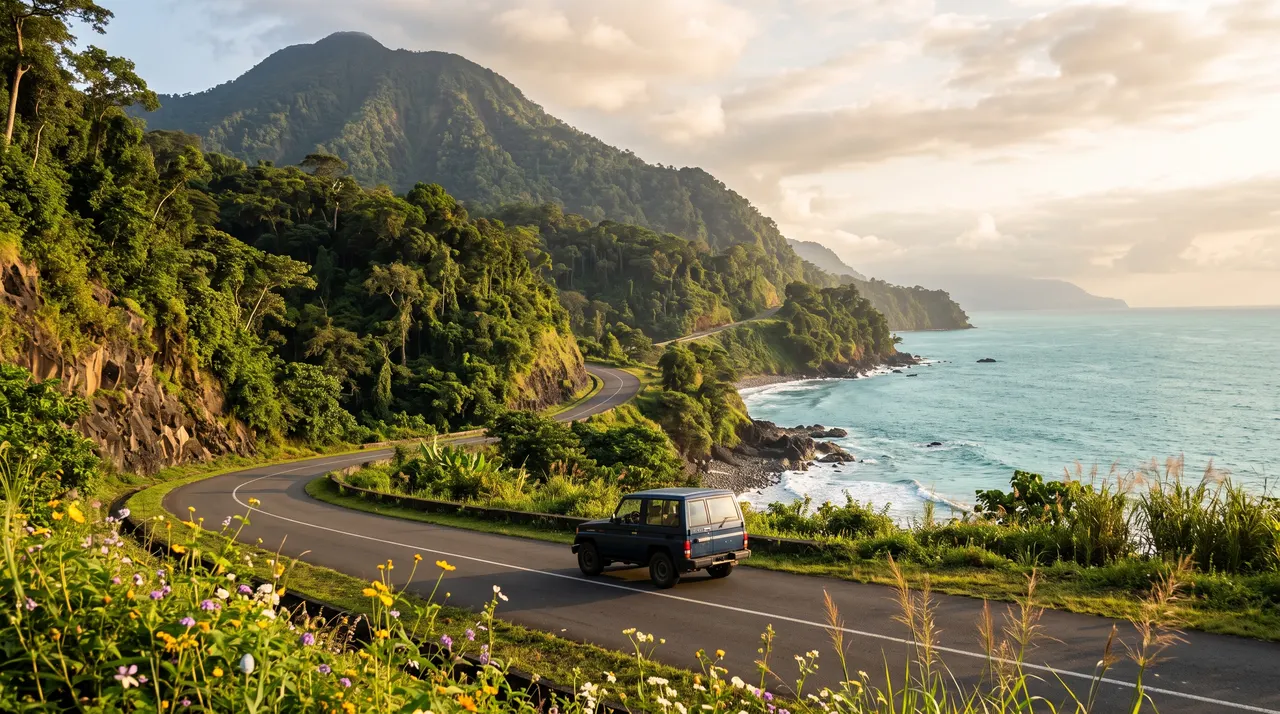
The coastal road from Malabo around Bioko Island toward Luba and the volcanic Pico Basile drive offers dramatic rainforest and ocean views. For most visitors the real draw is the freedom to reach places trains and tours don't, on your own schedule, with the open road generally capped around 100 km/h highways. Getting behind the wheel is the easy part: your International Driving Permit is a certified translation of your South Africa licence, carried alongside it, so rental staff and officials in Equatorial Guinea can read your credentials at a glance.
What applies to South Africa licence holders in Equatorial Guinea
| South Africa licence in Equatorial Guinea | |
|---|---|
| Do you need an IDP? | An IDP is not sufficient here |
| IDP format required | Local licensing rules apply |
| Your South Africa licence script | Roman (Latin) alphabet |
| South Africa is party to | 1949 Geneva and 1968 Vienna |
| Drives on the | Right-hand side |
| Minimum driving age | 18 |
| Emergency number | 114 (police) |
| Top speed limit | 100 km/h highways |
| Currency | XAF |
Driving rules in Equatorial Guinea you should know
- Drive on the right.
- Numerous police checkpoints.
- 0.05% alcohol limit.
- Carry passport, IDP and home licence.
Local driving facts in Equatorial Guinea
Emergency number: 114 (police) (112 also connects from most mobiles). Typical maximum for cars on the fastest road class: 100 km/h highways. Posted limits always take precedence.
Tolls & road charges in Equatorial Guinea
There are no electronic toll motorways; the country has no vignette or e-toll system, so no toll payment is required of tourists.
Parking in Equatorial Guinea
Parking is largely informal and unmetered in Malabo and Bata, with no formal paid-zone color system; park in guarded lots where possible as enforcement and signage are minimal.
Penalties & enforcement in Equatorial Guinea
Mobile phone use (even hands-free) and no seatbelt are prohibited and fined; officers may demand on-the-spot cash payment at checkpoints, and rental firms pass any fines to the renter's card.
If you have an accident in Equatorial Guinea
Stop immediately, do not move vehicles, and call police on 114 (or 112); a police report is required for any insurance or rental claim and leaving the scene is an offence.
City driving in Equatorial Guinea
Malabo and Bata have frequent military and police checkpoints where you must present passport, visa and licence; remain calm, comply, and never offer bribes.
Winter driving in Equatorial Guinea
No winter-tyre rules - tropical climate.
Fuel in Equatorial Guinea
Petrol (gasolina) and diesel (gasóleo) are sold, mostly attended service; stations are scarce outside Malabo and Bata, cash (CFA franc) is expected and cards are rarely accepted, with prices roughly 600-700 CFA per litre.
Sources: travel.state.gov, internationaldriversassociation.com, tyremap.com