 Germany licence
  Gambia
Can you drive in Gambia with a Germany license?
Short answer: to drive in Gambia with a Germany license you need an International Driving Permit in the 1949 Geneva format, carried together with your Germany license.
Yes — to drive in Gambia on a Germany licence you should carry an International Driving Permit together with your Germany licence. Gambia expects foreign drivers to hold an IDP.
German drivers should carry an International Driving Permit (Internationaler Führerschein) with their licence outside the EU and EEA. Your International Driving Permit is a certified multilingual translation of your existing licence, prepared in the 1949 Geneva format and carried alongside your national licence.


What driving in Gambia is like
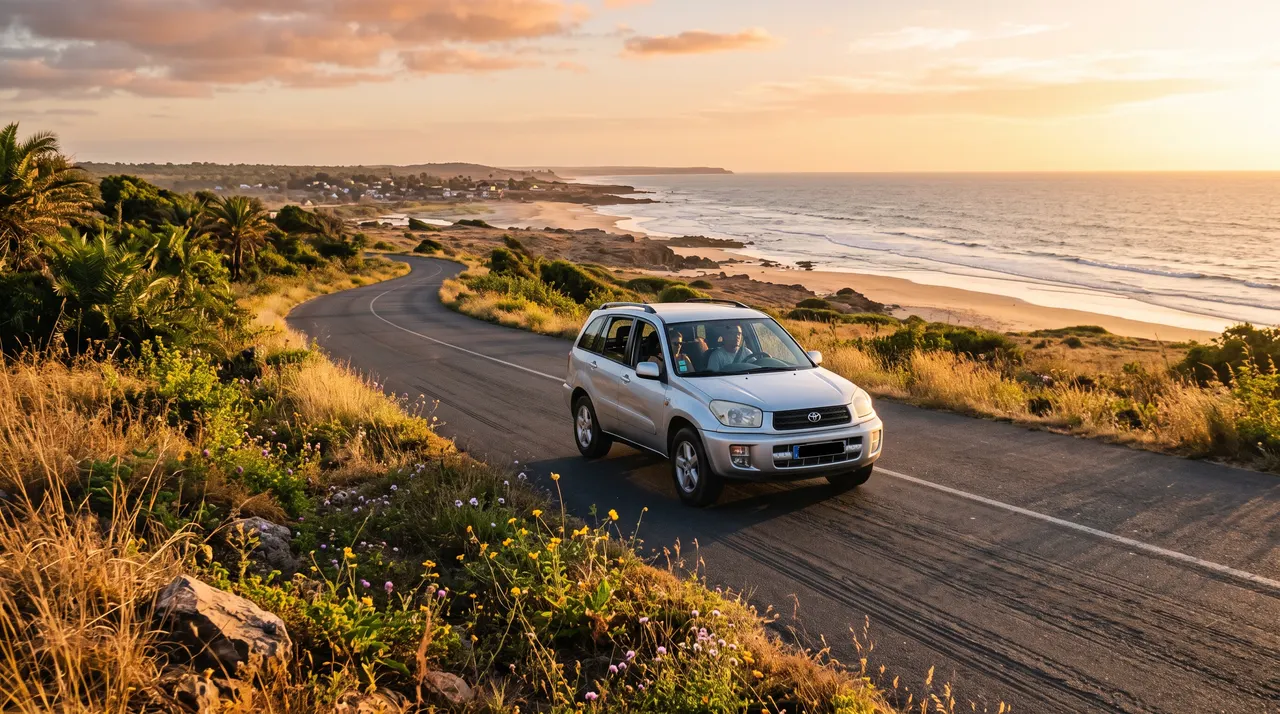
The Coastal Road linking Banjul, the resort strip and the Atlantic beaches down toward Kartong is the scenic drive visitors most often search for. For most visitors the real draw is the freedom to reach places trains and tours don't, on your own schedule, with the open road generally capped around 70 km/h open roads. Getting behind the wheel is the easy part: your International Driving Permit is a certified translation of your Germany licence, carried alongside it, so rental staff and officials in Gambia can read your credentials at a glance.
What applies to Germany licence holders in Gambia
| Germany licence in Gambia | |
|---|---|
| Do you need an IDP? | Yes — carry one alongside your licence |
| IDP format required | 1949 Geneva |
| Your Germany licence script | Roman (Latin) alphabet |
| Germany is party to | 1949 Geneva and 1968 Vienna |
| Drives on the | Right-hand side |
| Minimum driving age | 18 |
| Emergency number | 117 (police), 116 (ambulance) |
| Top speed limit | 70 km/h open roads |
| Currency | GMD |
Driving rules in Gambia you should know
- Drive on the right.
- Watch for pedestrians and carts.
- 0.05% alcohol limit.
- Carry passport, IDP and home licence.
Local driving facts in Gambia
Emergency number: 117 (police), 116 (ambulance) (112 also connects from most mobiles). Typical maximum for cars on the fastest road class: 70 km/h open roads. Posted limits always take precedence.
Tolls & road charges in Gambia
The Gambia has no toll roads or vignette scheme; the main highways and the Senegambia bridge over the river are used without tolls for cars.
Parking in Gambia
Parking in Banjul, Serrekunda and the tourist coast is informal and on-street, frequently overseen by attendants who expect a few dalasi; there are no formal paid zones, but poorly lit, narrow streets make double-parking and obstruction a towing or clamping risk near markets.
Penalties & enforcement in Gambia
Police roadblocks are common throughout the country and ID and vehicle documents are routinely requested; expect on-the-spot cash fines for speeding, seatbelt or phone offences, and rental firms recover any unpaid fines from your deposit.
If you have an accident in Gambia
Drive on the left; for any injury, dispute or more than a trivial scratch you must call the Gambia Police Force on 117 and obtain a police report before moving the vehicles, which insurers and rental firms require.
City driving in Gambia
The Serrekunda-to-Banjul corridor and the Coastal Road / Coastal Road flyover are the notorious congestion and accident points, with the single-lane Denton Bridge into Banjul a frequent bottleneck.
Winter driving in Gambia
No winter-tyre rules - tropical climate; the July-October rainy season is the main hazard, when unpaved upcountry roads need a 4x4.
Fuel in Gambia
Fuel is priced in dalasi and sold as petrol and diesel (gasoil) at attended stations, mostly clustered around the Greater Banjul area; stations are scarce upcountry so fill up before long trips, and cash is the norm as cards are rarely accepted.
Sources: travel.gc.ca, smartraveller.gov.au, qeeq.com, internationaldriversassociation.com