 UAE licence
  Georgia
Can you drive in Georgia with a UAE license?
Short answer: to drive in Georgia with a UAE license you need an International Driving Permit in the 1968 Vienna format, carried together with your UAE license.
Yes — to drive in Georgia on a UAE licence you should carry an International Driving Permit together with your UAE licence. Georgia expects foreign drivers to hold an IDP.
UAE drivers should carry an International Driving Permit alongside their licence when driving abroad. Your International Driving Permit is a certified multilingual translation of your existing licence, prepared in the 1968 Vienna Convention format that Georgia recognises and carried alongside your national licence.


What driving in Georgia is like
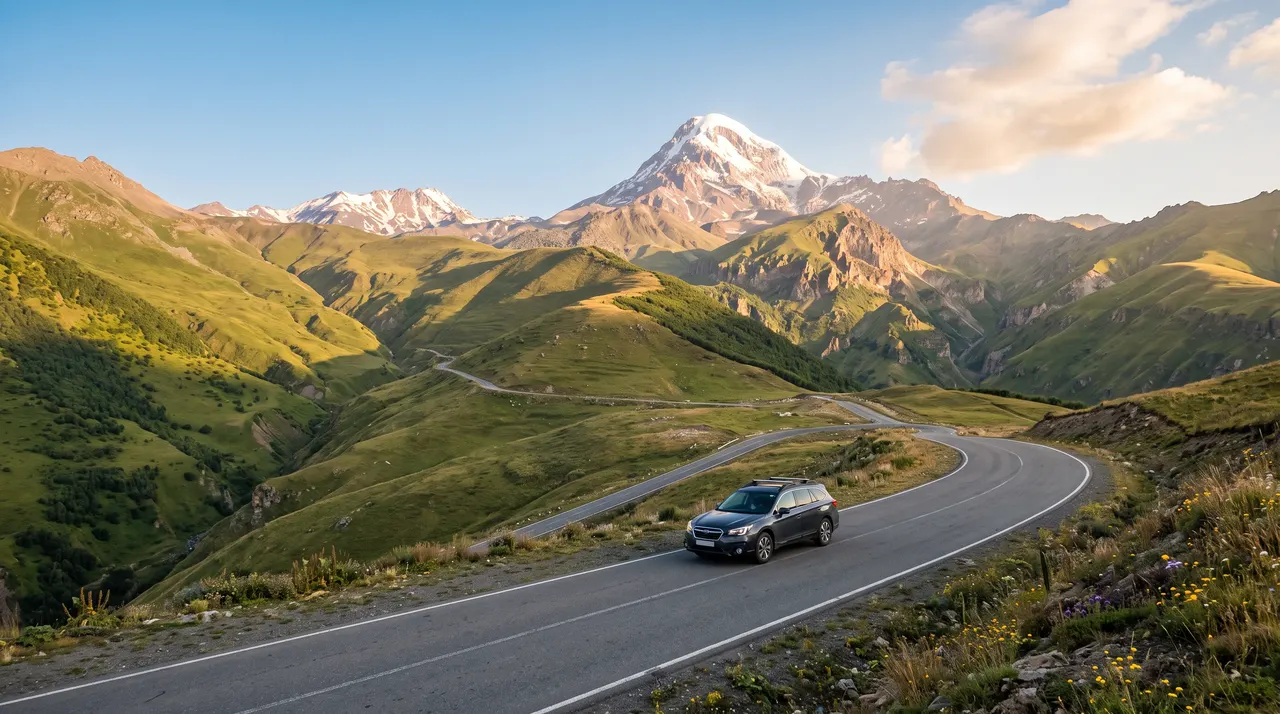
The Georgian Military Highway from Tbilisi through Gudauri and the Jvari Pass to Stepantsminda (Kazbegi) is the country's classic mountain drive beneath Mount Kazbek. For most visitors the real draw is the freedom to reach places trains and tours don't, on your own schedule, with the open road generally capped around 110 km/h motorways. Getting behind the wheel is the easy part: your International Driving Permit is a certified translation of your UAE licence, carried alongside it, so rental staff and officials in Georgia can read your credentials at a glance.
What applies to UAE licence holders in Georgia
| UAE licence in Georgia | |
|---|---|
| Do you need an IDP? | Yes — carry one alongside your licence |
| IDP format required | 1968 Vienna |
| Your UAE licence script | Roman (Latin) alphabet |
| United Arab Emirates is party to | 1968 Vienna |
| Drives on the | Right-hand side |
| Minimum driving age | 18 |
| Emergency number | 112 |
| Top speed limit | 110 km/h motorways |
| Currency | GEL |
Driving rules in Georgia you should know
- Drive on the right.
- Headlights on at all times.
- 0.03% alcohol limit.
- Assertive driving on mountain roads.
Local driving facts in Georgia
Emergency number: 112 (112 also connects from most mobiles). Typical maximum for cars on the fastest road class: 110 km/h motorways. Posted limits always take precedence.
Tolls & road charges in Georgia
Georgia has no toll roads, vignettes or road taxes on any main tourist route, so foreign-registered and rental cars drive the national highways toll-free. Budget only for fuel and parking.
Parking in Georgia
Tbilisi, Batumi, Kutaisi and Gori run paid zones requiring payment via municipal app (Tbilisi Parking), website or pay-box, with a 50 GEL fine for unpaid parking; passes range from a 20 GEL daily up to 800 GEL annual. Read signs carefully, as cars in prohibited spots are towed.
Penalties & enforcement in Georgia
Speed cameras are widespread and fines are issued by plate (e.g. roughly 50 GEL for moderate speeding, up to 200 GEL for over 50 km/h above the limit), plus fines for phone use and no seatbelt; rental firms forward camera fines to the renter. Most fines are paid online or at banks, not cash on the spot.
If you have an accident in Georgia
Dial 112 for police and ambulance; do not move the vehicles and wait for the patrol police to attend and produce a report, which the rental company and insurer will require. A police report is effectively mandatory for any claim.
City driving in Georgia
Tbilisi traffic is fast and assertive, with drivers ignoring lane markings and frequent abrupt lane changes; the central paid-parking zones and narrow Old Town streets are the main hazards for first-time visitors.
Winter driving in Georgia
Winter tyres are required on mountain roads from December 1 to March 1, and snow chains should be carried for high passes such as Gudauri and the Jvari Pass, where snow can fall from late October. Standard tyres suffice for lowland city driving in summer.
Fuel in Georgia
Stations sell petrol grades (Regular, Premium/95, Super/98) and diesel; most are attended and accept major cards, though rural stations can be sparse. As of mid-2026 premium 95 petrol is around 3.8 GEL per litre and diesel around 4.2 GEL per litre; keep the tank above half in the mountains.
Sources: wander-lush.org, og.ge, og.ge, globalpetrolprices.com