 Germany licence
  Guinea
Can you drive in Guinea with a Germany license?
Short answer: to drive in Guinea with a Germany license you need an International Driving Permit in the 1949 Geneva format, carried together with your Germany license.
Yes — to drive in Guinea on a Germany licence you should carry an International Driving Permit together with your Germany licence. Guinea expects foreign drivers to hold an IDP.
German drivers should carry an International Driving Permit (Internationaler Führerschein) with their licence outside the EU and EEA. Your International Driving Permit is a certified multilingual translation of your existing licence, prepared in the 1949 Geneva format and carried alongside your national licence.


What driving in Guinea is like
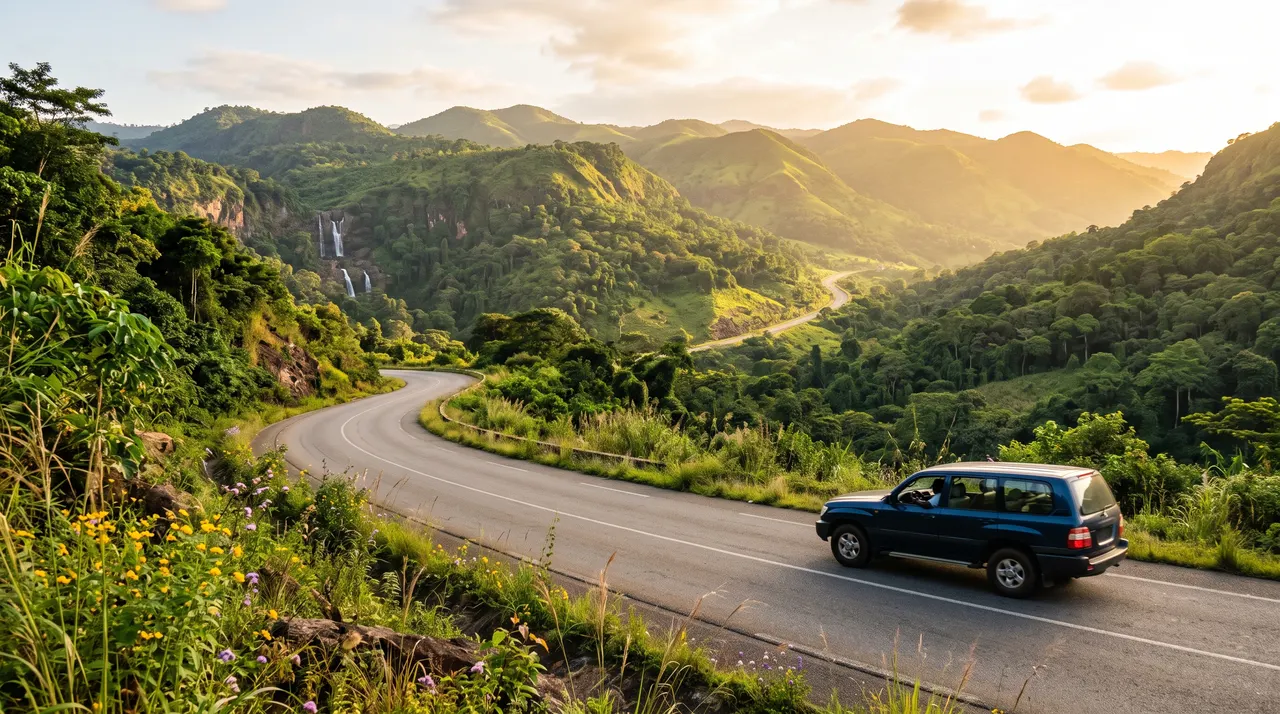
The drive from Conakry up through Kindia into the Fouta Djallon highlands, with its rolling hills and waterfalls, is the road trip visitors most search for. For most visitors the real draw is the freedom to reach places trains and tours don't, on your own schedule, with the open road generally capped around 100 km/h highways. Getting behind the wheel is the easy part: your International Driving Permit is a certified translation of your Germany licence, carried alongside it, so rental staff and officials in Guinea can read your credentials at a glance.
What applies to Germany licence holders in Guinea
| Germany licence in Guinea | |
|---|---|
| Do you need an IDP? | Yes — carry one alongside your licence |
| IDP format required | 1949 Geneva |
| Your Germany licence script | Roman (Latin) alphabet |
| Germany is party to | 1949 Geneva and 1968 Vienna |
| Drives on the | Right-hand side |
| Minimum driving age | 18 |
| Emergency number | 117 (police) |
| Top speed limit | 100 km/h highways |
| Currency | GNF |
Driving rules in Guinea you should know
- Drive on the right.
- Poor roads outside the capital.
- 0.05% alcohol limit.
- Carry passport, IDP and home licence.
Local driving facts in Guinea
Emergency number: 117 (police) (112 also connects from most mobiles). Typical maximum for cars on the fastest road class: 100 km/h highways. Posted limits always take precedence.
Tolls & road charges in Guinea
Guinea has no established toll-road or vignette system for tourists; main routes out of Conakry are used without tolls, though some bridges and barriers may attract informal charges.
Parking in Guinea
Parking in Conakry is informal and on-street, typically watched by attendants expecting a small Guinean-franc tip; there are no colour-coded paid zones, and the city's congested, potholed streets mean obstruction near markets risks your car being blocked in.
Penalties & enforcement in Guinea
Foreign drivers are frequently targeted at document checkpoints; expect on-the-spot cash fines for speeding, seatbelt or phone offences and requests for informal payments, with rental firms recovering any unpaid penalties from your deposit.
If you have an accident in Guinea
Drive on the right; call the police on 117 (or gendarmerie 118/122), do not move vehicles after an injury crash and wait for police to file a report needed for any claim; beware of people posing as officials soliciting informal payments.
City driving in Guinea
Conakry sits on a long narrow peninsula, so nearly all traffic funnels onto the single Route Le Prince / Autoroute corridor, producing severe daily gridlock, and military or police roadblocks are common in the city between 10pm and 6am.
Winter driving in Guinea
No winter-tyre rules - tropical climate; the heavy May-October rains badly degrade the partly paved network, and driving after dark is inadvisable due to unlit hazards.
Fuel in Guinea
Fuel is sold in Guinean francs as essence (petrol) and gasoil (diesel) at attended stations; supply can be tight and prices high and volatile (roughly 10,000+ GNF per litre), so fill up in Conakry, carry cash and keep a reserve as rural stations are sparse.
Sources: internationaldrivingauthority.com, tyremap.com, driverabroad.com, internationaldriversassociation.com