 Germany licence
  Hong Kong
Can you drive in Hong Kong with a Germany license?
Short answer: to drive in Hong Kong with a Germany license you need an International Driving Permit in the 1968 Vienna format, carried together with your Germany license.
Yes — to drive in Hong Kong on a Germany licence you should carry an International Driving Permit together with your Germany licence. Hong Kong expects foreign drivers to hold an IDP.
German drivers should carry an International Driving Permit (Internationaler Führerschein) with their licence outside the EU and EEA. Your International Driving Permit is a certified multilingual translation of your existing licence, prepared in the 1968 Vienna format and carried alongside your national licence.


What driving in Hong Kong is like
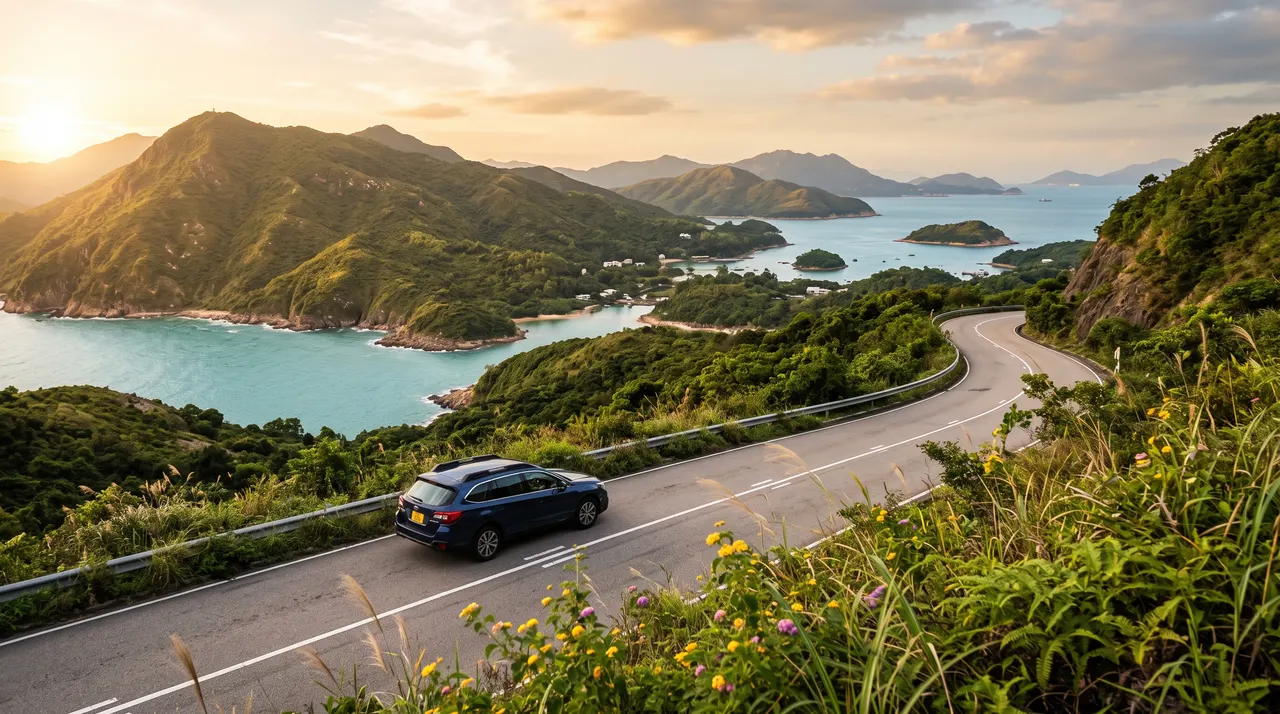
The drive out to Sai Kung and along Clear Water Bay Road offers Hong Kong's most scenic coastal and country-park views away from the city towers. For most visitors the real draw is the freedom to reach places trains and tours don't, on your own schedule, with the open road generally capped around 110 km/h on the North Lantau Highway. Getting behind the wheel is the easy part: your International Driving Permit is a certified translation of your Germany licence, carried alongside it, so rental staff and officials in Hong Kong can read your credentials at a glance.
What applies to Germany licence holders in Hong Kong
| Germany licence in Hong Kong | |
|---|---|
| Do you need an IDP? | Yes — carry one alongside your licence |
| IDP format required | 1968 Vienna |
| Your Germany licence script | Roman (Latin) alphabet |
| Germany is party to | 1949 Geneva and 1968 Vienna |
| Drives on the | Left-hand side |
| Minimum driving age | 18 |
| Emergency number | 999 |
| Top speed limit | 110 km/h on the North Lantau Highway |
| Currency | HKD |
Driving rules in Hong Kong you should know
- Drive on the left.
- Seatbelts mandatory front and rear.
- 0.05% alcohol limit.
- Tunnels and bridges carry tolls.
Local driving facts in Hong Kong
Emergency number: 999 (112 also connects from most mobiles). Typical maximum for cars on the fastest road class: 110 km/h on the North Lantau Highway. Posted limits always take precedence.
Tolls & road charges in Hong Kong
Hong Kong has numerous toll tunnels and roads (fees roughly HK$0-HK$75 depending on tunnel and vehicle) now moving to the cashless HKeToll system, where a vehicle tag is read automatically and billed. Rental cars are tag-equipped and tolls are charged back to the renter.
Parking in Hong Kong
On-street metered bays (30 minutes to 2 hours) are paid by Octopus card or the app, and commercial car parks dominate, with busy-area hourly rates above HK$50. Illegal parking draws a fixed penalty (raised to HK$400 from 2026), wheel-clamping or towing.
Penalties & enforcement in Hong Kong
Fixed-penalty speeding fines run HK$320 (up to 15 km/h over) to HK$1,000 (over 45 km/h over), with demerit points and possible disqualification; phone use and no seatbelt are also penalised. Rental firms forward camera/fixed-penalty notices to the renter plus an admin fee.
If you have an accident in Hong Kong
Dial 999 for emergencies; you must stop, exchange details, and report any accident to police within 24 hours (immediately if there is injury). A police report is needed for the rental company and any insurance claim.
City driving in Hong Kong
Hong Kong drives on the left, and dense areas like Central and Causeway Bay have heavy congestion, scarce parking and a maze of tunnels and flyovers; renting a car is rare and costly, and the MTR is usually faster.
Winter driving in Hong Kong
No winter-tyre rules - subtropical climate with no snow or ice on the roads.
Fuel in Hong Kong
Stations sell unleaded petrol (95 and 98 octane) and diesel, are attended (full-service is common) and accept major cards and Octopus. Fuel is among the world's most expensive at roughly HK$24-27 per litre.
Sources: scmp.com, clic.org.hk, expatinfodesk.com, en.wikivoyage.org