 Ireland licence
  Iceland
Can you drive in Iceland with an Ireland license?
Short answer: you can drive in Iceland with an Ireland license; an International Driving Permit is recommended and is carried alongside your Ireland license.
An International Driving Permit is recommended (not strictly required) for Ireland licence holders driving in Iceland. Your Ireland licence is in the Roman alphabet, but an IDP removes any doubt at rental desks and roadside checks. Carry both.
Irish drivers should carry an International Driving Permit with their licence when driving outside the EU and EEA. Your International Driving Permit is a certified multilingual translation of your existing licence, prepared in the 1949 Geneva & 1968 Vienna format and carried alongside your national licence.


What driving in Iceland is like
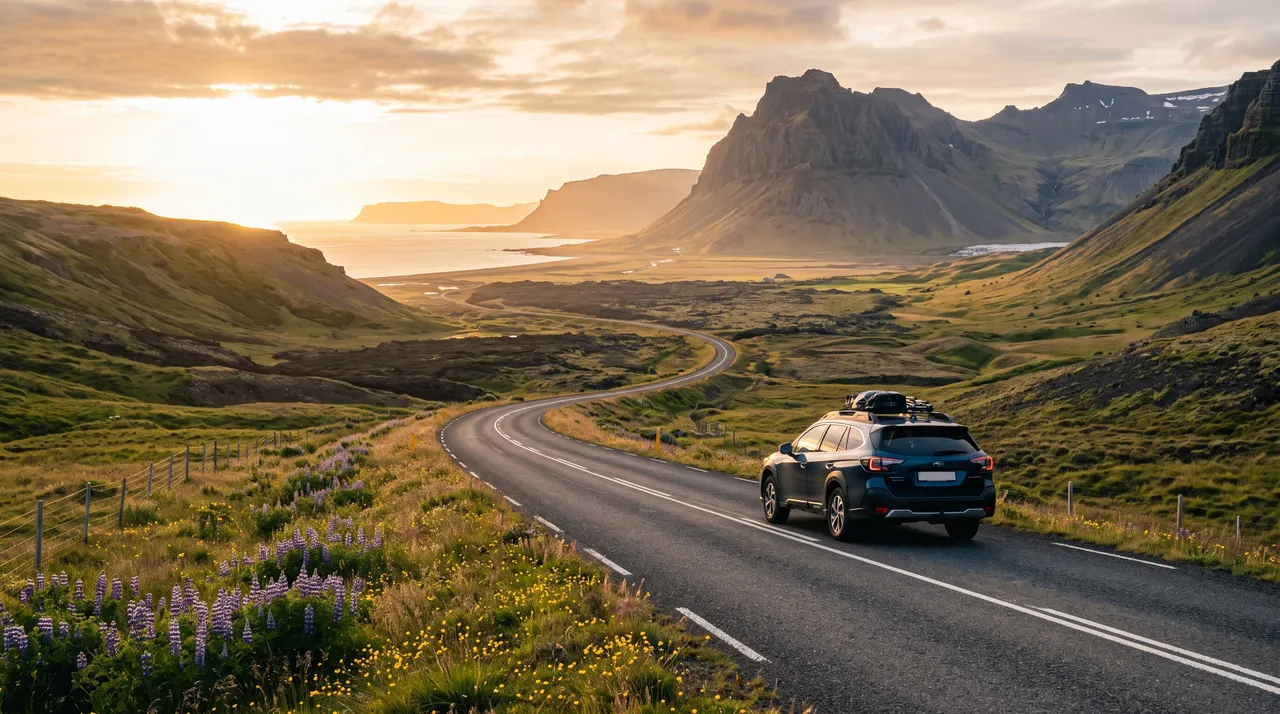
The Golden Circle (Thingvellir, Geysir, Gullfoss) and the full Ring Road (Route 1) around the island are the iconic Icelandic drives; highland F-roads require a 4x4 and open only in summer. For most visitors the real draw is the freedom to reach places trains and tours don't, on your own schedule, with the open road generally capped around 90 km/h paved rural roads. Getting behind the wheel is the easy part: your International Driving Permit is a certified translation of your Ireland licence, carried alongside it, so rental staff and officials in Iceland can read your credentials at a glance.
What applies to Ireland licence holders in Iceland
| Ireland licence in Iceland | |
|---|---|
| Do you need an IDP? | Recommended, not legally mandatory |
| IDP format required | 1949 Geneva or 1968 Vienna |
| Your Ireland licence script | Roman (Latin) alphabet |
| Ireland is party to | 1949 Geneva and 1968 Vienna |
| Drives on the | Right-hand side |
| Minimum driving age | 17 |
| Emergency number | 112 |
| Top speed limit | 90 km/h paved rural roads |
| Currency | ISK |
Driving rules in Iceland you should know
- Headlights on 24/7 by law.
- Off-road driving is illegal and heavily fined.
- 0.05% alcohol limit.
- Gravel and single-lane bridges common on Route 1.
Local driving facts in Iceland
Emergency number: 112 (112 also connects from most mobiles). Typical maximum for cars on the fastest road class: 90 km/h paved rural roads. Posted limits always take precedence.
Tolls & road charges in Iceland
The only toll is the Vadlaheidi tunnel near Akureyri (the older Hvalfjordur tunnel is now free); pay online within hours of passing via tunnel.is or the app. A nationwide distance-based road usage charge began phasing in from 2026.
Parking in Iceland
Reykjavik uses paid zones P1 to P4 (P1 the central, priciest zone), payable by meter or the Parka/EasyPark app; the compact centre relies on strictly enforced paid street parking rather than congestion charging, and overstays are ticketed promptly.
Penalties & enforcement in Iceland
Speeding cameras are widespread and fines are steep, starting around ISK 15,000 and rising fast; handheld phone use, no seatbelt and any off-road/off-track driving carry large fines. Police can fine on the spot and rental firms pass on camera and damage charges automatically from the card on file.
If you have an accident in Iceland
Call the single emergency number 112 for police, ambulance and fire; report injuries or significant damage. Do not move vehicles if anyone is hurt, photograph the scene, and complete the accident form provided with the rental, as the rental contract dictates damage reporting (gravel, sand and door-wind damage are common Icelandic claims).
City driving in Iceland
Reykjavik's tight one-way central streets and zoned paid parking (P1 to P4) trip up visitors; there is no congestion charge but enforcement of the central P1 zone is aggressive and many roads beyond the city quickly turn to gravel.
Winter driving in Iceland
Winter tyres are effectively required Nov 1 to Apr 14 (minimum 3 mm tread), and studded tyres are only permitted in that window, with fines around ISK 20,000 per wheel for using studs outside it. Rentals are fitted accordingly in winter.
Fuel in Iceland
Stations sell 95 octane petrol and Diesel and are overwhelmingly self-service, requiring a chip-and-PIN card with a PIN (many fully unattended); rural stations can be 80 to 100 km apart so keep the tank above half. Fuel is expensive, often around ISK 300+ per litre.
Sources: thrifty.is, camperrentaliceland.com, hertz.is, guidetoiceland.is