 Japan licence
  India
IndiaCan you drive in India with a Japan license?
Short answer: to drive in India with a Japan license you need an International Driving Permit in the 1949 Geneva format, carried together with your Japan license.
Yes — to drive in India on a Japan licence you should carry an International Driving Permit together with your Japan licence. India expects foreign drivers to hold an IDP.
Japanese drivers should carry an International Driving Permit (1949 Convention) with their licence when driving abroad. Your International Driving Permit is a certified multilingual translation of your existing licence, prepared in the 1949 Geneva format and carried alongside your national licence.


What driving in India is like
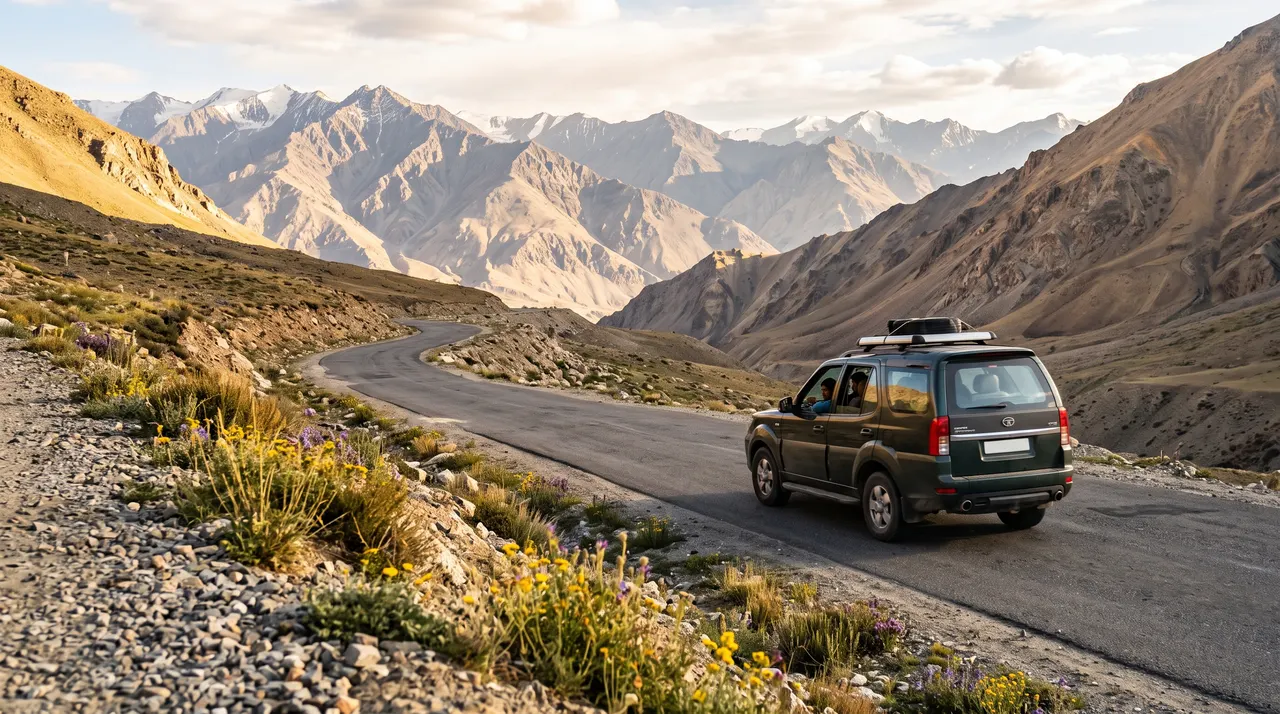
The Manali-Leh Highway (NH3, ~430 km over 5,000 m passes like Tanglang La) is India's most iconic high-altitude road trip. For most visitors the real draw is the freedom to reach places trains and tours don't, on your own schedule, with the open road generally capped around up to 120 km/h expressways (varies by state). Getting behind the wheel is the easy part: your International Driving Permit is a certified translation of your Japan licence, carried alongside it, so rental staff and officials in India can read your credentials at a glance.
What applies to Japan licence holders in India
| Japan licence in India | |
|---|---|
| Do you need an IDP? | Yes — carry one alongside your licence |
| IDP format required | 1949 Geneva |
| Your Japan licence script | Not in the Roman alphabet — an IDP translation is expected |
| Japan is party to | 1949 Geneva |
| Drives on the | Left-hand side |
| Minimum driving age | 18 |
| Emergency number | 112 |
| Top speed limit | Up to 120 km/h expressways (varies by state) |
| Currency | INR |
Driving rules in India you should know
- Drive on the left amid dense, unpredictable traffic.
- Horn use is routine.
- 0.03% alcohol limit.
- Inter-state toll plazas common.
Local driving facts in India
Emergency number: 112 (112 also connects from most mobiles). Typical maximum for cars on the fastest road class: Up to 120 km/h expressways (varies by state). Posted limits always take precedence.
Tolls & road charges in India
National highways run on the FASTag electronic toll system; most rental vehicles already carry a windscreen FASTag linked to a prepaid wallet, and lanes are FASTag-only so cash is largely phased out. Confirm at pickup whether tolls are prepaid in the rental or billed to you; typical highway tolls run tens to a few hundred rupees per plaza.
Parking in India
Use authorised paid lots and attended parking; unauthorised or 'no-parking' kerbside parking risks clamping, towing and fines in metros like Delhi and Mumbai. Many malls, stations and markets have ticketed multi-level or attended lots charging roughly 20-50 INR per hour.
Penalties & enforcement in India
Under the amended Motor Vehicles Act, speeding is fined ~1,000-2,000 INR, no-seatbelt and phone use ~1,000-5,000 INR, and drink-driving (limit 0.03% BAC) brings heavy fines or jail; traffic police can issue on-the-spot e-challans or cash fines. Camera challans and tolls are passed to the renter with a fee.
If you have an accident in India
Call the all-in-one emergency number 112 (or 100 police / 108 ambulance); for any injury, third-party claim or significant damage you must report to police and an FIR may be filed. Do not move an injured person improperly, but be aware crowds can gather - prioritise reaching a police station/hospital safely.
City driving in India
Delhi periodically runs an 'odd-even' number-plate rationing scheme during high-pollution spells, bans many trucks/commercial vehicles from entering by day, and now files FIRs for wrong-side driving; lane discipline is loose and constant horn use is normal.
Winter driving in India
No winter-tyre rules - tropical/no national winter rules; however high Himalayan passes (e.g. Manali-Leh) close in winter and require snow chains and 4x4 when seasonally open.
Fuel in India
Stations are attendant-served (self-service is rare) selling 'Petrol' (and premium variants) and 'Diesel'; cards and UPI are accepted at most outlets, though carry cash for rural pumps. Petrol commonly runs around 95-110 INR per litre depending on state taxes.
Sources: revv.co.in, tripcabinet.com, discoverindiabycar.com, epic.uchicago.edu