 China licence
  Lesotho
Can you drive in Lesotho with a China license?
Short answer: to drive in Lesotho with a China license you need an International Driving Permit in the 1949 Geneva format, carried together with your China license.
Yes — to drive in Lesotho on a China licence you should carry an International Driving Permit together with your China licence. Lesotho expects foreign drivers to hold an IDP.
Mainland China is not party to the IDP conventions, so Chinese drivers typically obtain a temporary local licence in the destination country. Your International Driving Permit is a certified multilingual translation of your existing licence, prepared in the 1949 Geneva format and carried alongside your national licence.


What driving in Lesotho is like
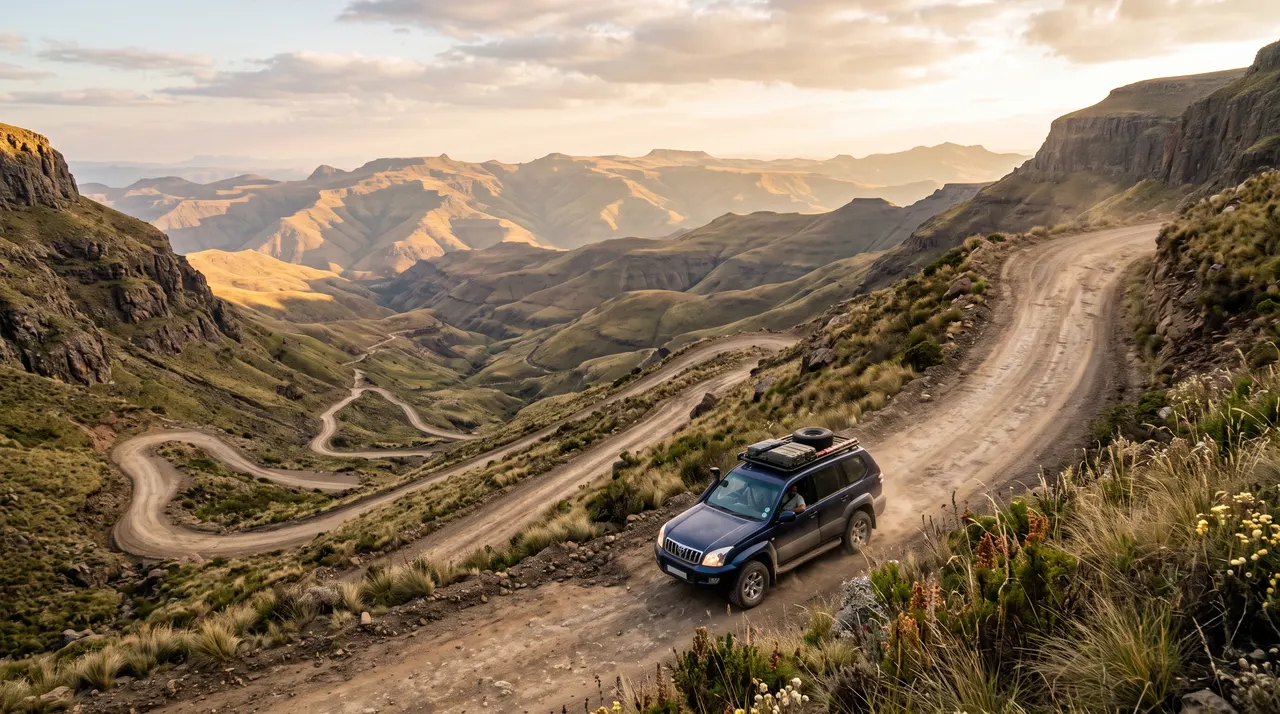
The legendary Sani Pass 4x4 ascent from South Africa, climbing over 1,300 m of hairpins to the highlands, is Lesotho's iconic drive. For most visitors the real draw is the freedom to reach places trains and tours don't, on your own schedule, with the open road generally capped around 100 km/h main roads. Getting behind the wheel is the easy part: your International Driving Permit is a certified translation of your China licence, carried alongside it, so rental staff and officials in Lesotho can read your credentials at a glance.
What applies to China licence holders in Lesotho
| China licence in Lesotho | |
|---|---|
| Do you need an IDP? | Yes — carry one alongside your licence |
| IDP format required | 1949 Geneva |
| Your China licence script | Not in the Roman alphabet — an IDP translation is expected |
| China is party to | Neither IDP convention |
| Drives on the | Left-hand side |
| Minimum driving age | 18 |
| Emergency number | 112 or 123 (police) |
| Top speed limit | 100 km/h main roads |
| Currency | LSL |
Driving rules in Lesotho you should know
- Drive on the left.
- Snow and ice on high passes in winter.
- 0.05% alcohol limit.
- Watch for livestock and pedestrians.
Local driving facts in Lesotho
Emergency number: 112 or 123 (police) (112 also connects from most mobiles). Typical maximum for cars on the fastest road class: 100 km/h main roads. Posted limits always take precedence.
Tolls & road charges in Lesotho
Lesotho has no motorway toll or vignette system; there is no charge to use the road network itself, though you pay standard border-post and road-fund fees when bringing a South African rental in via gates such as Maseru Bridge.
Parking in Lesotho
Maseru uses attendant-managed and some metered street parking where marshals collect a small maloti fee; park in designated bays as illegal parking can be ticketed, and secure off-street parking is advised overnight.
Penalties & enforcement in Lesotho
Speed limits are 50 km/h urban, 80 km/h open road and up to 120 km/h on the few highways; speeding, phone and seatbelt offences bring fines (often payable to police), with steeper penalties for serious breaches.
If you have an accident in Lesotho
Dial 123 or 124 for police (LMPS) and 121 for ambulance; do not move vehicles after an injury crash, report it to the Lesotho Mounted Police Service and get a police report for insurance.
City driving in Lesotho
Maseru drives on the left; watch the busy Maseru Bridge border approach and Kingsway roundabouts where minibus taxis stop abruptly, and stray livestock and pedestrians wander onto roads even within the capital.
Winter driving in Lesotho
No mandatory winter-tyre law, but high mountain passes (e.g. around Sani Pass and the highlands) get snow and ice June-August; a 4x4 with good tyres, and occasionally chains, is strongly advised in winter.
Fuel in Lesotho
Petrol and diesel are sold in maloti (pegged to the SA rand) by attendants; as of 2026 roughly 25-26 LSL/litre petrol and ~35 LSL/litre diesel. Stations are scarce in the highlands, so fill up in Maseru or Mokhotlong before remote drives.
Sources: internationaldrivingauthority.com, globalpetrolprices.com, anywhereweroam.com, lmps.org.ls