 NZ licence
  Libya
LibyaCan you drive in Libya with an NZ license?
Short answer: to drive in Libya with an NZ license you need an International Driving Permit in the 1949 Geneva format, carried together with your NZ license.
Yes — to drive in Libya on an NZ licence you should carry an International Driving Permit together with your NZ licence. Libya expects foreign drivers to hold an IDP.
New Zealand drivers should carry an International Driving Permit alongside their licence when driving abroad. Your International Driving Permit is a certified multilingual translation of your existing licence, prepared in the 1949 Geneva format and carried alongside your national licence.


What driving in Libya is like
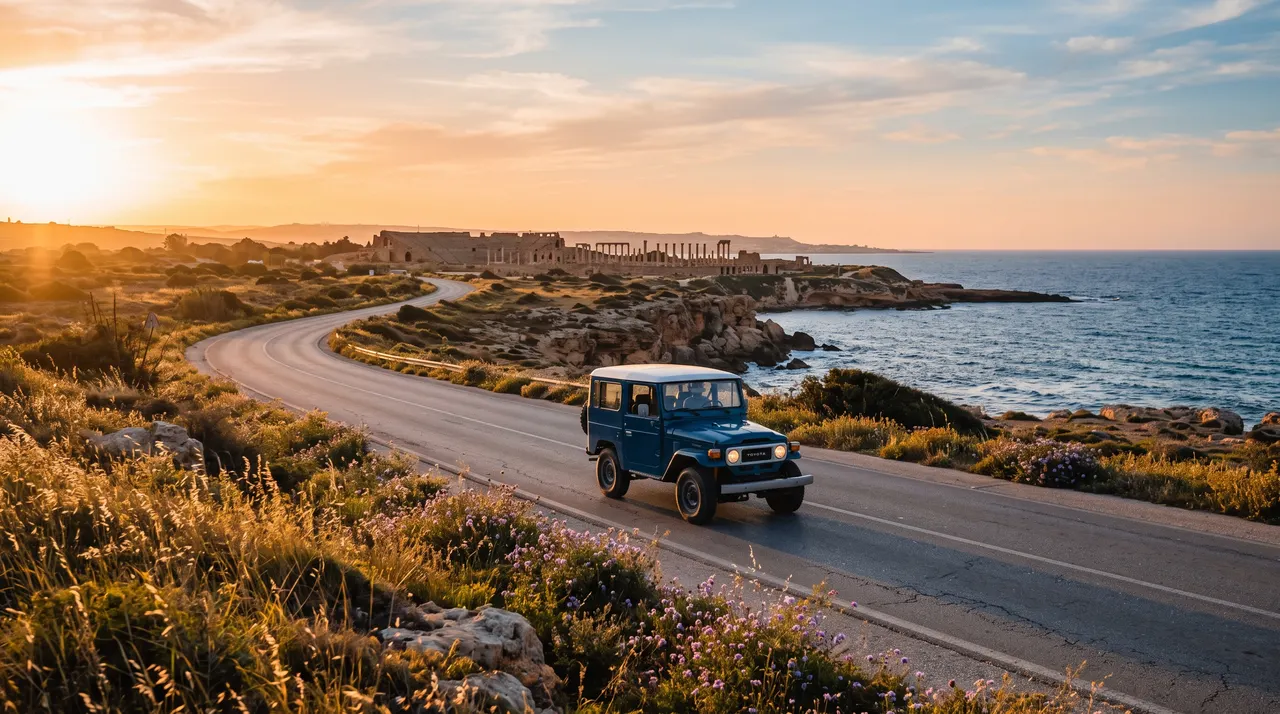
The coastal road from Tripoli west to the Roman ruins of Leptis Magna and Sabratha is the classic Libyan drive (security permitting). For most visitors the real draw is the freedom to reach places trains and tours don't, on your own schedule, with the open road generally capped around 100 km/h coastal highway. Getting behind the wheel is the easy part: your International Driving Permit is a certified translation of your NZ licence, carried alongside it, so rental staff and officials in Libya can read your credentials at a glance.
What applies to NZ licence holders in Libya
| NZ licence in Libya | |
|---|---|
| Do you need an IDP? | Yes — carry one alongside your licence |
| IDP format required | 1949 Geneva |
| Your NZ licence script | Roman (Latin) alphabet |
| New Zealand is party to | 1949 Geneva |
| Drives on the | Right-hand side |
| Minimum driving age | 18 |
| Emergency number | 1515 (police) |
| Top speed limit | 100 km/h coastal highway |
| Currency | LYD |
Driving rules in Libya you should know
- Drive on the right.
- Frequent checkpoints.
- Alcohol is prohibited — zero tolerance.
- Carry passport, IDP and home licence.
Local driving facts in Libya
Emergency number: 1515 (police) (112 also connects from most mobiles). Typical maximum for cars on the fastest road class: 100 km/h coastal highway. Posted limits always take precedence.
Tolls & road charges in Libya
Libya has no national toll-road or vignette system; motorways and main highways are toll-free. Fuel is heavily state-subsidised so running costs rather than tolls dominate.
Parking in Libya
Parking in Tripoli is largely informal and unregulated, with no organised paid-zone colour system; cars park on roadsides and lots, and you may be approached by informal attendants expecting a small cash tip. Avoid leaving vehicles in insecure areas.
Penalties & enforcement in Libya
Traffic-law enforcement is weak and inconsistent; speeding (the cause of roughly 70% of accidents in Tripoli studies) and phone use are rarely fined formally, but any on-the-spot payment requested at a checkpoint is typically cash. Rental firms pass on any documented fines to the renter.
If you have an accident in Libya
After a crash do not move the vehicles and call the police, who must attend to produce the official report needed for any insurance or rental claim; emergency response is slow and unreliable. Photograph the scene and exchange details.
City driving in Libya
Tripoli traffic is chaotic with poor lane discipline, frequent improper overtaking and widespread phone use while driving; militia-manned and security checkpoints appear on city approaches and must be approached slowly.
Winter driving in Libya
No winter-tyre rules - desert/Mediterranean climate; the main road hazard is wind-blown sand that can cut visibility without warning.
Fuel in Libya
Petrol (benzine) and diesel are sold, both among the cheapest in the world due to state subsidy (often only a few US cents per litre). Stations are attended; payment is cash only and queues/shortages are common.
Sources: travel.state.gov, countryreports.org, internationaldriversassociation.com