 Singapore licence
  Lithuania
Can you drive in Lithuania with a Singapore license?
Short answer: to drive in Lithuania with a Singapore license you need an International Driving Permit in the 1949 Geneva or 1968 Vienna format, carried together with your Singapore license.
Yes — to drive in Lithuania on a Singapore licence you should carry an International Driving Permit together with your Singapore licence. Lithuania expects foreign drivers to hold an IDP.
Singapore drivers should carry an International Driving Permit alongside their licence when driving abroad. Your International Driving Permit is a certified multilingual translation of your existing licence, prepared in the 1949 Geneva & 1968 Vienna format and carried alongside your national licence.


What driving in Lithuania is like
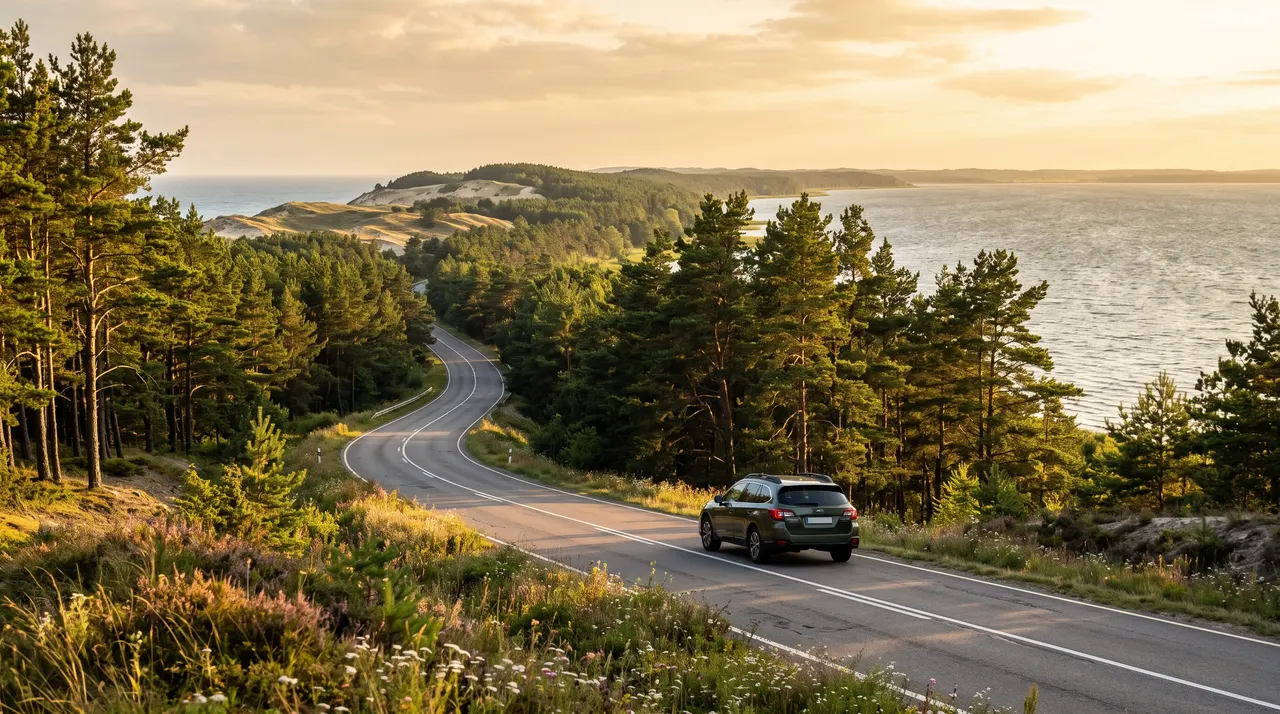
The drive onto the Curonian Spit (via the Klaipėda ferry) along pine-forested dunes between lagoon and Baltic Sea is Lithuania's most celebrated route. For most visitors the real draw is the freedom to reach places trains and tours don't, on your own schedule, with the open road generally capped around 130 km/h motorways in summer. Getting behind the wheel is the easy part: your International Driving Permit is a certified translation of your Singapore licence, carried alongside it, so rental staff and officials in Lithuania can read your credentials at a glance.
What applies to Singapore licence holders in Lithuania
| Singapore licence in Lithuania | |
|---|---|
| Do you need an IDP? | Yes — carry one alongside your licence |
| IDP format required | 1949 Geneva or 1968 Vienna |
| Your Singapore licence script | Roman (Latin) alphabet |
| Singapore is party to | 1949 Geneva |
| Drives on the | Right-hand side |
| Minimum driving age | 18 |
| Emergency number | 112 |
| Top speed limit | 130 km/h motorways in summer |
| Currency | EUR |
Driving rules in Lithuania you should know
- Headlights on day and night.
- Winter tyres mandatory Nov–Mar.
- 0.04% alcohol limit; zero for novice/professional drivers.
- Reflective vest and triangle required.
Local driving facts in Lithuania
Emergency number: 112 (112 also connects from most mobiles). Typical maximum for cars on the fastest road class: 130 km/h motorways in summer. Posted limits always take precedence.
Tolls & road charges in Lithuania
There is no toll or vignette for passenger cars - only trucks and buses need the e-vignette tied to the plate; driving a rental car costs nothing on the road network, though the truck e-vignette rose roughly 5-8% from 1 January 2026.
Parking in Lithuania
Vilnius Old Town sits in paid zones payable via meters or apps (e.g. m.Parking); never park on tram lines, within 15m of a bus stop or 5m of a junction, and use guarded car parks as break-ins occur.
Penalties & enforcement in Lithuania
Police can issue on-the-spot fines: speeding 20 km/h over starts around EUR 30 rising to EUR 450+ for 50 km/h over, and driving without a required (truck) vignette risks up to EUR 300. Camera fines for rentals are billed to the renter with a handling fee.
If you have an accident in Lithuania
Call 112 for injuries; damage-only collisions need not involve police if both parties agree and complete the European Accident Statement, but you must notify the rental supplier and obtain an accident report, and leave vehicles in place where there is injury or dispute.
City driving in Lithuania
Much of Vilnius's UNESCO Old Town is narrow, one-way and partly pedestrianised with a low-speed regime; park on the perimeter rather than driving into the historic core.
Winter driving in Lithuania
Winter tyres are mandatory from 10 November to 1 April, marked M+S or 3PMSF; studded tyres are allowed from 1 November to 9 April.
Fuel in Lithuania
Petrol (95/98) and diesel are widely available at self-service stations with cards accepted, roughly EUR 1.55-1.70 per litre; EV charging and hydrogen remain scarce. Common chains are Circle K, Neste, Viada and Orlen.
Sources: rac.co.uk, europa.eu, tyremap.com, tollguru.com