 UAE licence
  Namibia
Can you drive in Namibia with a UAE license?
Short answer: you can drive in Namibia with a UAE license; an International Driving Permit is recommended and is carried alongside your UAE license.
An International Driving Permit is recommended (not strictly required) for UAE licence holders driving in Namibia. Your UAE licence is in the Roman alphabet, but an IDP removes any doubt at rental desks and roadside checks. Carry both.
UAE drivers should carry an International Driving Permit alongside their licence when driving abroad. Your International Driving Permit is a certified multilingual translation of your existing licence, prepared in the 1949 Geneva format and carried alongside your national licence.


What driving in Namibia is like
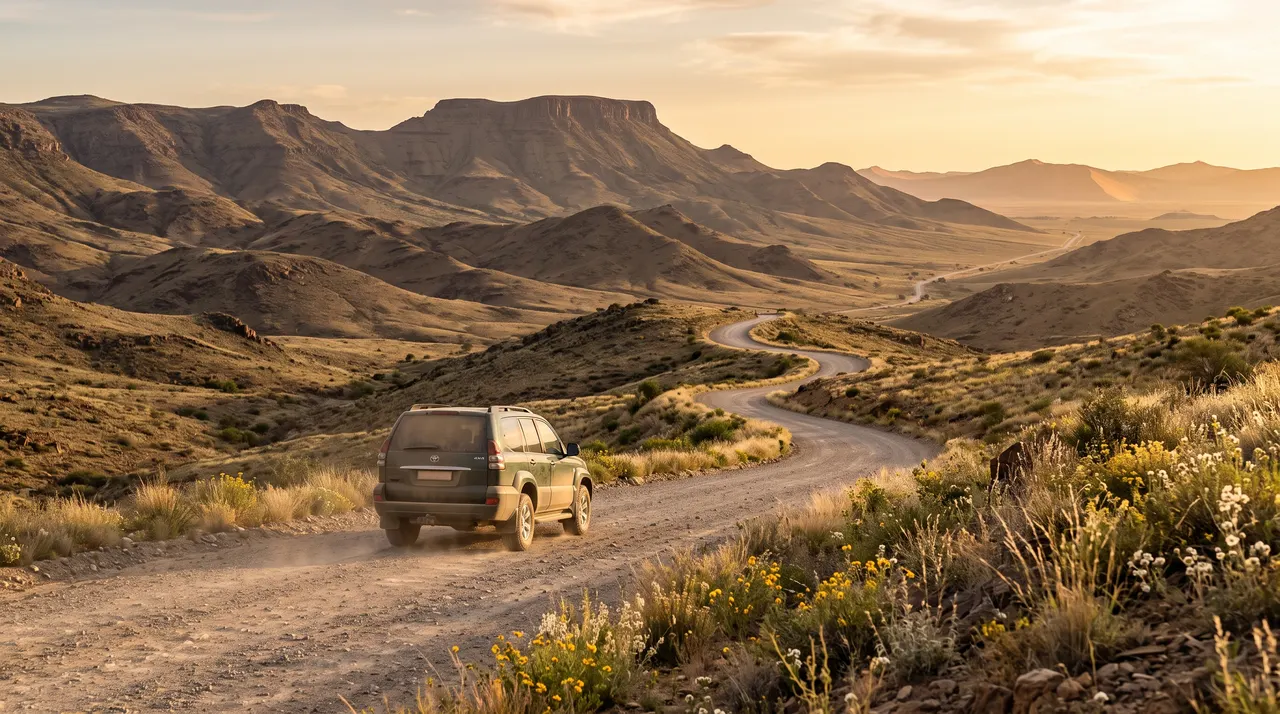
The C26/D1982 over the Gamsberg and Spreetshoogte passes toward Sossusvlei's red dunes is one of Africa's great gravel-road drives. For most visitors the real draw is the freedom to reach places trains and tours don't, on your own schedule, with the open road generally capped around 120 km/h tarred highways. Getting behind the wheel is the easy part: your International Driving Permit is a certified translation of your UAE licence, carried alongside it, so rental staff and officials in Namibia can read your credentials at a glance.
What applies to UAE licence holders in Namibia
| UAE licence in Namibia | |
|---|---|
| Do you need an IDP? | Recommended, not legally mandatory |
| IDP format required | 1949 Geneva |
| Your UAE licence script | Roman (Latin) alphabet |
| United Arab Emirates is party to | 1968 Vienna |
| Drives on the | Left-hand side |
| Minimum driving age | 18 |
| Emergency number | 10111 (police) |
| Top speed limit | 120 km/h tarred highways |
| Currency | NAD |
Driving rules in Namibia you should know
- Drive on the left.
- Gravel roads — reduce speed and watch tyres.
- 0.05% alcohol limit.
- Long distances between fuel stops.
Local driving facts in Namibia
Emergency number: 10111 (police) (112 also connects from most mobiles). Typical maximum for cars on the fastest road class: 120 km/h tarred highways. Posted limits always take precedence.
Tolls & road charges in Namibia
Namibia has effectively no toll roads - the national network, including the tarred B-roads, is free to use, so no vignette or e-tag is needed.
Parking in Namibia
In Windhoek and towns, kerb markings signal the rules: red-and-white means no parking, yellow-and-white indicates restricted/short-term parking; central bays are often metered or attended by marshals. Heed signs (English) to avoid being clamped or towed.
Penalties & enforcement in Namibia
Speeding (cameras and roadblocks), seatbelt and phone offences carry fixed fines; on gravel the limit is 100 km/h but 60-80 km/h is far safer. Rental firms charge the hirer for any fines plus tyre/underbody gravel damage, which basic insurance often excludes.
If you have an accident in Namibia
By law an accident must be reported at a police station or to a traffic officer within 24 hours; call the police on 10111. Do not move vehicles if there are injuries until police attend, photograph the scene, and notify your rental company.
City driving in Namibia
Windhoek is compact but its central one-way streets and metered/marshal-controlled bays catch tourists out; watch for sudden speed-limit drops to 60 km/h entering town and roving roadblocks on the B1 approaches.
Winter driving in Namibia
No winter-tyre rules. Standard tyres are fine year-round, but a 4x4 with good tyres is strongly advised for the extensive gravel network where punctures are common.
Fuel in Namibia
Stations are attended (no self-service) and a petrol attendant fills the tank; most take cards but rural stations can be cash-only, so refill at every town as distances between stations are long. Petrol and diesel are both widely sold.
Sources: travelbutlers.com, rhinocarhire.com, uncovernamibia.com, en.wikipedia.org