 France licence
  New Zealand
Can you drive in New Zealand with a France license?
Short answer: you can drive in New Zealand with a France license; an International Driving Permit is recommended and is carried alongside your France license.
An International Driving Permit is recommended (not strictly required) for France licence holders driving in New Zealand. Your France licence is in the Roman alphabet, but carrying one alongside it can help at rental desks and roadside checks. Carry both.
French drivers should carry an International Driving Permit with their licence when driving outside the EU and EEA. Your International Driving Permit is a certified multilingual translation of your existing licence, prepared in the 1949 Geneva Convention format that New Zealand recognises and carried alongside your national licence.


What driving in New Zealand is like
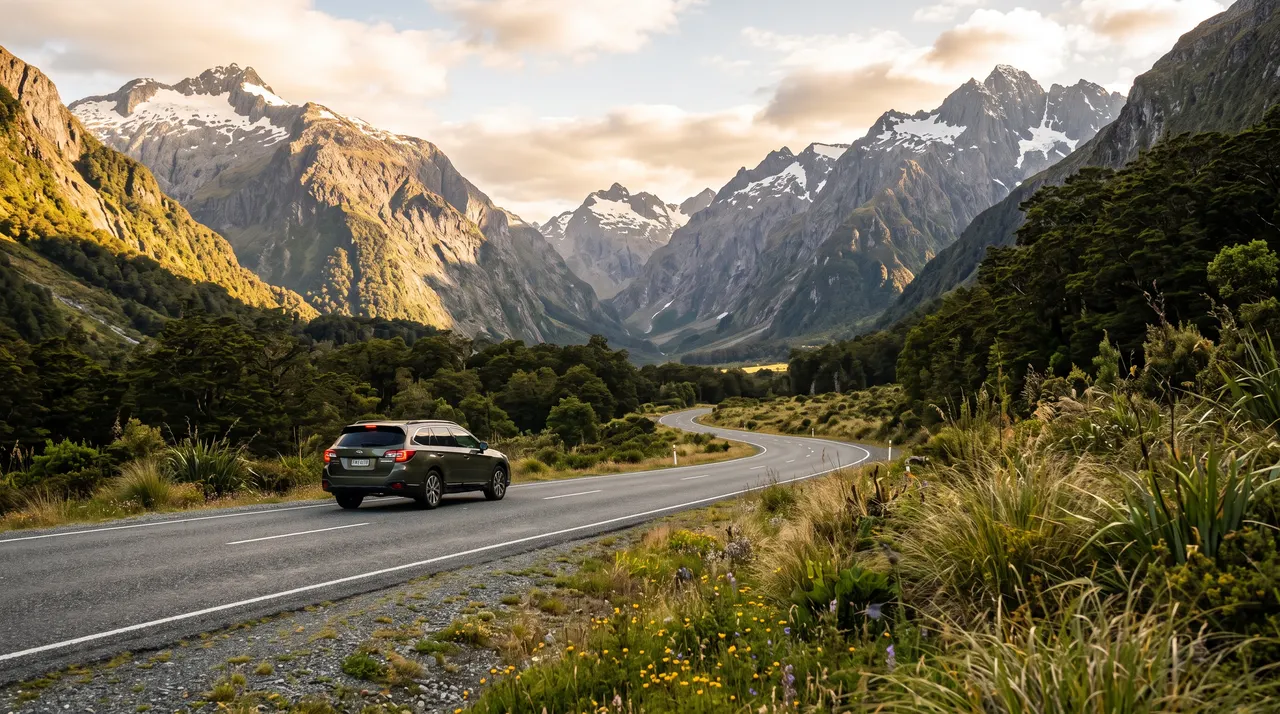
The Milford Road (SH94) from Te Anau to Milford Sound through Fiordland is among the world's great alpine drives. For most visitors the real draw is the freedom to reach places trains and tours don't, on your own schedule, with the open road generally capped around 100 km/h open roads (110 on some expressways). Getting behind the wheel is the easy part: your International Driving Permit is a certified translation of your France licence, carried alongside it, so rental staff and officials in New Zealand can read your credentials at a glance.
What applies to France licence holders in New Zealand
| France licence in New Zealand | |
|---|---|
| Do you need an IDP? | Recommended, not legally mandatory |
| IDP format required | 1949 Geneva |
| Your France licence script | Roman (Latin) alphabet |
| France is party to | 1949 Geneva and 1968 Vienna |
| Drives on the | Left-hand side |
| Minimum driving age | 16 |
| Emergency number | 111 |
| Top speed limit | 100 km/h open roads (110 on some expressways) |
| Currency | NZD |
Driving rules in New Zealand you should know
- Drive on the left.
- Give way rules at intersections are strict.
- Many rural roads are narrow and winding.
- 0.05% alcohol limit; zero under 20.
Local driving facts in New Zealand
Emergency number: 111 (112 also connects from most mobiles). Typical maximum for cars on the fastest road class: 100 km/h open roads (110 on some expressways). Posted limits always take precedence.
Tolls & road charges in New Zealand
Only three North Island roads are tolled (Northern Gateway near Auckland, Takitimu Drive and Tauranga Eastern Link); there are no booths - pay online at NZTA, via the rental company, or at some petrol stations within five days.
Parking in New Zealand
Urban parking is paid at kerbside kiosks or apps (coin or card), with time-limited and resident zones marked on signs; unpaid or overstayed parking earns infringement tickets.
Penalties & enforcement in New Zealand
Speeding and seatbelt offences draw fixed infringement fees, and handheld mobile-phone use is a NZD 150 fine plus demerits; fines are issued by camera or police and passed on by rental firms.
If you have an accident in New Zealand
Call 111 for injuries; you must stop and exchange details, and report to police within 60 hours (immediately if anyone is hurt) - driving on without authority can void your rental insurance.
City driving in New Zealand
Auckland has no congestion charge yet but its motorway network and the Northern Gateway toll just north of the city catch out visitors; the CBD's many one-way streets and Spaghetti Junction interchange are notoriously confusing.
Winter driving in New Zealand
Some South Island alpine roads (e.g. around Queenstown, the Crown Range, Milford) require snow chains to be carried and fitted in winter conditions; carry chains and check NZTA road reports before mountain passes.
Fuel in New Zealand
Fuel is self-service and sold by the litre, with petrol grades 91, 95 and 98 plus diesel; you must use at least the octane your car requires, and cards are accepted everywhere.
Sources: newzealand.com, nzta.govt.nz, police.govt.nz, aa.co.nz