 Ireland licence
  Niger
NigerCan you drive in Niger with an Ireland license?
Short answer: to drive in Niger with an Ireland license you need an International Driving Permit in the 1949 Geneva format, carried together with your Ireland license.
Yes — to drive in Niger on an Ireland licence you should carry an International Driving Permit together with your Ireland licence. Niger expects foreign drivers to hold an IDP.
Irish drivers should carry an International Driving Permit with their licence when driving outside the EU and EEA. Your International Driving Permit is a certified multilingual translation of your existing licence, prepared in the 1949 Geneva format and carried alongside your national licence.


What driving in Niger is like
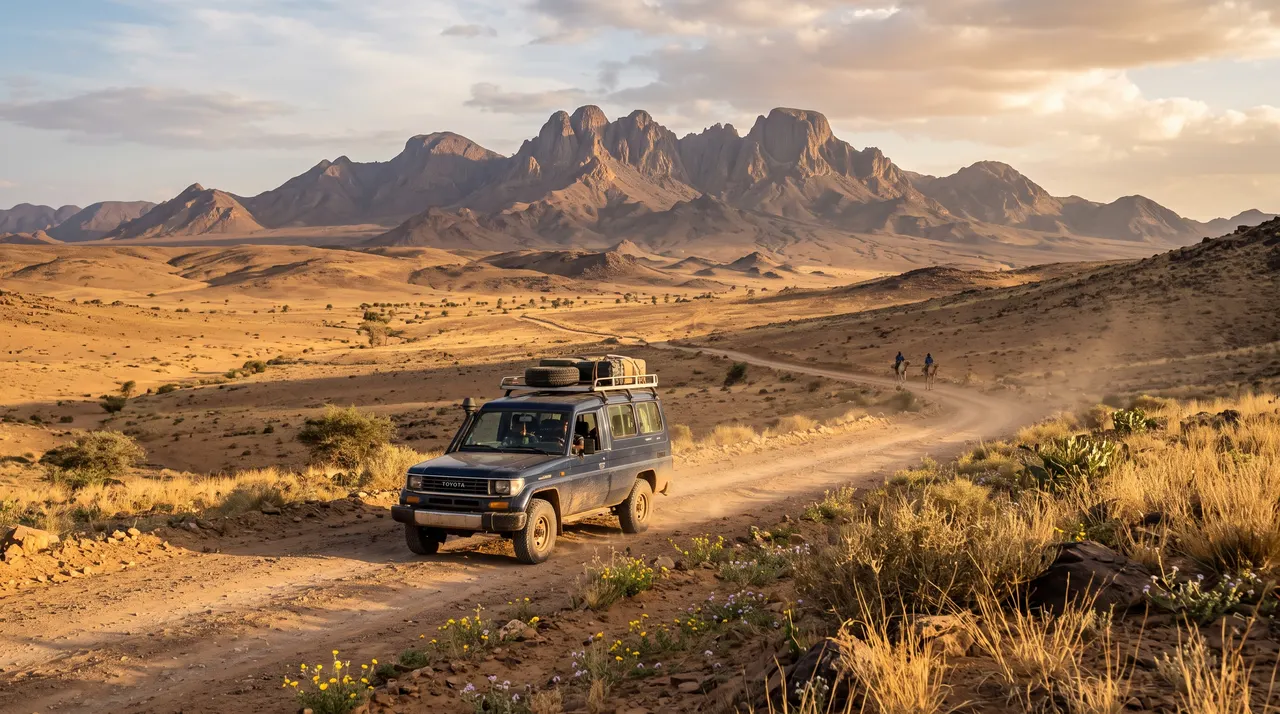
The RN25 route toward the Air Mountains and Agadez (security permitting) is the country's iconic Saharan drive into desert and Tuareg country. For most visitors the real draw is the freedom to reach places trains and tours don't, on your own schedule, with the open road generally capped around 90 km/h highways. Getting behind the wheel is the easy part: your International Driving Permit is a certified translation of your Ireland licence, carried alongside it, so rental staff and officials in Niger can read your credentials at a glance.
What applies to Ireland licence holders in Niger
| Ireland licence in Niger | |
|---|---|
| Do you need an IDP? | Yes — carry one alongside your licence |
| IDP format required | 1949 Geneva |
| Your Ireland licence script | Roman (Latin) alphabet |
| Ireland is party to | 1949 Geneva and 1968 Vienna |
| Drives on the | Right-hand side |
| Minimum driving age | 18 |
| Emergency number | 17 (police), 15 (ambulance) |
| Top speed limit | 90 km/h highways |
| Currency | XOF |
Driving rules in Niger you should know
- Drive on the right.
- Sandy desert roads and checkpoints.
- 0.08% alcohol limit.
- Carry passport, IDP and home licence.
Local driving facts in Niger
Emergency number: 17 (police), 15 (ambulance) (112 also connects from most mobiles). Typical maximum for cars on the fastest road class: 90 km/h highways. Posted limits always take precedence.
Tolls & road charges in Niger
Niger has no developed electronic toll network; the main paved corridors (e.g. RN1 Niamey-Zinder) are largely toll-free, though informal road barriers and gendarmerie checkpoints where small 'fees' may be solicited are common.
Parking in Niger
Parking is informal and largely unmetered; in central Niamey you typically pay a small cash tip to local gardiens who watch parked cars rather than using paid zones or apps.
Penalties & enforcement in Niger
Fines for speeding, no seatbelt or phone use are usually settled on the spot in cash at checkpoints; rental companies pass any documented fines back to the renter, and bribe solicitation is a known issue.
If you have an accident in Niger
Stop immediately, do not move vehicles, and call the police/gendarmerie (dial 17) and emergency services (18); a police report is needed for any insurance or rental claim and you must wait for officers at the scene.
City driving in Niger
In Niamey, the Kennedy Bridge and Pont de l'Amitie over the Niger River are the main chokepoints, and mixing of cars, motorbikes and animal carts on unlit roads makes night driving in the capital hazardous.
Winter driving in Niger
No winter-tyre rules - tropical climate
Fuel in Niger
Petrol (essence) and diesel (gasoil) are sold, mostly attended service; stations are reliable in Niamey but sparse in the north and east, so carry extra fuel for desert routes. Pay cash, as card acceptance is rare.
Sources: internationaldrivingpermit.org, idaoffice.org, internationaltravelpermits.com