 Australia licence
  North Korea
Can you drive in North Korea with an Australia license?
Short answer: you cannot drive in North Korea on an Australia license or an International Driving Permit alone — North Korea requires a local or temporary licence.
An International Driving Permit is not sufficient to drive in North Korea. North Korea does not accept the IDP for foreign visitors — a local or temporary licence is required. Always confirm the current rule before you travel.
Australian drivers should carry an International Driving Permit (1949 Convention) alongside their state licence when driving abroad. Your International Driving Permit is a certified multilingual translation of your existing licence, prepared in the Local rules format and carried alongside your national licence.


What driving in North Korea is like
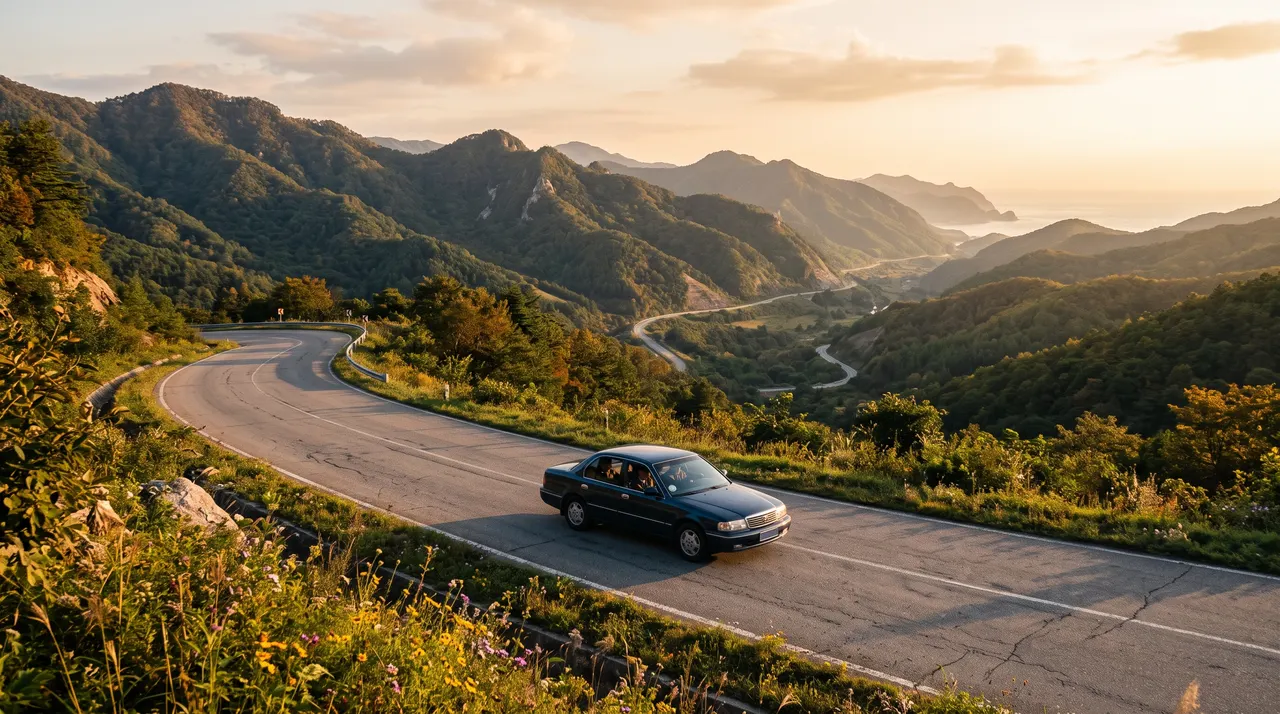
The guided Pyongyang-to-Wonsan road across the mountains toward the east coast is the route most curious visitors ask about, though it can only be travelled with official escorts. For most visitors the real draw is the freedom to reach places trains and tours don't, on your own schedule, with the open road generally capped around restricted — foreign self-drive not permitted. Getting behind the wheel is the easy part: your International Driving Permit is a certified translation of your Australia licence, carried alongside it, so rental staff and officials in North Korea can read your credentials at a glance.
What applies to Australia licence holders in North Korea
| Australia licence in North Korea | |
|---|---|
| Do you need an IDP? | An IDP is not sufficient here |
| IDP format required | Local licensing rules apply |
| Your Australia licence script | Roman (Latin) alphabet |
| Australia is party to | 1949 Geneva |
| Drives on the | Right-hand side |
| Minimum driving age | 18 |
| Emergency number | 119 |
| Top speed limit | Restricted — foreign self-drive not permitted |
| Currency | KPW |
Driving rules in North Korea you should know
- Drive on the right (not applicable to tourists).
- Independent driving is prohibited.
- All movement is guided.
- Roads outside Pyongyang are sparse.
Local driving facts in North Korea
Emergency number: 119 (112 also connects from most mobiles). Typical maximum for cars on the fastest road class: Restricted — foreign self-drive not permitted. Posted limits always take precedence.
Tolls & road charges in North Korea
Not relevant to visitors, as tourists cannot drive; the country's few highways, such as the Pyongyang-Wonsan and Pyongyang-Kaesong motorways, are used only by official and guided transport. There is no consumer toll-tag system a foreigner would ever use.
Parking in North Korea
Not applicable for tourists, who never control their own vehicle; all movement is in guide-arranged transport that parks at sanctioned sites only. Independent stopping or wandering off the approved itinerary is prohibited.
Penalties & enforcement in North Korea
Because independent driving is banned, the real risk is detention for breaching tour rules rather than ordinary traffic fines; punishments for rule-breaking can be severe and arbitrary. Most Western governments advise against all travel.
If you have an accident in North Korea
There is no tourist-driving accident procedure because visitors do not drive; in any incident you remain with and follow your assigned guides, who handle authorities. Western governments warn that consular help is extremely limited (the Swedish embassy acts as protecting power for some nations).
City driving in North Korea
Pyongyang has wide, near-empty multi-lane boulevards famously directed by uniformed traffic-control officers at major intersections, but foreigners only ever experience them as guided passengers. Photographing checkpoints, military sites or straying from the route is forbidden.
Winter driving in North Korea
Winter-equipment rules are irrelevant to visitors since they cannot drive, though northern North Korea has cold, snowy winters from December to February affecting official road transport. No tourist-facing winter-tyre regulation exists.
Fuel in North Korea
Tourists never buy fuel; petrol is scarce, rationed and routed to state and official users, with very few public stations. Foreign visitors have no access to retail fuelling.
Sources: youngpioneertours.com, travel.gc.ca, travel.state.gov