 China licence
  Palestine
Can you drive in Palestine with a China license?
Short answer: you cannot drive in Palestine on a China license or an International Driving Permit alone — Palestine requires a local or temporary licence.
An International Driving Permit is not sufficient to drive in Palestine. Palestine does not accept the IDP for foreign visitors — a local or temporary licence is required. Always confirm the current rule before you travel.
Mainland China is not party to the IDP conventions, so Chinese drivers typically obtain a temporary local licence in the destination country. Your International Driving Permit is a certified multilingual translation of your existing licence, prepared in the Local rules format and carried alongside your national licence.


What driving in Palestine is like
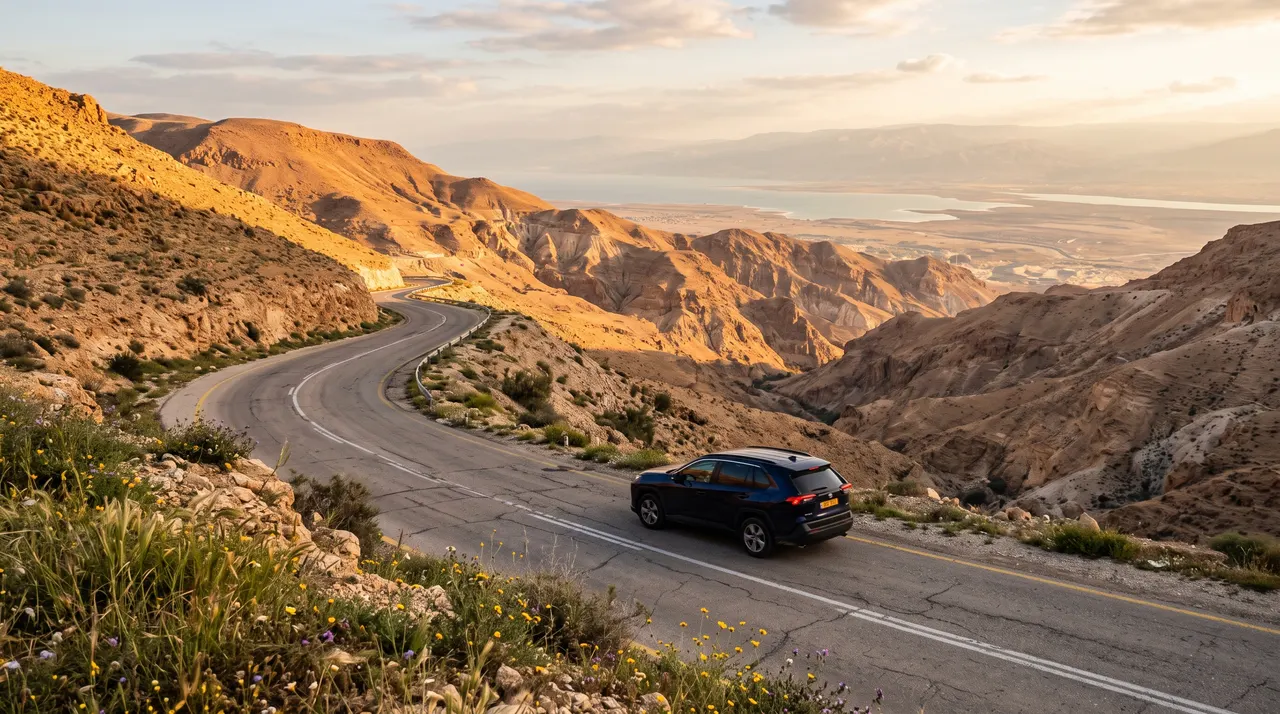
The descent on Route 1/90 from Jerusalem down to Jericho and the Dead Sea, the lowest road on Earth, is a striking drive. For most visitors the real draw is the freedom to reach places trains and tours don't, on your own schedule, with the open road generally capped around 90 km/h on Route highways. Getting behind the wheel is the easy part: your International Driving Permit is a certified translation of your China licence, carried alongside it, so rental staff and officials in Palestine can read your credentials at a glance.
What applies to China licence holders in Palestine
| China licence in Palestine | |
|---|---|
| Do you need an IDP? | An IDP is not sufficient here |
| IDP format required | Local licensing rules apply |
| Your China licence script | Not in the Roman alphabet — an IDP translation is expected |
| China is party to | Neither IDP convention |
| Drives on the | Right-hand side |
| Minimum driving age | 18 |
| Emergency number | 100 (police), 101 (ambulance) |
| Top speed limit | 90 km/h on Route highways |
| Currency | ILS |
Driving rules in Palestine you should know
- Drive on the right.
- Checkpoints affect routes and timing.
- Seatbelts mandatory.
- Carry passport, IDP and home licence.
Local driving facts in Palestine
Emergency number: 100 (police), 101 (ambulance) (112 also connects from most mobiles). Typical maximum for cars on the fastest road class: 90 km/h on Route highways. Posted limits always take precedence.
Tolls & road charges in Palestine
There are no toll roads or vignette system in the West Bank; main highways (including Route 60 and 443) are toll-free.
Parking in Palestine
Paid street parking in Ramallah, Bethlehem and Nablus is marked and cheap, often collected by attendants or meters; in dense old-city cores parking is scarce, so use municipal lots to avoid towing.
Penalties & enforcement in Palestine
Speeding, phone use and no-seatbelt fines are issued on the spot by Palestinian or Israeli traffic police depending on the road; rental firms pass on tickets plus an admin fee, and unpaid fines can complicate vehicle return.
If you have an accident in Palestine
Call Palestinian police on 100 (or Israeli police 100 on Israeli-administered highways) and do not move vehicles until documented; a police report is required for any insurance claim, and an Israeli rental car taken into PA-controlled cities is usually uninsured, leaving you liable for all damage.
City driving in Palestine
Around Ramallah, watch for the heavily congested Qalandia and other checkpoints where lanes funnel sharply and queues form unpredictably; never enter red-signed Area A cities in an Israeli (yellow-plate) rental.
Winter driving in Palestine
No mandatory winter-tyre or chain law, but higher areas around Ramallah and Hebron occasionally see snow and ice in winter, so caution and proper tread are advised.
Fuel in Palestine
Stations are full-service and common in towns; petrol is sold in 95/98 octane and diesel (solar), priced in shekels and broadly tracking Israeli pump prices (roughly 7-8 ILS per litre), with cash widely needed in rural areas.
Sources: idaservice.org, gopalestine.org, holylandtravelhq.com, worldtravelguide.net