 Japan licence
  Panama
Can you drive in Panama with a Japan license?
Short answer: to drive in Panama with a Japan license you need an International Driving Permit in the 1949 Geneva format, carried together with your Japan license.
Yes — to drive in Panama on a Japan licence you should carry an International Driving Permit together with your Japan licence. Panama accepts foreign licences, but an IDP is needed because Japan licences are not in the local alphabet.
Japanese drivers should carry an International Driving Permit (1949 Convention) with their licence when driving abroad. Your International Driving Permit is a certified multilingual translation of your existing licence, prepared in the 1949 Geneva format and carried alongside your national licence.


What driving in Panama is like
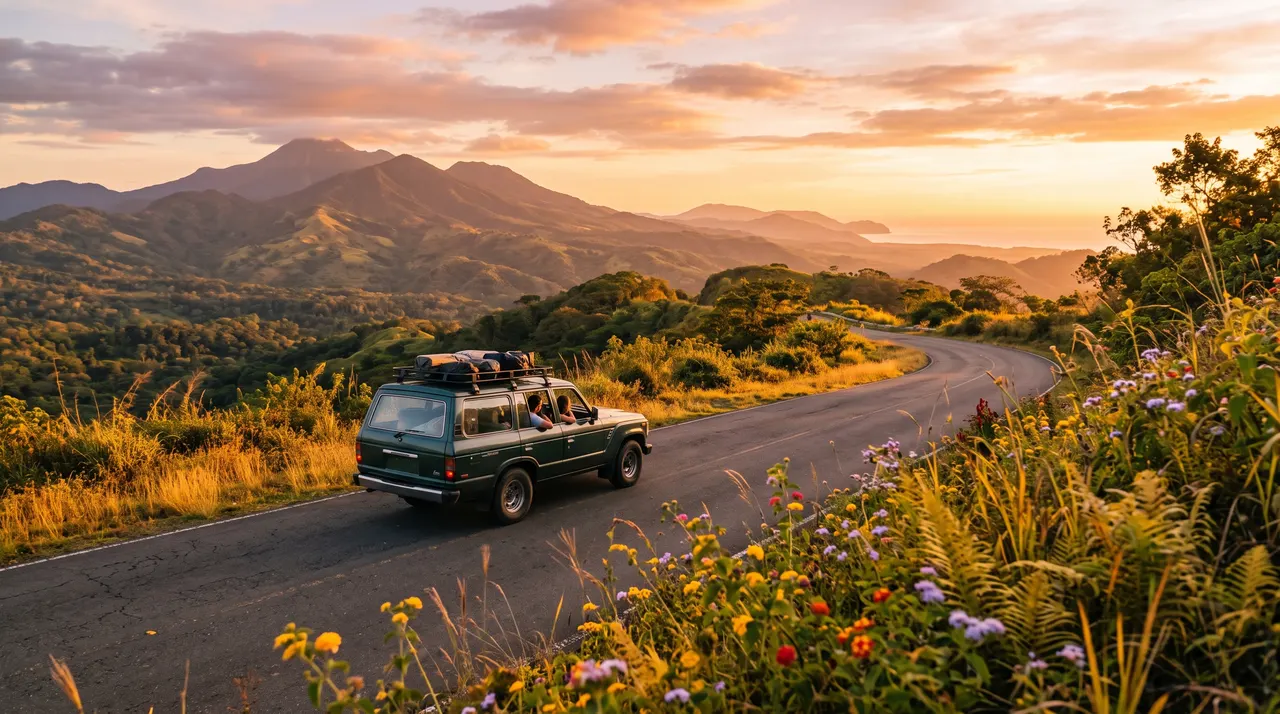
The drive over the Bridge of the Americas and west along the Pacific to El Valle de Anton, or up to the cool highlands of Boquete in Chiriqui, is the classic route visitors search for. For most visitors the real draw is the freedom to reach places trains and tours don't, on your own schedule, with the open road generally capped around 100 km/h on the Pan-American Highway. Getting behind the wheel is the easy part: your International Driving Permit is a certified translation of your Japan licence, carried alongside it, so rental staff and officials in Panama can read your credentials at a glance.
What applies to Japan licence holders in Panama
| Japan licence in Panama | |
|---|---|
| Do you need an IDP? | Yes — carry one alongside your licence |
| IDP format required | 1949 Geneva |
| Your Japan licence script | Not in the Roman alphabet — an IDP translation is expected |
| Japan is party to | 1949 Geneva |
| Drives on the | Right-hand side |
| Minimum driving age | 18 |
| Emergency number | 911 |
| Top speed limit | 100 km/h on the Pan-American Highway |
| Currency | PAB |
Driving rules in Panama you should know
- Drive on the right.
- Heavy congestion in Panama City.
- 0.05% alcohol limit.
- Corredor toll expressways in the capital.
Local driving facts in Panama
Emergency number: 911 (112 also connects from most mobiles). Typical maximum for cars on the fastest road class: 100 km/h on the Pan-American Highway. Posted limits always take precedence.
Tolls & road charges in Panama
Panama City's Corredor Sur and Corredor Norte are 100% electronic with NO cash option, requiring a prepaid PanaPass transponder; a typical airport-to-city run costs about US$3-8 in tolls. Rentals usually come with a PanaPass.
Parking in Panama
Use paid garages at malls (Albrook, Multiplaza) and hotels in Panama City; the historic Casco Viejo has restricted, tight street parking and tow risk, while informal attendants expect a US$1-2 tip elsewhere.
Penalties & enforcement in Panama
Speeding, no seatbelt and handheld phone use draw fixed fines, and speed cameras plus checkpoints are common in and around Panama City; rental companies pass any camera/transit fines to the card on file with a handling fee.
If you have an accident in Panama
Do not move the vehicles until the Transito police arrive and document the scene; dial 911 for police and ambulance. The transit (parte) report is required for insurance and rental claims.
City driving in Panama
Panama City's Cinta Costera and the merges around Avenida Balboa and the Corredor Sur on-ramps are notoriously confusing, with heavy congestion and assertive drivers who ignore lane markings.
Winter driving in Panama
No winter-tyre rules - tropical climate.
Fuel in Panama
Fuel is sold by the GALLON (not litre) in US dollars, in grades 91/95 gasolina and diesel; stations are widely attendant-served, accept cards in cities, and the US dollar is the cash currency.
Sources: tollguru.com, kraemerlaw.com, thelostandfoundhostel.com