 Singapore licence
  Papua New Guinea
Can you drive in Papua New Guinea with a Singapore license?
Short answer: to drive in Papua New Guinea with a Singapore license you need an International Driving Permit in the 1949 Geneva format, carried together with your Singapore license.
Yes — to drive in Papua New Guinea on a Singapore licence you should carry an International Driving Permit together with your Singapore licence. Papua New Guinea expects foreign drivers to hold an IDP.
Singapore drivers should carry an International Driving Permit alongside their licence when driving abroad. Your International Driving Permit is a certified multilingual translation of your existing licence, prepared in the 1949 Geneva format and carried alongside your national licence.


What driving in Papua New Guinea is like
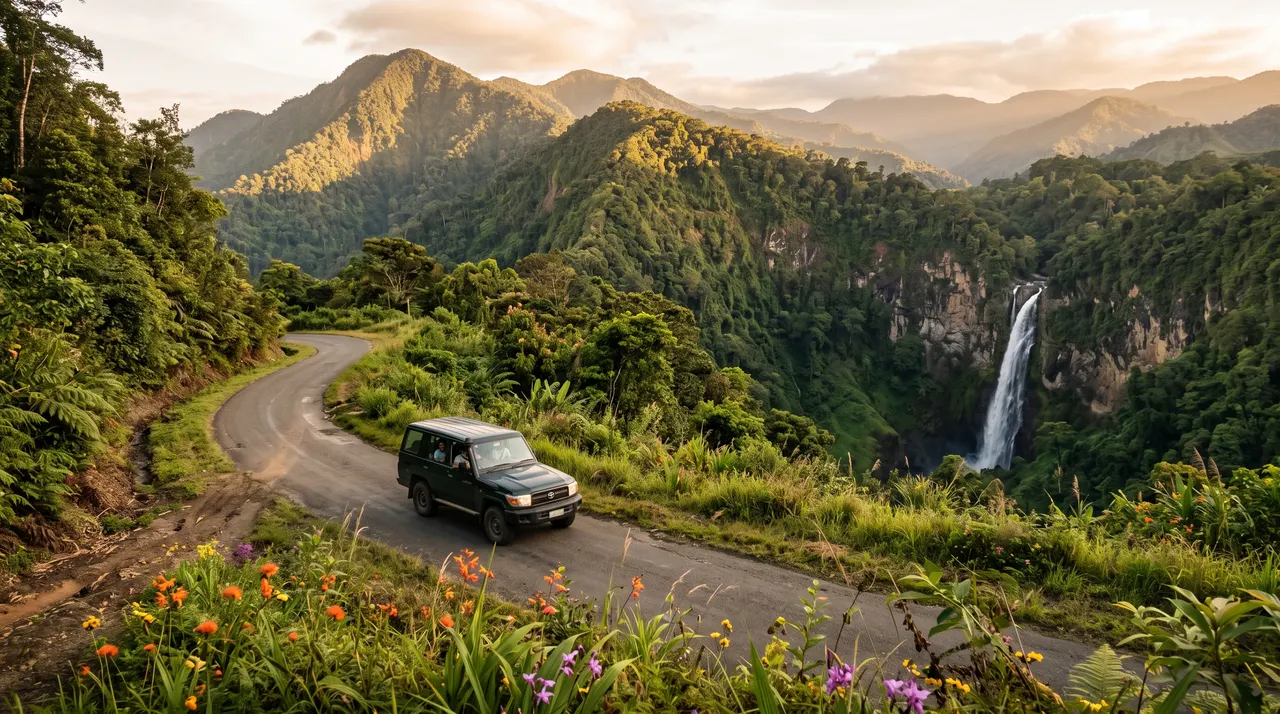
The drive from Port Moresby out to Sogeri Plateau and the start of the Kokoda Track, passing the Rouna Falls, is the most popular self-drive day trip near the capital. For most visitors the real draw is the freedom to reach places trains and tours don't, on your own schedule, with the open road generally capped around 75 km/h highways. Getting behind the wheel is the easy part: your International Driving Permit is a certified translation of your Singapore licence, carried alongside it, so rental staff and officials in Papua New Guinea can read your credentials at a glance.
What applies to Singapore licence holders in Papua New Guinea
| Singapore licence in Papua New Guinea | |
|---|---|
| Do you need an IDP? | Yes — carry one alongside your licence |
| IDP format required | 1949 Geneva |
| Your Singapore licence script | Roman (Latin) alphabet |
| Singapore is party to | 1949 Geneva |
| Drives on the | Left-hand side |
| Minimum driving age | 18 |
| Emergency number | 112 or 000 |
| Top speed limit | 75 km/h highways |
| Currency | PGK |
Driving rules in Papua New Guinea you should know
- Drive on the left.
- Rough, mountainous roads.
- 0.05% alcohol limit.
- Carry passport, IDP and home licence.
Local driving facts in Papua New Guinea
Emergency number: 112 or 000 (112 also connects from most mobiles). Typical maximum for cars on the fastest road class: 75 km/h highways. Posted limits always take precedence.
Tolls & road charges in Papua New Guinea
Papua New Guinea has no toll roads or electronic toll/vignette system; the limited sealed highway network (such as the Highlands Highway) is free but often in poor, unsealed condition.
Parking in Papua New Guinea
There are no formal paid-parking zones; in Port Moresby use guarded, fenced car parks at hotels and shopping centres (e.g. Vision City) rather than street parking, which carries a real theft and carjacking risk.
Penalties & enforcement in Papua New Guinea
Speed limits are about 60 km/h in towns and up to 100 km/h on open highways; police issue on-the-spot fines for speeding, seatbelt and phone offences, and rental firms recover any fines from the renter. Roadblocks and informal demands occur.
If you have an accident in Papua New Guinea
The national emergency number is 000 (police), though response is slow and limited outside Port Moresby; after a serious crash do not stop in unsafe areas and instead drive to the nearest police station to report, as a report is required for insurance.
City driving in Papua New Guinea
In Port Moresby, carjacking is a genuine hazard at intersections and on the road toward Lae/Nadzab; keep doors locked and windows up, avoid driving after dark, and never stop for unofficial flag-downs.
Winter driving in Papua New Guinea
No winter-tyre rules - tropical climate.
Fuel in Papua New Guinea
Petrol and diesel are sold at attended service stations; under the 2026 government subsidy motorists paid roughly K4.39/litre for petrol and K4.44 for diesel (unsubsidised caps were near K6.24 petrol / K8.35 diesel). Fuel shortages and queues occur, so fill up when you can and carry cash.
Sources: travel.state.gov, travel.gc.ca, remitly.com, news.pngfacts.com