 China licence
  Peru
PeruCan you drive in Peru with a China license?
Short answer: to drive in Peru with a China license you need an International Driving Permit in the 1968 Vienna format, carried together with your China license.
Yes — to drive in Peru on a China licence you should carry an International Driving Permit together with your China licence. Peru expects foreign drivers to hold an IDP.
Mainland China is not party to the IDP conventions, so Chinese drivers typically obtain a temporary local licence in the destination country. Your International Driving Permit is a certified multilingual translation of your existing licence, prepared in the 1968 Vienna format and carried alongside your national licence.


What driving in Peru is like
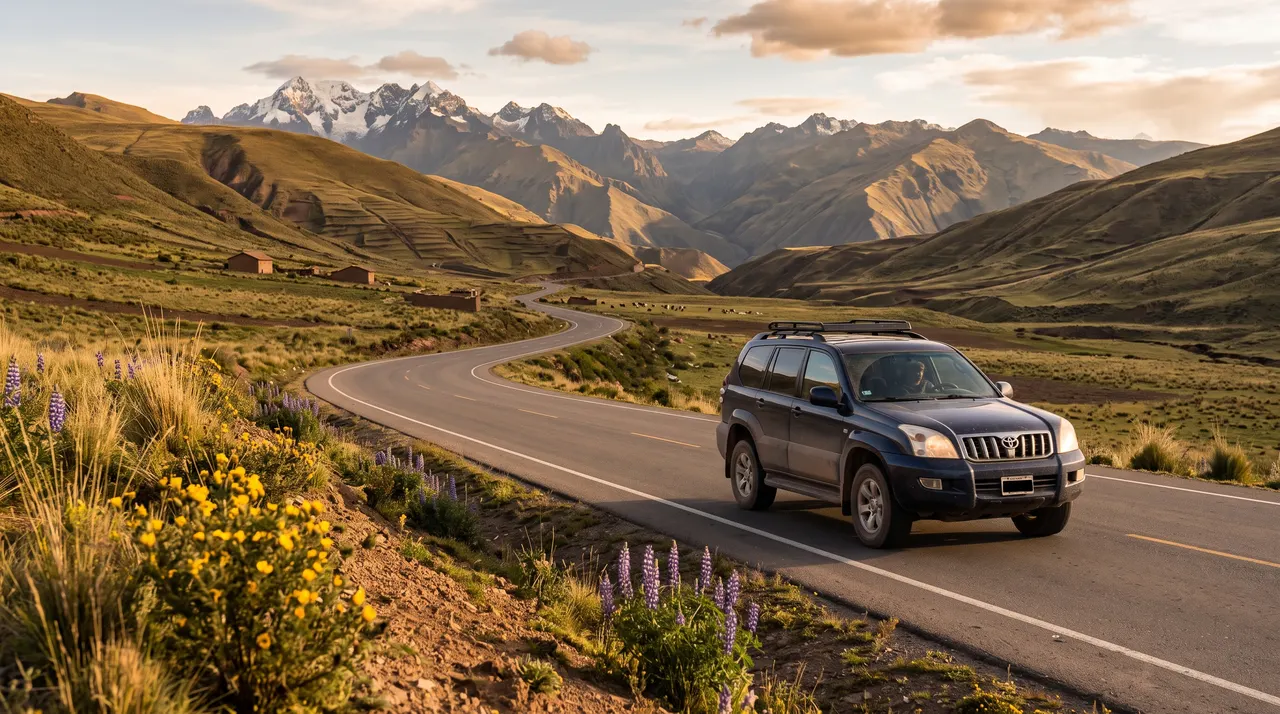
The drive from Cusco through the Sacred Valley to Ollantaytambo, or the high road across the Andes on the Cusco-Puno altiplano. For most visitors the real draw is the freedom to reach places trains and tours don't, on your own schedule, with the open road generally capped around 100 km/h highways. Getting behind the wheel is the easy part: your International Driving Permit is a certified translation of your China licence, carried alongside it, so rental staff and officials in Peru can read your credentials at a glance.
What applies to China licence holders in Peru
| China licence in Peru | |
|---|---|
| Do you need an IDP? | Yes — carry one alongside your licence |
| IDP format required | 1968 Vienna |
| Your China licence script | Not in the Roman alphabet — an IDP translation is expected |
| China is party to | Neither IDP convention |
| Drives on the | Right-hand side |
| Minimum driving age | 18 |
| Emergency number | 105 (police) |
| Top speed limit | 100 km/h highways |
| Currency | PEN |
Driving rules in Peru you should know
- Aggressive city traffic — defensive driving essential.
- High-altitude routes (Cusco, Puno) affect engine performance.
- 0.05% alcohol limit.
- Carry original documents at all times.
Local driving facts in Peru
Emergency number: 105 (police) (112 also connects from most mobiles). Typical maximum for cars on the fastest road class: 100 km/h highways. Posted limits always take precedence.
Tolls & road charges in Peru
Main highways (Panamericana and others) have frequent manned toll booths (peajes), typically a few soles each; many do not accept cards, so carry small-denomination soles in cash.
Parking in Peru
Avoid street parking; use guarded paid lots (playas de estacionamiento or 'cocheras') in cities like Lima and Cusco, both for security and to avoid towing/clamping in restricted central zones.
Penalties & enforcement in Peru
Fines (papeletas) are graded by severity as fractions of the UIT tax unit; speeding, no seatbelt and phone use are penalized. Do not pay cash to officers on the roadside; legitimate fines are processed officially and rental firms pass camera/towing charges to the renter.
If you have an accident in Peru
Call the police on 105 (SAMU ambulance 106); do not move vehicles if there are injuries until police arrive. SOAT (compulsory insurance) covers only personal injury, not the rental car, so file a police report for the rental insurer.
City driving in Peru
Lima traffic is heavy and assertive; the central Cercado de Lima has restricted/pedestrianized areas and the Vía Expresa ('El Zanjón') and Javier Prado are notorious bottlenecks where lane discipline is loose.
Winter driving in Peru
No winter-tyre rules - tropical/Andean climate; however high Andean passes can see snow and ice, so caution and good tyres are advised on sierra routes and night mountain driving is discouraged.
Fuel in Peru
Stations (Primax, Repsol, Petroperú) are attended; petrol is sold by octane (84/90/95/97) plus 'GLP'/'GNV' gas, and diesel as 'diésel B5', roughly USD 1.10-1.30 per litre for petrol with most stations taking cards.
Sources: remitly.com, tyremap.com, internationaltravelpermits.com, theonlyperuguide.com