 Ireland licence
  Republic of the Congo
Can you drive in Republic of the Congo with an Ireland license?
Short answer: to drive in Republic of the Congo with an Ireland license you need an International Driving Permit in the 1949 Geneva format, carried together with your Ireland license.
Yes — to drive in Republic of the Congo on an Ireland licence you should carry an International Driving Permit together with your Ireland licence. Republic of the Congo expects foreign drivers to hold an IDP.
Irish drivers should carry an International Driving Permit with their licence when driving outside the EU and EEA. Your International Driving Permit is a certified multilingual translation of your existing licence, prepared in the 1949 Geneva format and carried alongside your national licence.


What driving in Republic of the Congo is like
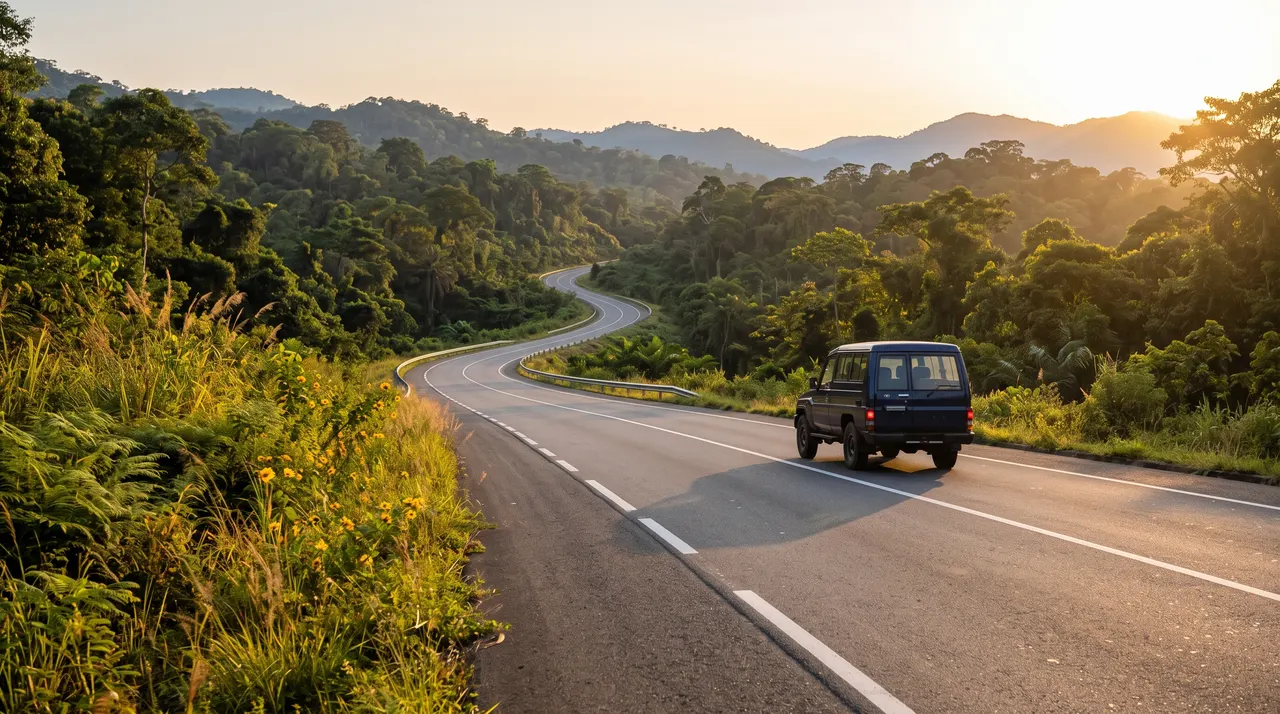
The paved RN1 from Brazzaville to the coastal city of Pointe-Noire, crossing the Mayombe forest, is the country's signature road journey. For most visitors the real draw is the freedom to reach places trains and tours don't, on your own schedule, with the open road generally capped around 90 km/h highways. Getting behind the wheel is the easy part: your International Driving Permit is a certified translation of your Ireland licence, carried alongside it, so rental staff and officials in Republic of the Congo can read your credentials at a glance.
What applies to Ireland licence holders in Republic of the Congo
| Ireland licence in Republic of the Congo | |
|---|---|
| Do you need an IDP? | Yes — carry one alongside your licence |
| IDP format required | 1949 Geneva |
| Your Ireland licence script | Roman (Latin) alphabet |
| Ireland is party to | 1949 Geneva and 1968 Vienna |
| Drives on the | Right-hand side |
| Minimum driving age | 18 |
| Emergency number | 117 (police) |
| Top speed limit | 90 km/h highways |
| Currency | XAF |
Driving rules in Republic of the Congo you should know
- Drive on the right.
- Frequent police checkpoints.
- 0.08% alcohol limit.
- Carry passport, IDP and home licence.
Local driving facts in Republic of the Congo
Emergency number: 117 (police) (112 also connects from most mobiles). Typical maximum for cars on the fastest road class: 90 km/h highways. Posted limits always take precedence.
Tolls & road charges in Republic of the Congo
There are no widespread electronic tolls or vignettes; the upgraded Brazzaville-Pointe-Noire (RN1) corridor has some péage barriers paid in cash (CFA francs). Most travel cost is fuel rather than tolls.
Parking in Republic of the Congo
Parking in Brazzaville and Pointe-Noire is mostly informal on-street with attendants who expect a small tip; there are no app-based or colour-zone systems. Use guarded hotel or business parking and avoid leaving the car unattended.
Penalties & enforcement in Republic of the Congo
Police checkpoints are frequent and may seek on-the-spot cash payments from foreign drivers; ask for an official receipt and keep documents accessible. Common cited offences are missing papers, seatbelt and speeding violations.
If you have an accident in Republic of the Congo
Remain at the scene if safe, do not move vehicles when there are injuries, and summon police to file a report for insurance; exchange details with the other driver. If a crowd turns hostile, leave and report at the nearest police/gendarmerie post.
City driving in Republic of the Congo
In Brazzaville the central avenues and the Avenue de la Paix area are congested with shared taxis and motorbikes, and lane markings are widely ignored. Drive slowly and watch for sudden stops by 'taxi-bus' vehicles.
Winter driving in Republic of the Congo
No winter-tyre rules - tropical climate.
Fuel in Republic of the Congo
Petrol (essence) and diesel (gasoil) are reliable in Brazzaville and Pointe-Noire but frequently unavailable in rural areas where shortages are common, so fill up before long trips. Payment is typically cash in CFA francs.
Sources: internationaldriversassociation.com, internationaltravelpermits.com, travel.state.gov, countryreports.org