 China licence
  South Sudan
Can you drive in South Sudan with a China license?
Short answer: you cannot drive in South Sudan on a China license or an International Driving Permit alone — South Sudan requires a local or temporary licence.
An International Driving Permit is not sufficient to drive in South Sudan. South Sudan does not accept the IDP for foreign visitors — a local or temporary licence is required. Always confirm the current rule before you travel.
Mainland China is not party to the IDP conventions, so Chinese drivers typically obtain a temporary local licence in the destination country. Your International Driving Permit is a certified multilingual translation of your existing licence, prepared in the Local rules format and carried alongside your national licence.


What driving in South Sudan is like
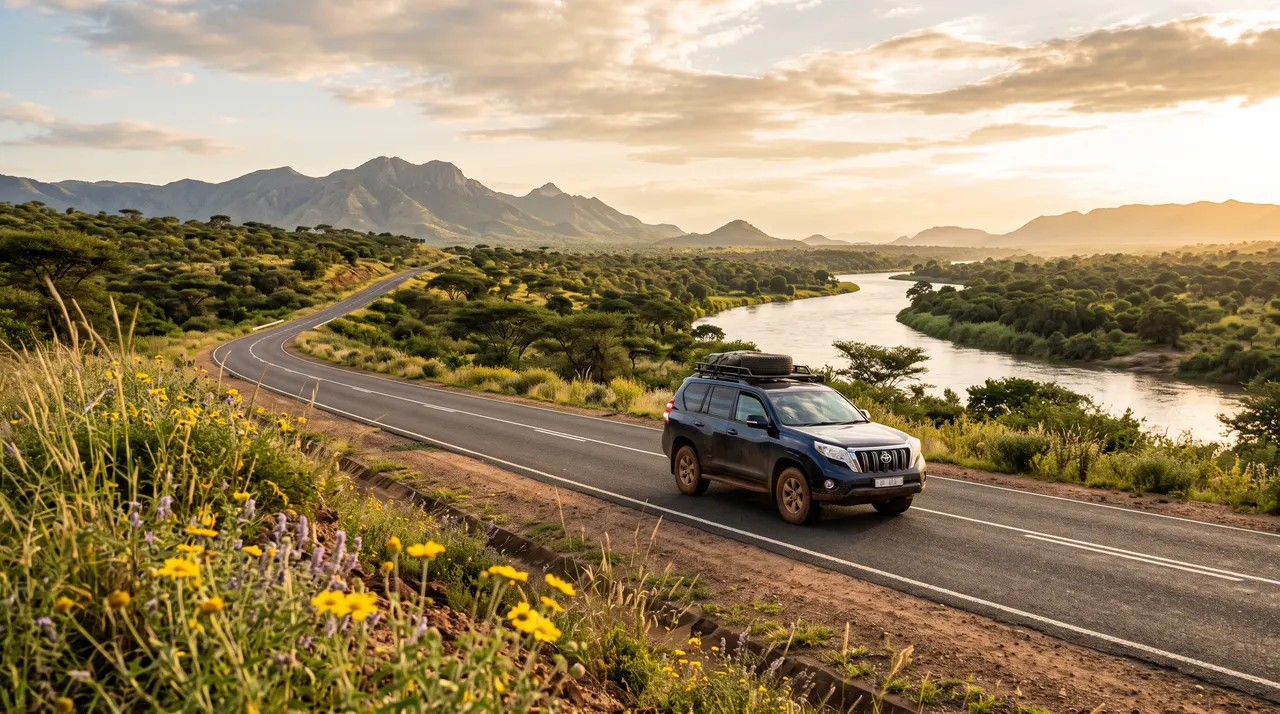
The paved Juba-Nimule highway toward the Ugandan border, running past Nimule National Park along the Nile, is the country's most notable drivable route. For most visitors the real draw is the freedom to reach places trains and tours don't, on your own schedule, with the open road generally capped around 80 km/h highways. Getting behind the wheel is the easy part: your International Driving Permit is a certified translation of your China licence, carried alongside it, so rental staff and officials in South Sudan can read your credentials at a glance.
What applies to China licence holders in South Sudan
| China licence in South Sudan | |
|---|---|
| Do you need an IDP? | An IDP is not sufficient here |
| IDP format required | Local licensing rules apply |
| Your China licence script | Not in the Roman alphabet — an IDP translation is expected |
| China is party to | Neither IDP convention |
| Drives on the | Right-hand side |
| Minimum driving age | 18 |
| Emergency number | 777 (police, Juba) |
| Top speed limit | 80 km/h highways |
| Currency | SSP |
Driving rules in South Sudan you should know
- Drive on the right.
- Unpaved roads outside Juba.
- Checkpoints are frequent.
- Carry passport, IDP and home licence.
Local driving facts in South Sudan
Emergency number: 777 (police, Juba) (112 also connects from most mobiles). Typical maximum for cars on the fastest road class: 80 km/h highways. Posted limits always take precedence.
Tolls & road charges in South Sudan
There is no national electronic toll or vignette system; the road network is overwhelmingly unpaved outside Juba, so visitors pay nothing in formal tolls but should budget cash for informal checkpoint demands.
Parking in South Sudan
There are no organised paid parking zones; in Juba parking is informal kerbside, often watched by self-appointed attendants who expect a small cash tip, and vehicles should never be left unattended with valuables visible.
Penalties & enforcement in South Sudan
Enforcement is largely manual at checkpoints with on-the-spot cash fines negotiated in person; foreign drivers without proper documents risk vehicle hold-ups, and a 4x4 with comprehensive insurance is strongly advised as cover can be voided without an IDP.
If you have an accident in South Sudan
After a crash do not move the vehicles if there are injuries; call police (the general emergency line is 777) and remain at the scene, as a police report is required for any insurance claim and leaving can be treated as a serious offence.
City driving in South Sudan
In Juba, police and military checkpoints are frequent, especially on Friday and Saturday nights, and photographing bridges, government buildings or checkpoints is prohibited and can lead to detention.
Winter driving in South Sudan
No winter-tyre rules - tropical climate.
Fuel in South Sudan
Petrol and diesel are sold but supply is unreliable and queues are common; stations are scarce outside Juba, so carry jerry cans of extra fuel for any long journey, and pay in cash (often US dollars or South Sudanese pounds).
Sources: internationaltravelpermits.com, tyremap.com, idpservices.org