 UK licence
  Spain
SpainCan you drive in Spain with a UK license?
Short answer: to drive in Spain with a UK license you need an International Driving Permit in the 1949 Geneva or 1968 Vienna format, carried together with your UK license.
Yes — to drive in Spain on a UK licence you should carry an International Driving Permit together with your UK licence. Spain expects foreign drivers to hold an IDP.
UK drivers should carry an International Driving Permit with their licence; some countries recognise the 1949 version and others the 1968 version. Your International Driving Permit is a certified multilingual translation of your existing licence, prepared in the 1949 Geneva and 1968 Vienna Convention format that Spain recognises and carried alongside your national licence.


What driving in Spain is like
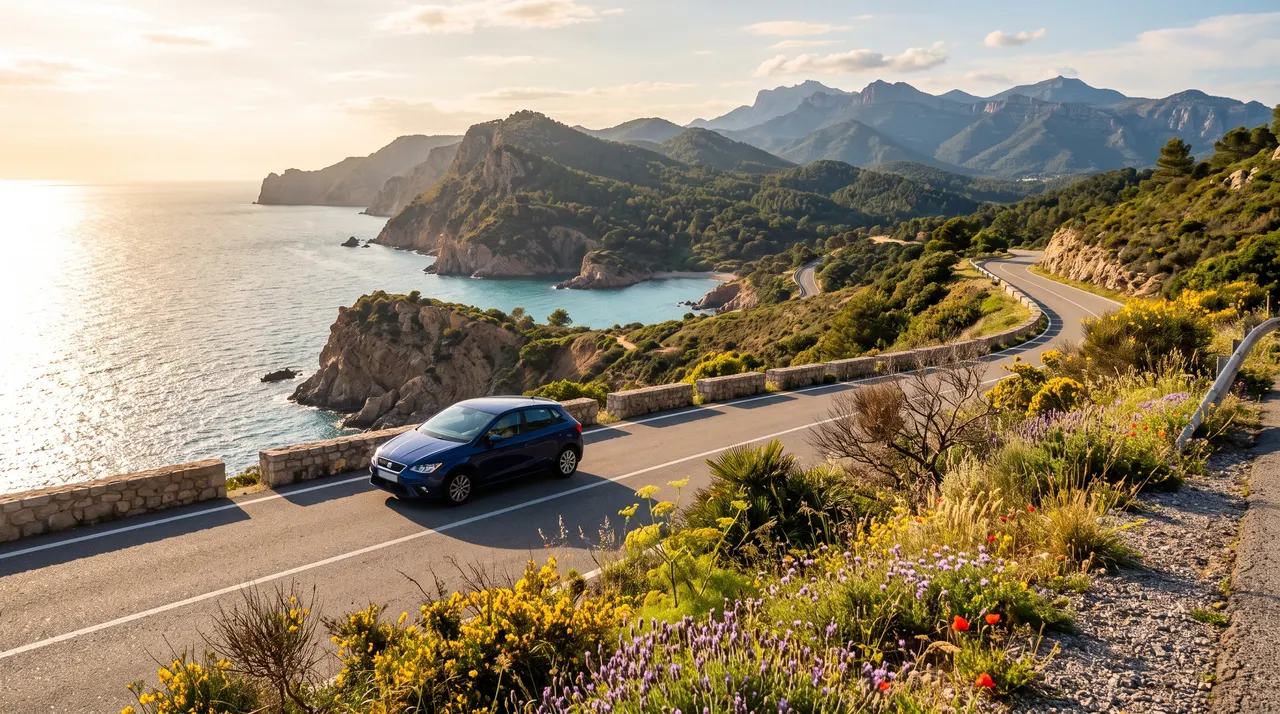
The coastal and mountain road network of the Costa Brava and the Pyrenees, or the dramatic GR-clifftop drives near Ronda in Andalusia, are standout Spanish drives. For most visitors the real draw is the freedom to reach places trains and tours don't, on your own schedule, with the open road generally capped around 120 km/h autopistas. Getting behind the wheel is the easy part: your International Driving Permit is a certified translation of your UK licence, carried alongside it, so rental staff and officials in Spain can read your credentials at a glance.
What applies to UK licence holders in Spain
| UK licence in Spain | |
|---|---|
| Do you need an IDP? | Yes — carry one alongside your licence |
| IDP format required | 1949 Geneva or 1968 Vienna |
| Your UK licence script | Roman (Latin) alphabet |
| United Kingdom is party to | 1949 Geneva and 1968 Vienna |
| Drives on the | Right-hand side |
| Minimum driving age | 18 |
| Emergency number | 112 |
| Top speed limit | 120 km/h autopistas |
| Currency | EUR |
Driving rules in Spain you should know
- Two warning triangles and a reflective vest must be carried.
- Spare pair of glasses required if you wear them to drive.
- 0.05% alcohol limit; 0.03% for novice drivers.
- Roundabouts: yield to traffic already circulating.
Local driving facts in Spain
Emergency number: 112 (112 also connects from most mobiles). Typical maximum for cars on the fastest road class: 120 km/h autopistas. Posted limits always take precedence.
Tolls & road charges in Spain
Many former toll autopistas (AP) are now free, but remaining toll roads take cash and cards at booths, while newer free-flow gantry stretches require online payment within about 72 hours. Miss the window and the bill, plus an admin fee, is passed through the rental company; typical tolls run EUR 5-25.
Parking in Spain
Kerbside zona azul (blue) is short-stay paid parking and zona verde (green) favours residents; pay at the meter or via apps and display the ticket. Secure blue-P underground car parks cost roughly EUR 20-28 per 24h, and leaving a car in a regulated zone overnight risks a fine or grua (tow).
Penalties & enforcement in Spain
A 50% discount applies if a fine is paid within 20 days; police may demand on-the-spot payment from foreign drivers and can immobilise the car until paid. Phone use and no-seatbelt fines run into the low hundreds of euros, and under EU cross-border enforcement unpaid fines can be pursued back home.
If you have an accident in Spain
Call 112; police must attend if there are injuries. For damage-only crashes complete the declaracion amistosa de accidente (European Accident Statement) signed by both drivers, photograph the scene, avoid moving vehicles when anyone is hurt, and notify the rental firm; carry and wear the reflective vest when exiting on a road.
City driving in Spain
Madrid's citywide Zona de Bajas Emisiones (the former Madrid Central/Madrid 360) and Barcelona's ZBE restrict vehicles by environmental label, with cameras fining unauthorised entry around EUR 90-200. Rental cars are normally labelled, but confirm the car's distintivo ambiental and the access rules before entering the centre.
Winter driving in Spain
Winter tyres are not legally mandated nationally, but in snow or ice the Guardia Civil can require winter tyres or snow chains on affected mountain roads and turn back vehicles without them. Studded tyres are banned except in tightly restricted conditions.
Fuel in Spain
Stations sell gasolina (95/98 unleaded) and gasoleo/diesel A; many are self-service (autoservicio) and some rural ones close midday or only take cards overnight. Cards are widely accepted; petrol is around EUR 1.55-1.75/litre, often cheaper than France or Italy.
Sources: spainonfoot.com, tyremap.com, cover4rentals.ie, europa.eu