 Japan licence
  Sudan
SudanCan you drive in Sudan with a Japan license?
Short answer: to drive in Sudan with a Japan license you need an International Driving Permit in the 1949 Geneva format, carried together with your Japan license.
Yes — to drive in Sudan on a Japan licence you should carry an International Driving Permit together with your Japan licence. Sudan expects foreign drivers to hold an IDP.
Japanese drivers should carry an International Driving Permit (1949 Convention) with their licence when driving abroad. Your International Driving Permit is a certified multilingual translation of your existing licence, prepared in the 1949 Geneva format and carried alongside your national licence.


What driving in Sudan is like
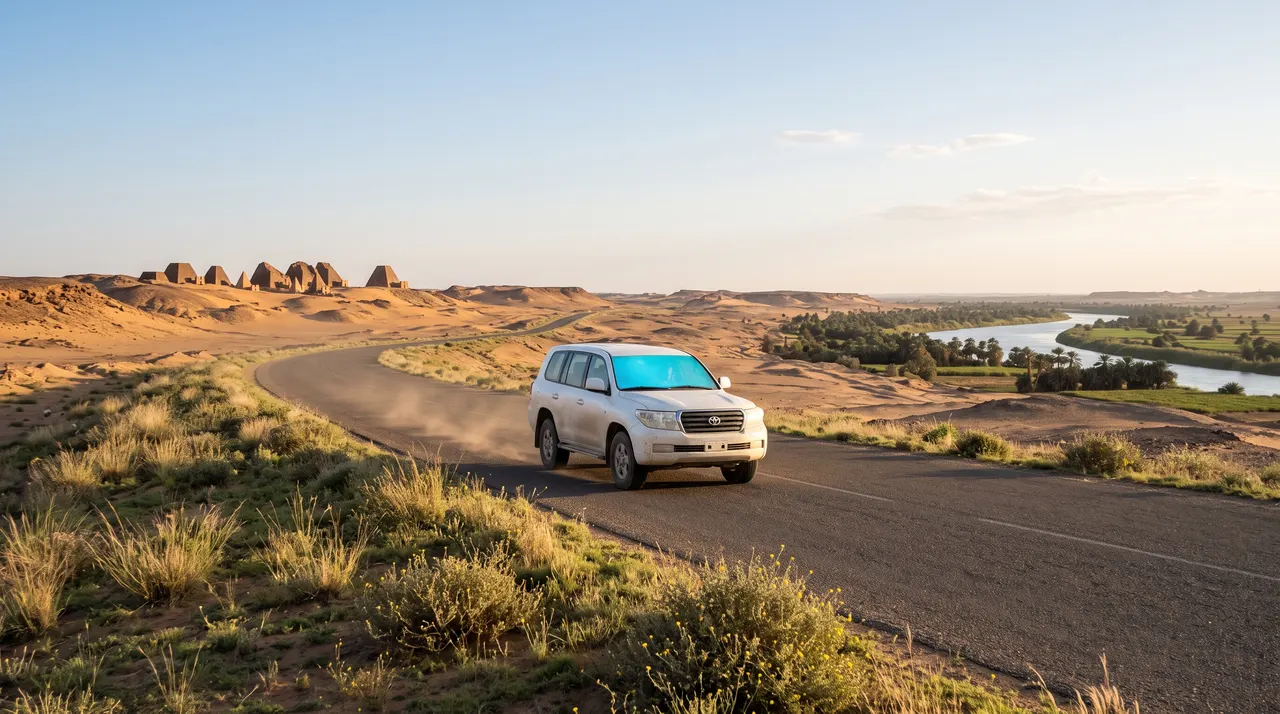
The desert highway north from Khartoum toward the Meroe pyramids and the Nile bend is Sudan's most renowned drive, though it is currently unsafe due to the civil war. For most visitors the real draw is the freedom to reach places trains and tours don't, on your own schedule, with the open road generally capped around 110 km/h on the Khartoum–Port Sudan highway. Getting behind the wheel is the easy part: your International Driving Permit is a certified translation of your Japan licence, carried alongside it, so rental staff and officials in Sudan can read your credentials at a glance.
What applies to Japan licence holders in Sudan
| Japan licence in Sudan | |
|---|---|
| Do you need an IDP? | Yes — carry one alongside your licence |
| IDP format required | 1949 Geneva |
| Your Japan licence script | Not in the Roman alphabet — an IDP translation is expected |
| Japan is party to | 1949 Geneva |
| Drives on the | Right-hand side |
| Minimum driving age | 18 |
| Emergency number | 999 |
| Top speed limit | 110 km/h on the Khartoum–Port Sudan highway |
| Currency | SDG |
Driving rules in Sudan you should know
- Drive on the right.
- Sandy desert roads and checkpoints.
- Alcohol is prohibited.
- Carry passport, IDP and home licence.
Local driving facts in Sudan
Emergency number: 999 (112 also connects from most mobiles). Typical maximum for cars on the fastest road class: 110 km/h on the Khartoum–Port Sudan highway. Posted limits always take precedence.
Tolls & road charges in Sudan
Sudan has no nationwide electronic toll network; the main long-distance corridor is the Khartoum-Port Sudan highway, and any charges are paid in cash, though ongoing conflict has halted most road maintenance and upgrade projects.
Parking in Sudan
There are no formal paid parking apps or colour-coded zones; in Khartoum parking is informal and congested, with vehicles competing for kerb space alongside buses and motorcyclists, and attended lots expect a cash tip.
Penalties & enforcement in Sudan
Using a phone while driving is illegal, seatbelts are mandatory for all occupants front and rear, and the blood-alcohol limit is zero; enforcement is manual with on-the-spot cash penalties at checkpoints.
If you have an accident in Sudan
Stop immediately and do not leave the scene; contact the police (emergency 999) and obtain a report, since third-party liability insurance claims require it. Note the US State Department advises against all travel to Sudan due to armed conflict.
City driving in Sudan
Khartoum traffic is heavily congested with buses, cars and motorcyclists weaving across lanes; checkpoints are common and photographing military, bridges or government sites is forbidden and can lead to arrest.
Winter driving in Sudan
No winter-tyre rules - tropical/desert climate.
Fuel in Sudan
Fuel shortages are chronic and queues are severe; drivers should carry additional fuel, spare tyres and provisions when leaving Khartoum, and expect to pay cash as card acceptance is effectively nonexistent.
Sources: travel.state.gov, adcidl.com, internationaldrivingpermit.org