 Singapore licence
  Suriname
Can you drive in Suriname with a Singapore license?
Short answer: to drive in Suriname with a Singapore license you need an International Driving Permit in the 1949 Geneva format, carried together with your Singapore license.
Yes — to drive in Suriname on a Singapore licence you should carry an International Driving Permit together with your Singapore licence. Suriname expects foreign drivers to hold an IDP.
Singapore drivers should carry an International Driving Permit alongside their licence when driving abroad. Your International Driving Permit is a certified multilingual translation of your existing licence, prepared in the 1949 Geneva format and carried alongside your national licence.


What driving in Suriname is like
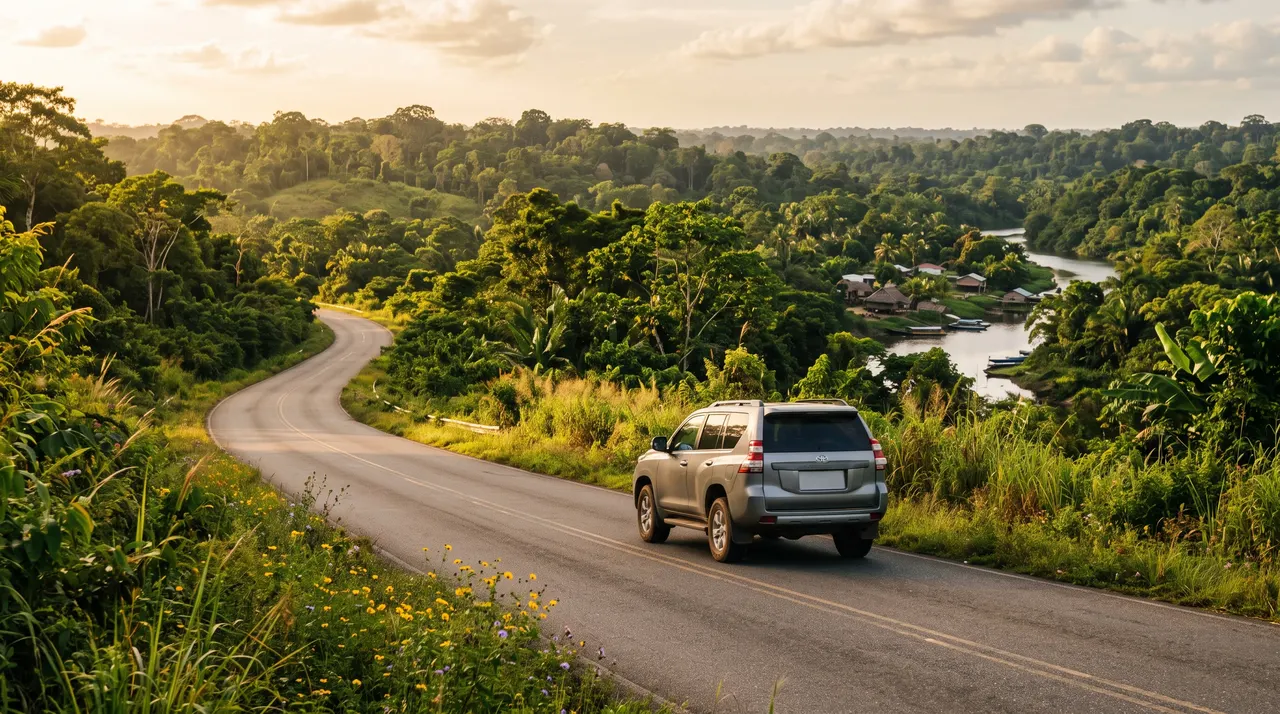
The East-West Highway from Paramaribo toward Albina runs through rainforest and riverside villages and is the country's signature road trip. For most visitors the real draw is the freedom to reach places trains and tours don't, on your own schedule, with the open road generally capped around 80 km/h open roads. Getting behind the wheel is the easy part: your International Driving Permit is a certified translation of your Singapore licence, carried alongside it, so rental staff and officials in Suriname can read your credentials at a glance.
What applies to Singapore licence holders in Suriname
| Singapore licence in Suriname | |
|---|---|
| Do you need an IDP? | Yes — carry one alongside your licence |
| IDP format required | 1949 Geneva |
| Your Singapore licence script | Roman (Latin) alphabet |
| Singapore is party to | 1949 Geneva |
| Drives on the | Left-hand side |
| Minimum driving age | 18 |
| Emergency number | 115 (police) |
| Top speed limit | 80 km/h open roads |
| Currency | SRD |
Driving rules in Suriname you should know
- Drive on the left.
- Unpaved roads in the interior.
- 0.05% alcohol limit.
- Carry passport, IDP and home licence.
Local driving facts in Suriname
Emergency number: 115 (police) (112 also connects from most mobiles). Typical maximum for cars on the fastest road class: 80 km/h open roads. Posted limits always take precedence.
Tolls & road charges in Suriname
Suriname has no toll-road network; roads are funded publicly and there are no toll booths or vignettes for tourists to deal with.
Parking in Suriname
Paramaribo has informal kerbside and lot parking with low or no fees; central spots fill early and pavements/potholes make spaces tight, so use guarded lots where available rather than risk a blocked or sunken kerb.
Penalties & enforcement in Suriname
Police issue on-the-spot tickets specifying the offence and where to pay; seatbelt and hand-held-phone violations are enforced, and rental firms pass any unpaid tickets to your card. Roads are unlit and poorly policed at night, so drive defensively rather than relying on enforcement.
If you have an accident in Suriname
Stop, do not move the vehicles if anyone is hurt, and call the police; the standard emergency line is 115 for police. Wait for officers and obtain their report for your insurer and the rental company.
City driving in Suriname
In Paramaribo expect left-hand traffic, undisciplined merging and large potholes on city streets; the busy roundabouts and the bridge approaches over the Suriname River are the main congestion chokepoints.
Winter driving in Suriname
No winter-tyre rules - tropical climate; the real seasonal hazard is the rainy season, when potholes flood and interior laterite roads become impassable.
Fuel in Suriname
Stations sell petrol (benzine) and diesel; petrol runs roughly SRD 19-20 per litre and diesel around SRD 45 per litre. Attendant service is common, cash (SRD) is safest, and stations are scarce outside Paramaribo and the coastal belt so fill up before heading into the interior.
Sources: countryreports.org, tyremap.com, globalpetrolprices.com, autoeurope.co.uk