 Singapore licence
  Switzerland
Can you drive in Switzerland with a Singapore license?
Short answer: to drive in Switzerland with a Singapore license you need an International Driving Permit in the 1949 Geneva or 1968 Vienna format, carried together with your Singapore license.
Yes — to drive in Switzerland on a Singapore licence you should carry an International Driving Permit together with your Singapore licence. Switzerland expects foreign drivers to hold an IDP.
Singapore drivers should carry an International Driving Permit alongside their licence when driving abroad. Your International Driving Permit is a certified multilingual translation of your existing licence, prepared in the 1949 Geneva & 1968 Vienna format and carried alongside your national licence.


What driving in Switzerland is like
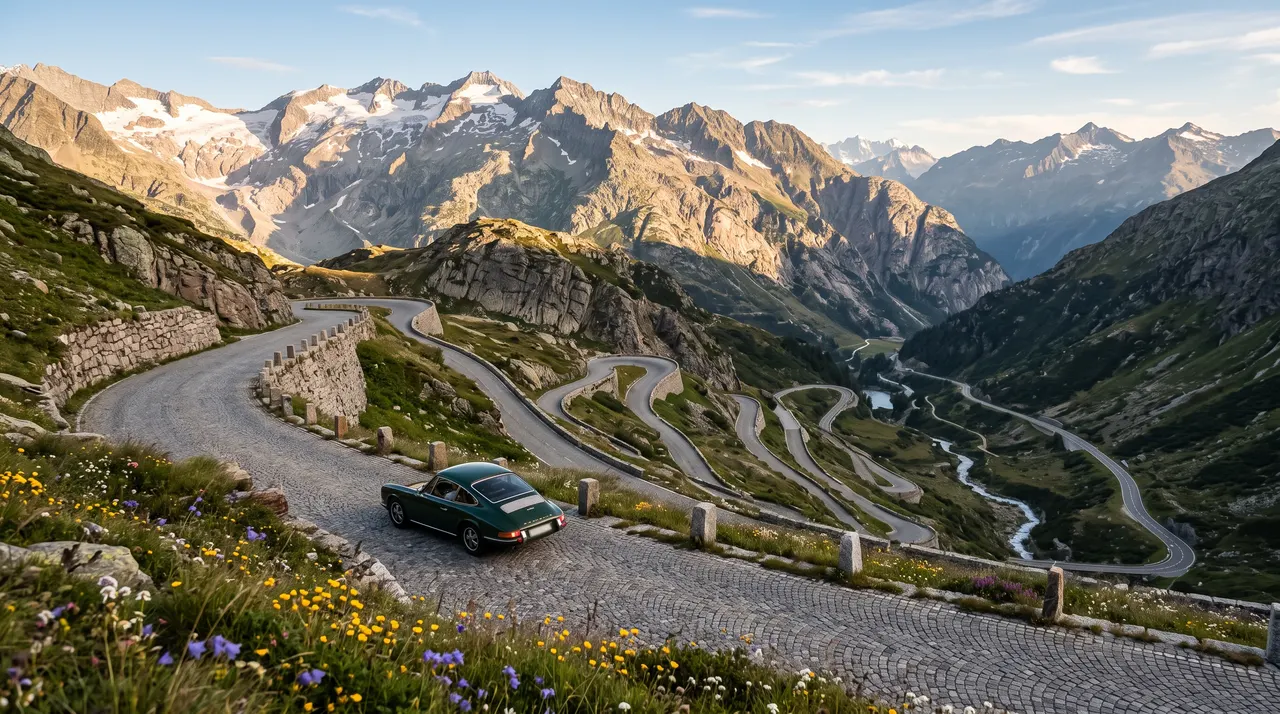
The Furka, Grimsel and Susten pass loop and the Tremola road up the old Gotthard pass are among Europe's most celebrated Alpine drives. For most visitors the real draw is the freedom to reach places trains and tours don't, on your own schedule, with the open road generally capped around 120 km/h motorways. Getting behind the wheel is the easy part: your International Driving Permit is a certified translation of your Singapore licence, carried alongside it, so rental staff and officials in Switzerland can read your credentials at a glance.
What applies to Singapore licence holders in Switzerland
| Singapore licence in Switzerland | |
|---|---|
| Do you need an IDP? | Yes — carry one alongside your licence |
| IDP format required | 1949 Geneva or 1968 Vienna |
| Your Singapore licence script | Roman (Latin) alphabet |
| Singapore is party to | 1949 Geneva |
| Drives on the | Right-hand side |
| Minimum driving age | 18 |
| Emergency number | 112 |
| Top speed limit | 120 km/h motorways |
| Currency | CHF |
Driving rules in Switzerland you should know
- Motorway vignette required (sold at borders/petrol stations).
- Headlights on at all times, day and night.
- 0.05% alcohol limit; 0.01% for new/professional drivers.
- Strict speed-camera enforcement.
Local driving facts in Switzerland
Emergency number: 112 (112 also connects from most mobiles). Typical maximum for cars on the fastest road class: 120 km/h motorways. Posted limits always take precedence.
Tolls & road charges in Switzerland
No per-km tolls; a single annual motorway vignette (CHF 40, valid Dec 1 to Jan 31 of the following year) is mandatory for all motorways and is already fitted on rental cars. The Great St Bernard and Munt la Schera tunnels charge separate tolls.
Parking in Switzerland
White zones are paid (meter or apps like Parkingpay/TWINT); blue zones require a parking disc giving free limited stay (typically 1 hour) during posted hours. Yellow markings are private/no-parking and cars are towed.
Penalties & enforcement in Switzerland
Speeding is fined on graduated bands and serious excess (e.g. 25+ km/h over in town) can mean criminal proceedings and licence seizure; handheld phone use and no seatbelt draw on-the-spot fines around CHF 100. Police can collect cash on the spot and rental firms pass camera fines on with an admin fee.
If you have an accident in Switzerland
Call police on 117 (rescue 144, fire 118); police must be called for any injury and for anything beyond minor bodywork damage. Place the warning triangle at least 50 m back (100 m on fast roads), photograph the scene and complete the European Accident Statement (recommended, not compulsory). Do not move vehicles if there are injuries.
City driving in Switzerland
Zurich and Geneva have dense blue-zone residential parking and limited centre access; Geneva's lakefront one-way system and Zurich's tram-priority junctions catch out visitors, and many city centres are effectively car-hostile with paid white zones throughout.
Winter driving in Switzerland
No blanket winter-tyre law, but a driver causing an obstruction or accident on snow/ice with unsuitable tyres faces fines and full liability; snow chains are compulsory where the blue 'chains mandatory' sign is posted. Winter tyres late Oct to Easter are strongly advised for Alpine routes.
Fuel in Switzerland
Stations sell Bleifrei 95/98 petrol and Diesel; nearly all are self-service and accept international credit cards, with many unattended pumps overnight requiring a chip-and-PIN card. Petrol runs roughly CHF 1.75 to 1.95 per litre.
Sources: ch.ch, iamexpat.ch, thelocal.ch, lenews.ch