 France licence
  United States
Can you drive in United States with a France license?
Short answer: you can drive in United States with a France license; an International Driving Permit is recommended and is carried alongside your France license.
An International Driving Permit is recommended (not strictly required) for France licence holders driving in United States. Your France licence is in the Roman alphabet, but carrying one alongside it can help at rental desks and roadside checks. Carry both.
French drivers should carry an International Driving Permit with their licence when driving outside the EU and EEA. Your International Driving Permit is a certified multilingual translation of your existing licence, prepared in the 1949 Geneva Convention format that United States recognises and carried alongside your national licence.


What driving in United States is like
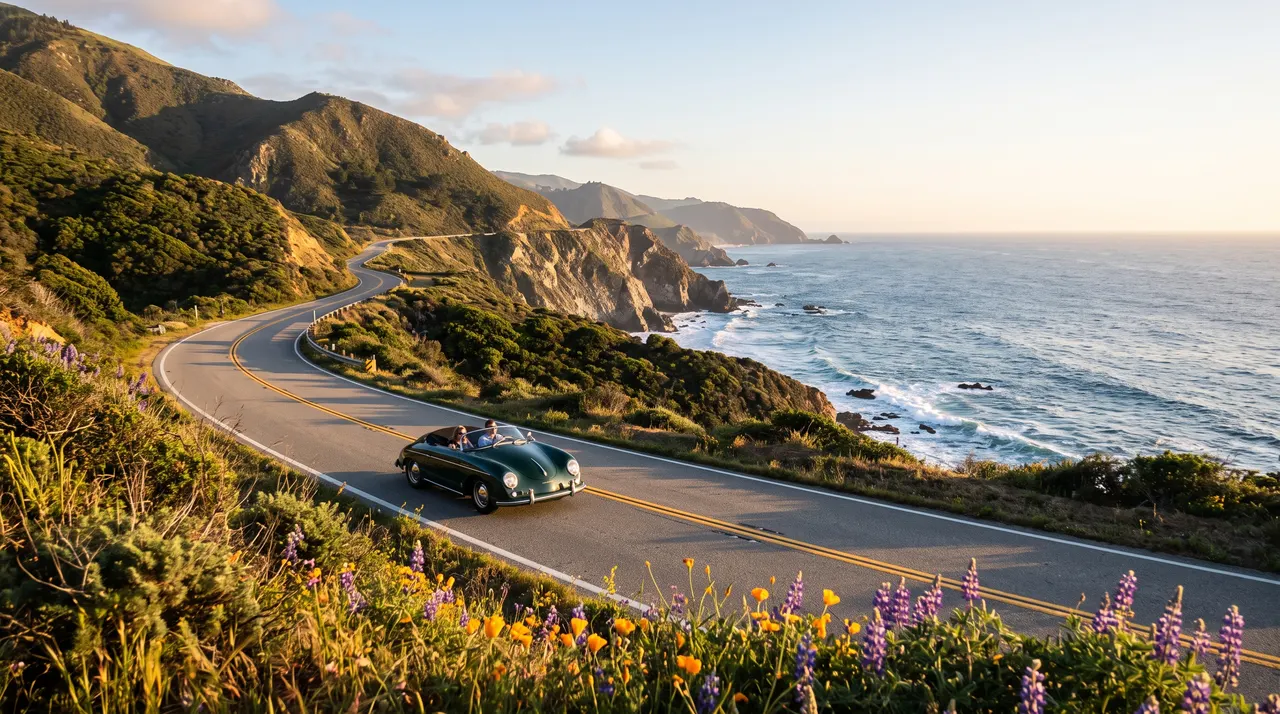
California's Highway 1 (Pacific Coast Highway) along the Big Sur coast is among the most iconic American road trips. For most visitors the real draw is the freedom to reach places trains and tours don't, on your own schedule, with the open road generally capped around 55–85 mph depending on state. Getting behind the wheel is the easy part: your International Driving Permit is a certified translation of your France licence, carried alongside it, so rental staff and officials in United States can read your credentials at a glance.
What applies to France licence holders in United States
| France licence in United States | |
|---|---|
| Do you need an IDP? | Recommended, not legally mandatory |
| IDP format required | 1949 Geneva |
| Your France licence script | Roman (Latin) alphabet |
| France is party to | 1949 Geneva and 1968 Vienna |
| Drives on the | Right-hand side |
| Minimum driving age | 16 |
| Emergency number | 911 |
| Top speed limit | 55–85 mph depending on state |
| Currency | USD |
Driving rules in United States you should know
- Traffic laws vary by state.
- Right turn on red generally permitted after stopping.
- School-bus stop laws strictly enforced.
- Alcohol limit 0.08% (lower for commercial/under-21).
Local driving facts in United States
Emergency number: 911 (112 also connects from most mobiles). Typical maximum for cars on the fastest road class: 55–85 mph depending on state. Posted limits always take precedence.
Tolls & road charges in United States
Tolling is regional and increasingly cashless/license-plate based; common transponders are E-ZPass (Northeast/Midwest), SunPass (Florida) and FasTrak (California). Rental firms offer toll-pass add-ons (e.g. Enterprise/Hertz) or bill plate-read tolls back with daily admin fees.
Parking in United States
Cities use metered/app-based parking (ParkMobile, PayByPhone) with strictly enforced street-cleaning, permit-only and colored-curb rules; a painted red curb means no stopping. Violations bring tickets, booting or towing, and rental firms pass on unpaid citations.
Penalties & enforcement in United States
Fines for speeding, handheld phone use and no seatbelt vary by state and city and are issued by police, usually paid later by mail/online (not roadside cash). Speed/red-light camera tickets and unpaid tolls are forwarded to renters with an administrative surcharge.
If you have an accident in United States
Call 911 for any injury or serious crash. Move vehicles out of traffic only if safe, exchange insurance and licence details, photograph the scene, and file a police report (required in most states above a damage threshold); notify the rental company promptly.
City driving in United States
In Manhattan, a congestion-pricing toll (launched January 2025) charges most cars entering below 60th Street, billed by plate to the rental firm; right turns on red are also illegal throughout New York City unless a sign permits.
Winter driving in United States
No national winter-tyre law, but snowy states (e.g. Colorado, California mountain passes) post traction/chain-control requirements during storms, and Colorado has a seasonal traction law on I-70. In mountain areas carry or rent chains when signs require them.
Fuel in United States
Petrol ('gas') is sold by the US gallon (3.78 L) as Regular 87, Mid 89 and Premium 91-93 octane, plus diesel; stations are nearly all self-serve. Pay at the pump by card, though some require a US ZIP code, so prepay inside if a foreign card is declined.
Sources: carandrentals.com, enterprise.com, esim.holafly.com, booking.com