 NZ licence
  Vietnam
Can you drive in Vietnam with an NZ license?
Short answer: to drive in Vietnam with an NZ license you need an International Driving Permit in the 1968 Vienna format, carried together with your NZ license.
Yes — to drive in Vietnam on an NZ licence you should carry an International Driving Permit together with your NZ licence. Vietnam expects foreign drivers to hold an IDP.
New Zealand drivers should carry an International Driving Permit alongside their licence when driving abroad. Your International Driving Permit is a certified multilingual translation of your existing licence, prepared in the 1968 Vienna format and carried alongside your national licence.


What driving in Vietnam is like
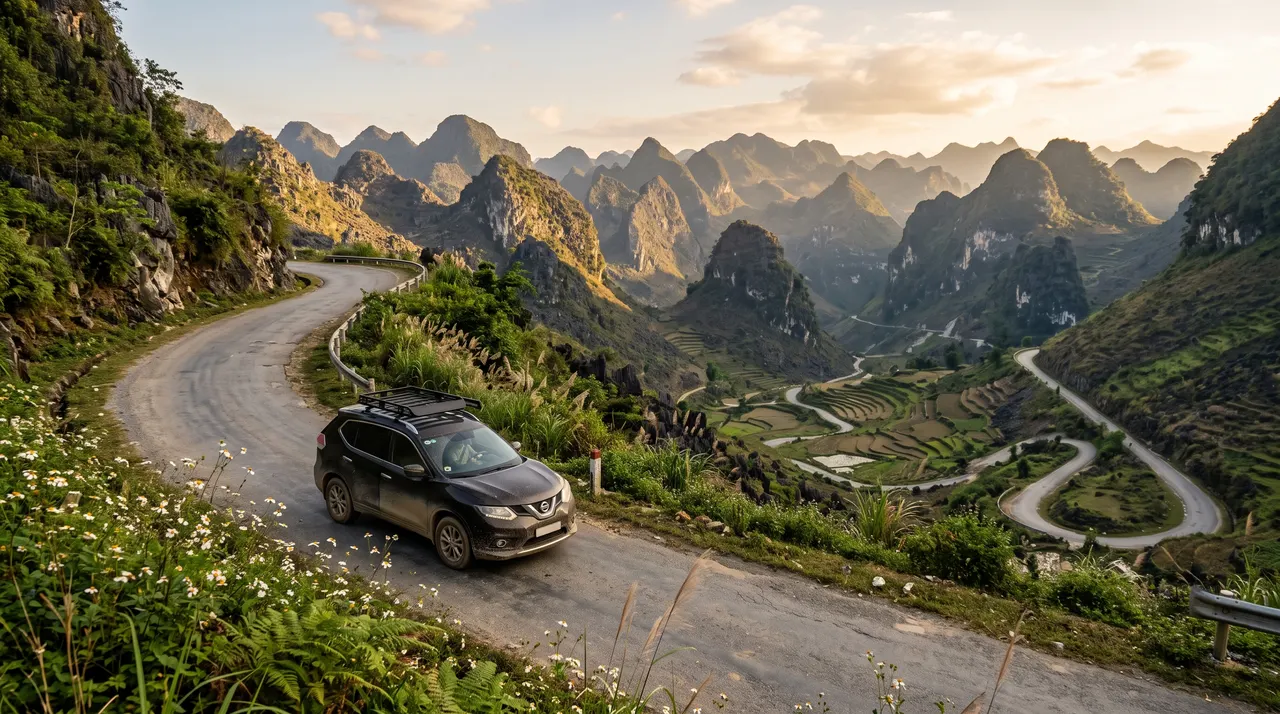
The Ha Giang Loop, a roughly 350km mountain circuit through the Dong Van Karst Plateau geopark near the China border, is Vietnam's most famous overland drive. For most visitors the real draw is the freedom to reach places trains and tours don't, on your own schedule, with the open road generally capped around 120 km/h expressways. Getting behind the wheel is the easy part: your International Driving Permit is a certified translation of your NZ licence, carried alongside it, so rental staff and officials in Vietnam can read your credentials at a glance.
What applies to NZ licence holders in Vietnam
| NZ licence in Vietnam | |
|---|---|
| Do you need an IDP? | Yes — carry one alongside your licence |
| IDP format required | 1968 Vienna |
| Your NZ licence script | Roman (Latin) alphabet |
| New Zealand is party to | 1949 Geneva |
| Drives on the | Right-hand side |
| Minimum driving age | 18 |
| Emergency number | 113 (police), 115 (ambulance) |
| Top speed limit | 120 km/h expressways |
| Currency | VND |
Driving rules in Vietnam you should know
- Drive on the right amid dense scooter traffic.
- Helmets mandatory for all motorbike riders.
- 0.0% alcohol tolerance.
- Carry passport, IDP and home licence.
Local driving facts in Vietnam
Emergency number: 113 (police), 115 (ambulance) (112 also connects from most mobiles). Typical maximum for cars on the fastest road class: 120 km/h expressways. Posted limits always take precedence.
Tolls & road charges in Vietnam
Expressways use BOT toll stations; cars pay roughly VND 150,000-200,000 (about USD 6-8) per 100km, and the three e-tag providers (VETC, ePass, VietMap) are now interoperable nationwide, though many booths still take cash. A rental car should ideally have an e-tag fitted, as some expressway lanes are becoming barrier-free electronic-only.
Parking in Vietnam
In Hanoi and Ho Chi Minh City use guarded paid lots (gui xe) at hotels, malls and street attendants who issue a ticket for a small fee; do not leave a car unattended on the street. Pavement and red-curb parking is routinely ticketed or clamped in the central districts.
Penalties & enforcement in Vietnam
2025-2026 reforms raised fines sharply: phone use while driving is now VND 4-6 million, and extreme/reckless driving can reach VND 50 million (about USD 1,900); alcohol limit is effectively zero. Police can fine on the spot, and rental firms pass camera (phat nguoi) fines back to the renter's card.
If you have an accident in Vietnam
Stop immediately, do not move the vehicles, and call police on 113 (ambulance 115); leaving the scene of an injury crash is a serious offence. Wait for police to produce a report for your insurer/rental firm, and expect to be detained until fault is settled, especially in injury cases.
City driving in Vietnam
Both Hanoi and Ho Chi Minh City are dominated by dense swarms of motorbikes that flow continuously and weave through gaps, so junctions rarely clear fully; cross and turn slowly and predictably and let bikes flow around you rather than stopping abruptly.
Winter driving in Vietnam
No winter-tyre rules - tropical climate; the only seasonal hazard is heavy flooding and landslides during the May-October rainy season, especially in the northern mountains.
Fuel in Vietnam
Stations sell RON 95 and RON 92/E5 petrol plus diesel (dau); a litre of RON 95 ran around VND 30,000-33,000 (about USD 1.20-1.35) in early 2026. Filling is attendant-served (you stay in the car/on the bike), large Petrolimex and PVOil stations take cards but small rural pumps are cash-only.
Sources: gov.uk, tollguru.com, globalpetrolprices.com, en.baochinhphu.vn