 Japan licence
  Yemen
YemenCan you drive in Yemen with a Japan license?
Short answer: to drive in Yemen with a Japan license you need an International Driving Permit in the 1949 Geneva format, carried together with your Japan license.
Yes — to drive in Yemen on a Japan licence you should carry an International Driving Permit together with your Japan licence. Yemen expects foreign drivers to hold an IDP.
Japanese drivers should carry an International Driving Permit (1949 Convention) with their licence when driving abroad. Your International Driving Permit is a certified multilingual translation of your existing licence, prepared in the 1949 Geneva format and carried alongside your national licence.


What driving in Yemen is like
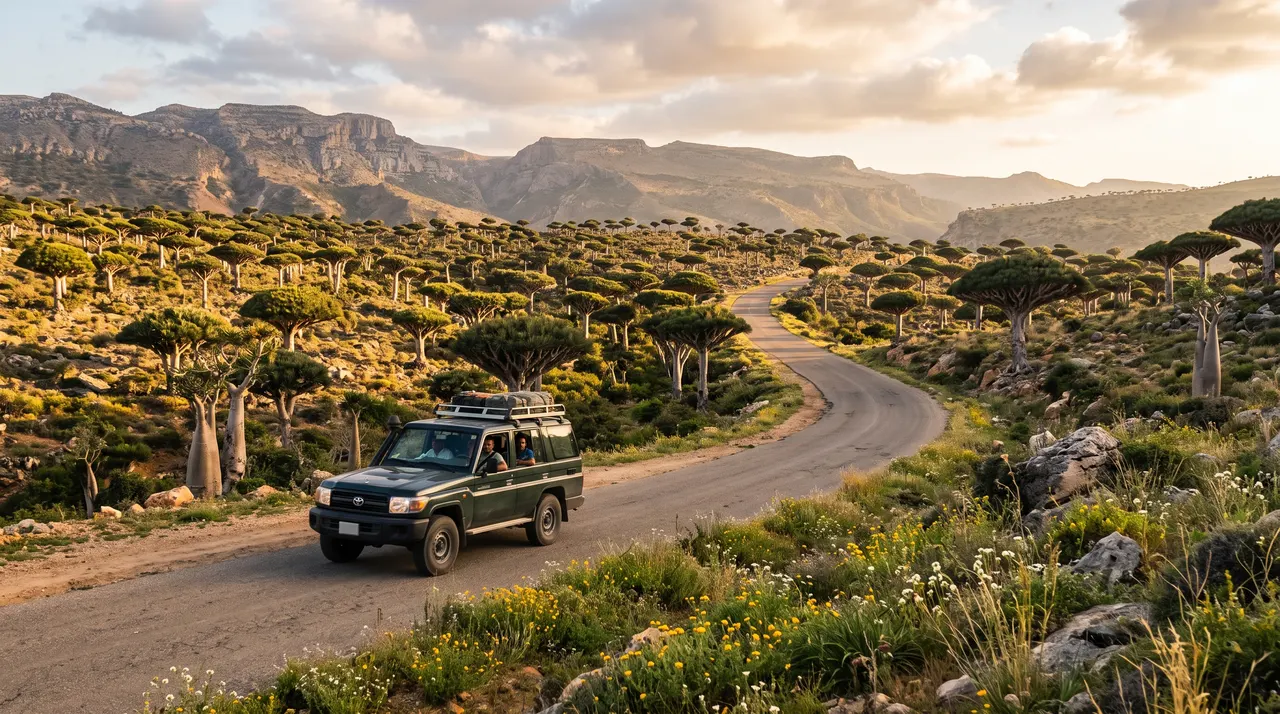
The drive across Socotra island, from Hadibu out to the dragon's-blood-tree forests of the Diksam plateau, is Yemen's standout scenic route. For most visitors the real draw is the freedom to reach places trains and tours don't, on your own schedule, with the open road generally capped around 100 km/h highways. Getting behind the wheel is the easy part: your International Driving Permit is a certified translation of your Japan licence, carried alongside it, so rental staff and officials in Yemen can read your credentials at a glance.
What applies to Japan licence holders in Yemen
| Japan licence in Yemen | |
|---|---|
| Do you need an IDP? | Yes — carry one alongside your licence |
| IDP format required | 1949 Geneva |
| Your Japan licence script | Not in the Roman alphabet — an IDP translation is expected |
| Japan is party to | 1949 Geneva |
| Drives on the | Right-hand side |
| Minimum driving age | 18 |
| Emergency number | 194 (police), 191 (ambulance) |
| Top speed limit | 100 km/h highways |
| Currency | YER |
Driving rules in Yemen you should know
- Drive on the right.
- Frequent checkpoints.
- Carry passport, IDP and home licence.
- Drive defensively on intercity roads.
Local driving facts in Yemen
Emergency number: 194 (police), 191 (ambulance) (112 also connects from most mobiles). Typical maximum for cars on the fastest road class: 100 km/h highways. Posted limits always take precedence.
Tolls & road charges in Yemen
There is no developed motorway or electronic toll network; long-distance routes instead pass through numerous military and tribal checkpoints where informal payments or document checks, rather than formal tolls, are the norm. Carry cash and copies of your IDP, passport and any travel permits at every checkpoint.
Parking in Yemen
There are no organised paid parking zones or apps; in Sana'a and Aden you simply park on the street, ideally in a guarded hotel compound or where an attendant watches the car for a tip. Vehicle theft and carjacking are real risks, so never leave a car unattended in an unsecured spot.
Penalties & enforcement in Yemen
Formal traffic-fine enforcement is weak and inconsistent amid the conflict; the bigger risks are detention or fines at checkpoints for missing permits, and a strict nationwide alcohol ban means any drink-driving is treated severely. Do not photograph checkpoints, police or military.
If you have an accident in Yemen
Stop and do not move the vehicles; there is no reliable single emergency line nationwide, so contact local police or the nearest checkpoint/military post, which often handle incidents. Obtain whatever written report you can for insurance, and be aware that injury crashes can trigger tribal blood-money (diya) claims that are settled locally.
City driving in Yemen
In Sana'a, near-permanent fuel queues spill across roads and traffic-rule enforcement is minimal, so junctions are congested and chaotic; armed checkpoints ring the city and you must stop, dim lights and present documents calmly at each one.
Winter driving in Yemen
No winter-tyre rules - desert/tropical climate; the real hazards are sand and flash floods in wadis after rain, and unlit, potholed roads, so a 4x4 and daytime-only driving are strongly advised.
Fuel in Yemen
Petrol and diesel are sold but chronically scarce, especially in Houthi-held north including Sana'a, where stations run dry and supply shifts to the black market at sharply inflated prices. Expect hours-long queues, cash-only payment in Yemeni rial, and carry jerry cans of spare fuel on any long trip.
Sources: gov.uk, travel.state.gov, middleeasteye.net, internationaldrivingpermit.org