 NZ licence
  Zimbabwe
Can you drive in Zimbabwe with an NZ license?
Short answer: to drive in Zimbabwe with an NZ license you need an International Driving Permit in the 1968 Vienna format, carried together with your NZ license.
Yes — to drive in Zimbabwe on an NZ licence you should carry an International Driving Permit together with your NZ licence. Zimbabwe expects foreign drivers to hold an IDP.
New Zealand drivers should carry an International Driving Permit alongside their licence when driving abroad. Your International Driving Permit is a certified multilingual translation of your existing licence, prepared in the 1968 Vienna format and carried alongside your national licence.


What driving in Zimbabwe is like
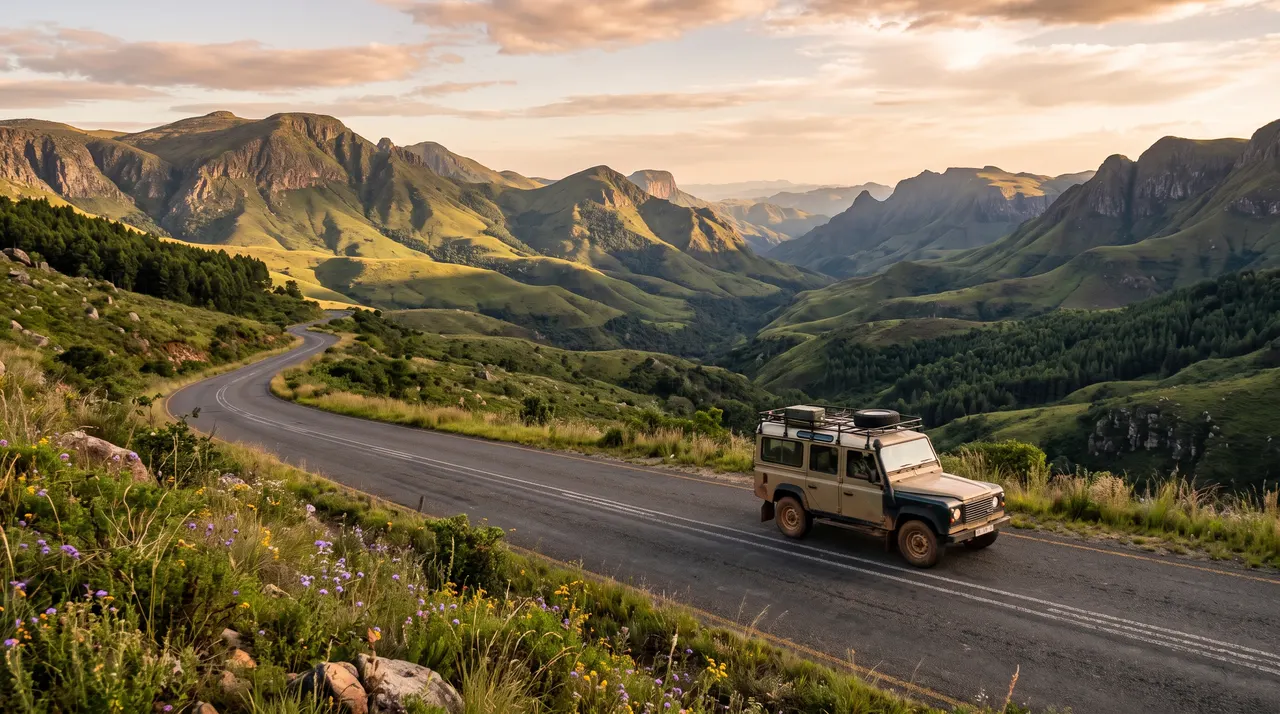
The route from Harare east to the Eastern Highlands around Nyanga and Mutare offers Zimbabwe's most scenic mountain driving. For most visitors the real draw is the freedom to reach places trains and tours don't, on your own schedule, with the open road generally capped around 120 km/h highways. Getting behind the wheel is the easy part: your International Driving Permit is a certified translation of your NZ licence, carried alongside it, so rental staff and officials in Zimbabwe can read your credentials at a glance.
What applies to NZ licence holders in Zimbabwe
| NZ licence in Zimbabwe | |
|---|---|
| Do you need an IDP? | Yes — carry one alongside your licence |
| IDP format required | 1968 Vienna |
| Your NZ licence script | Roman (Latin) alphabet |
| New Zealand is party to | 1949 Geneva |
| Drives on the | Left-hand side |
| Minimum driving age | 18 |
| Emergency number | 995 (police), 994 (ambulance) |
| Top speed limit | 120 km/h highways |
| Currency | USD |
Driving rules in Zimbabwe you should know
- Drive on the left.
- Frequent police roadblocks.
- 0.08% alcohol limit.
- Carry reflective triangles and a fire extinguisher.
Local driving facts in Zimbabwe
Emergency number: 995 (police), 994 (ambulance) (112 also connects from most mobiles). Typical maximum for cars on the fastest road class: 120 km/h highways. Posted limits always take precedence.
Tolls & road charges in Zimbabwe
Numerous toll gates sit on inter-city highways, charging roughly USD 2-5 per car depending on the road, payable in cash (US dollars or local bond/ZiG notes); keep small USD notes for each gate.
Parking in Zimbabwe
In Harare and Bulawayo town-centre parking is paid via council attendants or parking apps; secure guarded paid parking is strongly recommended, as theft from cars in unattended areas is a concern.
Penalties & enforcement in Zimbabwe
Spot fines run from about USD 5 to USD 100 for offences like no seatbelt, defective equipment, no insurance or speeding, and are collected on the spot in USD - always demand an official receipt. The drink-drive limit is 80mg/100ml; rental firms pass on outstanding fines.
If you have an accident in Zimbabwe
Call police on 995 (or 999); for minor damage with no injuries you need not call police, but for injuries do not move the vehicles, photograph the scene and obtain a police report. A report is important for the rental firm and insurance.
City driving in Zimbabwe
Harare has frequent police roadblocks on main roads and many non-working traffic lights ('robots') at CBD intersections, where you must treat the junction with caution; commuter omnibuses stop unpredictably.
Winter driving in Zimbabwe
No winter-tyre rules - subtropical climate; the November-March rainy season brings flooded roads and washed-out unpaved surfaces, the main seasonal hazard.
Fuel in Zimbabwe
Stations are attendant-served selling petrol ('blend') and diesel, priced and paid mostly in US dollars; availability has improved but can still fluctuate, so fill up in major cities and carry a spare can before heading to outlying towns.
Sources: greatzimbabweguide.com, aazimbabwe.co.zw, aazimbabwe.co.zw, zimpricecheck.com