Angola Democratic Republic of the Congo
 Angola
  Democratic Republic of the Congo
Last reviewed July 2026
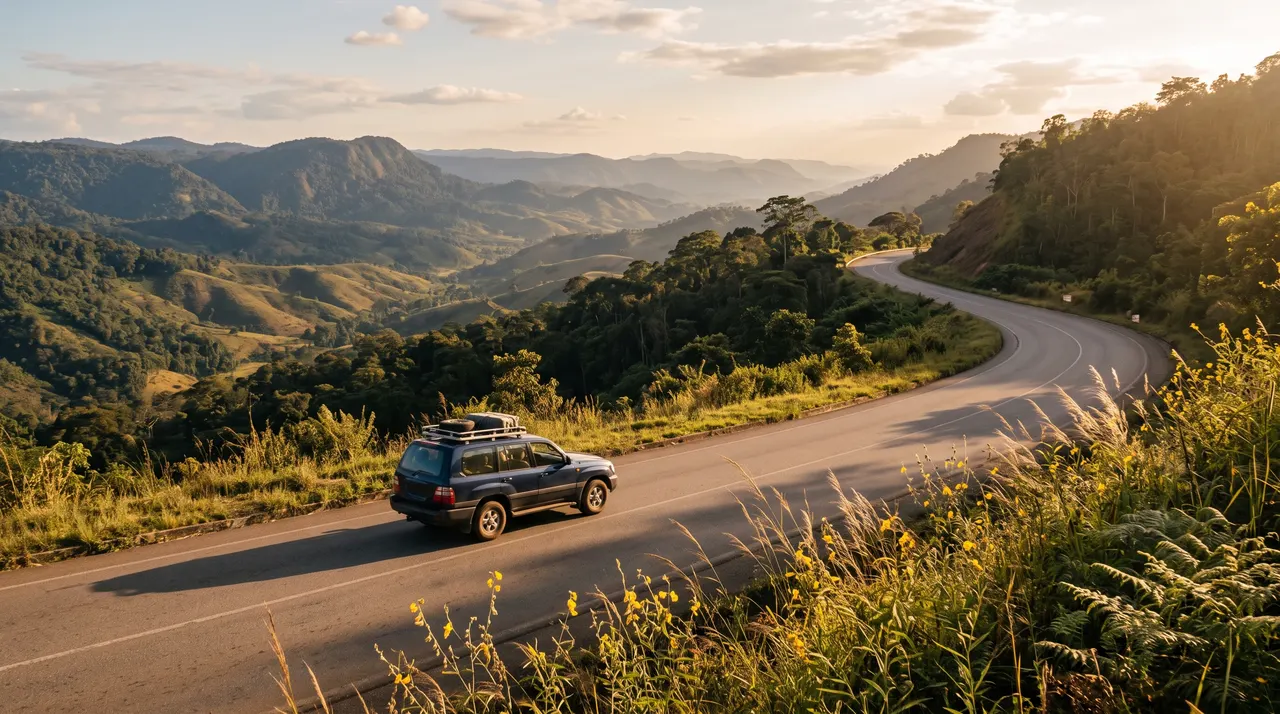
Crossing the border
Angola and Democratic Republic of the Congo share a land border you can cross by car. Keep your passport, national driving licence and International Driving Permit together, and check opening hours and any toll or vignette requirements before you travel.
Driving rules in Democratic Republic of the Congo
- Drive on the right.
- Poor roads outside major cities.
- Frequent checkpoints.
- Carry passport, IDP and home licence.
Once you're driving in Democratic Republic of the Congo
Destination-specific detail sourced from national road authorities, motoring clubs and rental policies — the things that catch cross-border drivers out.
Driving on a foreign licence
The DRC follows the 1968 Vienna Convention, so a licence from a Vienna-signatory country may be accepted short-term, but in practice police and rental firms expect an IDP plus your home licence. Carry both; long stays require converting to a Congolese licence.
Tolls & road charges
There are no nationwide electronic tolls or vignettes, though péage barriers exist on some upgraded routes such as sections around Kinshasa and the Matadi road, paid in cash (Congolese francs or USD). Carry small cash for these and for frequent checkpoints.
Parking in the cities
In Kinshasa some central zones have regulated/paid parking and informal attendants ('parking boys') who expect a tip to guard the car. Avoid leaving vehicles unattended on the street; use guarded hotel or compound parking where possible.
Fines & camera enforcement
Traffic police frequently stop foreign drivers and may demand on-the-spot cash payments; insist on official fines and a receipt where possible. Phone use while driving and missing documents are common pretexts, so keep licence, IDP, passport copy and vehicle papers ready.
If you have an accident
After a crash do NOT stop to aid injured parties or linger if a hostile crowd gathers - drive directly to the nearest police station or gendarmerie to report it. If safe, stay in the vehicle until police arrive; the general emergency line is 112, though response is slow.
Driving in the capital
Kinshasa traffic is dense and chaotic, with the Boulevard du 30 Juin and major roundabouts gridlocked at peak hours and informal 'roulage' traffic police directing flow. Cell-phone use while driving is prohibited.
Sources: internationaldriversassociation.com · countryreports.org · gov.uk · smartraveller.gov.au