Cameroon Equatorial Guinea
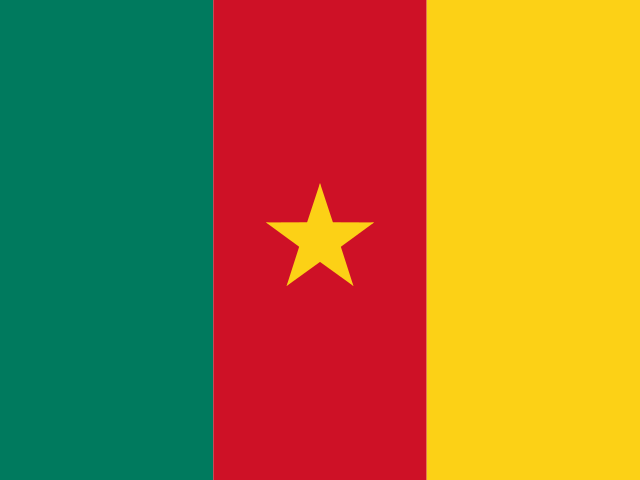 Cameroon
 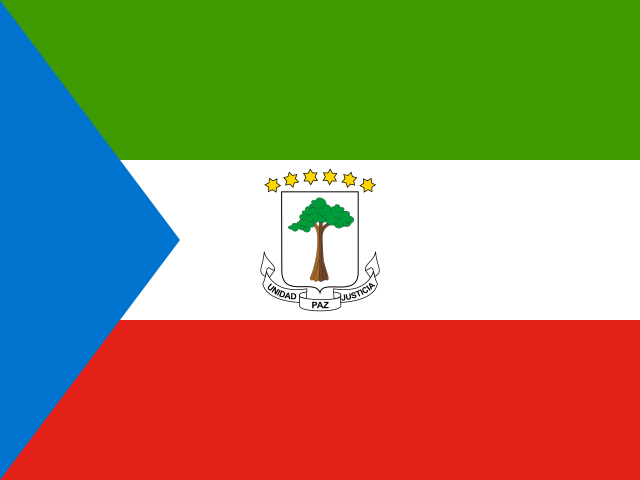 Equatorial Guinea
Last reviewed July 2026
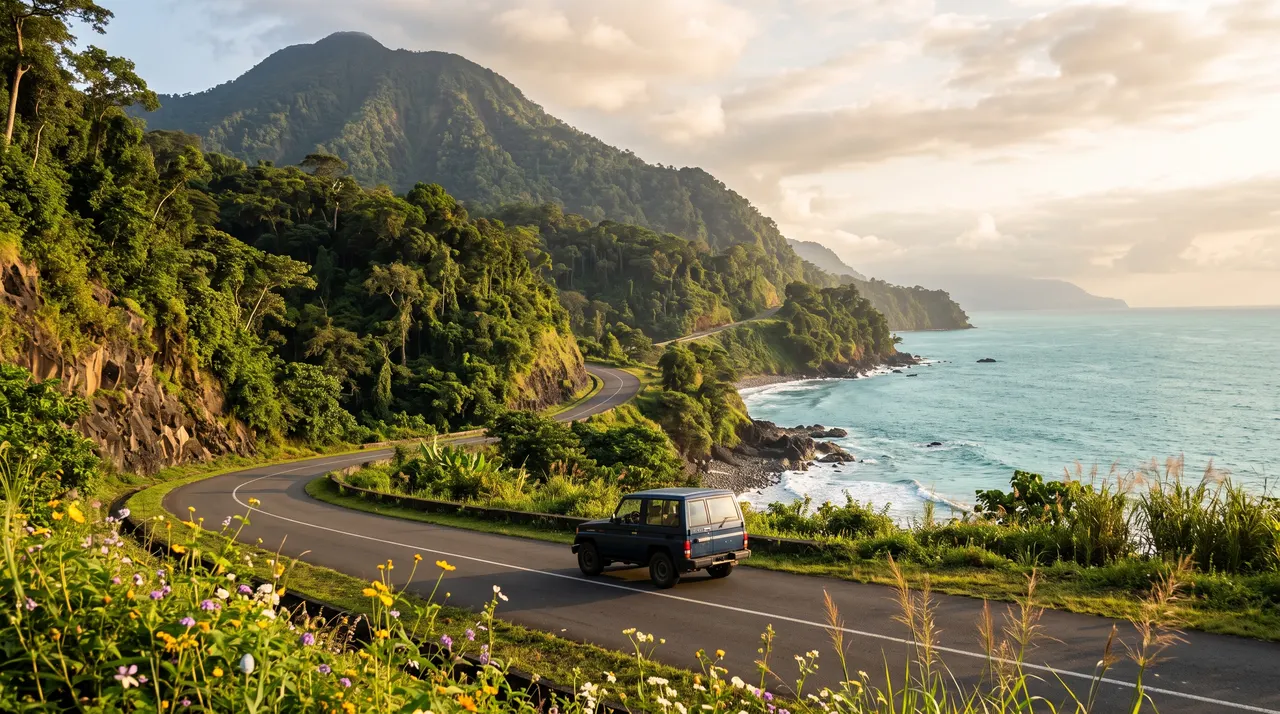
Crossing the border
Cameroon and Equatorial Guinea share a land border you can cross by car. Keep your passport, national driving licence and International Driving Permit together, and check opening hours and any toll or vignette requirements before you travel.
Driving rules in Equatorial Guinea
- Drive on the right.
- Numerous police checkpoints.
- 0.05% alcohol limit.
- Carry passport, IDP and home licence.
Once you're driving in Equatorial Guinea
Destination-specific detail sourced from national road authorities, motoring clubs and rental policies — the things that catch cross-border drivers out.
Driving on a foreign licence
Foreign visitors may drive on a valid home licence accompanied by an International Driving Permit for short stays; an IDP is strongly recommended and required by rental firms, and a local licence is needed for extended residence.
Tolls & road charges
There are no electronic toll motorways; the country has no vignette or e-toll system, so no toll payment is required of tourists.
Parking in the cities
Parking is largely informal and unmetered in Malabo and Bata, with no formal paid-zone color system; park in guarded lots where possible as enforcement and signage are minimal.
Fines & camera enforcement
Mobile phone use (even hands-free) and no seatbelt are prohibited and fined; officers may demand on-the-spot cash payment at checkpoints, and rental firms pass any fines to the renter's card.
If you have an accident
Stop immediately, do not move vehicles, and call police on 114 (or 112); a police report is required for any insurance or rental claim and leaving the scene is an offence.
Driving in the capital
Malabo and Bata have frequent military and police checkpoints where you must present passport, visa and licence; remain calm, comply, and never offer bribes.
Sources: travel.state.gov · internationaldriversassociation.com · tyremap.com