Democratic Republic of the Congo Rwanda
 Democratic Republic of the Congo
  Rwanda
Last reviewed July 2026
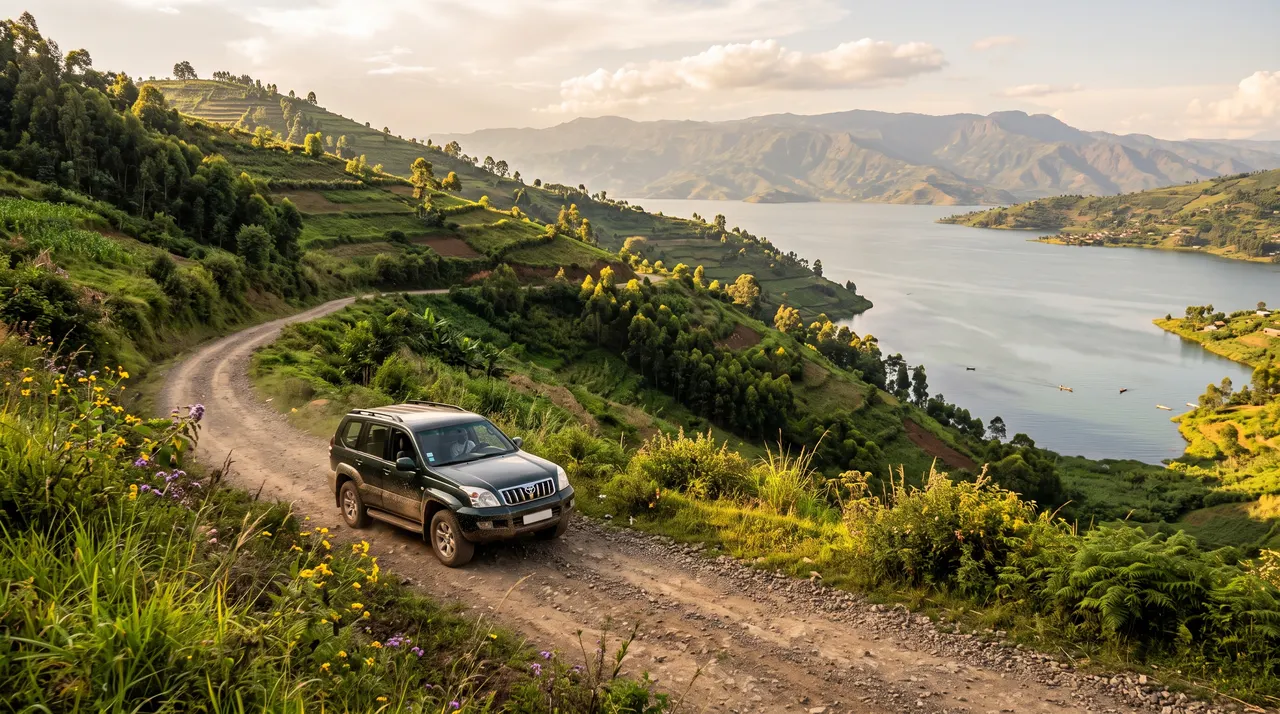
Crossing the border
Democratic Republic of the Congo and Rwanda share a land border you can cross by car. Keep your passport, national driving licence and International Driving Permit together, and check opening hours and any toll or vignette requirements before you travel.
Driving rules in Rwanda
- Drive on the right.
- Winding hill roads — watch for motorbike taxis.
- 0.08% alcohol limit.
- Monthly car-free 'Umuganda' restrictions in Kigali.
What to see when you arrive in Rwanda
- the mountain gorillas of Volcanoes National Park
- the capital Kigali and its Genocide Memorial
- Lake Kivu
- the Nyungwe rainforest
- the Akagera safari park
Once you're driving in Rwanda
Destination-specific detail sourced from national road authorities, motoring clubs and rental policies — the things that catch cross-border drivers out.
Driving on a foreign licence
Foreign visitors may drive on a valid home licence plus an International Driving Permit for up to one year; police checks are frequent and officers strictly insist on seeing the IDP, so always carry it with your licence, insurance and rental agreement.
Tolls & road charges
Rwanda has no road tolls, which keeps road-trip budgeting simple; there is no vignette or e-toll system to arrange.
Parking in the cities
Kigali uses managed paid on-street parking zones with attendants and cashless options; park only in marked bays, as the city's strict, orderly traffic culture means illegal parking can incur fines.
Fines & camera enforcement
Speeding, seatbelt and phone-use fines are rigorously enforced, often via radar, with a typical speeding penalty around RWF 50,000; rental firms pass any traffic fines back to the renter.
If you have an accident
Do not leave the scene; call police (dial 112) and wait for officers, exchange details with other parties and witnesses, and notify your rental company, as a police report is required for claims.
Driving in the capital
Kigali enforces lower, sometimes time-variable speed limits (signs are occasionally changed by officers for congestion or pedestrian safety) and breaking them can cost about RWF 50,000; police presence is widespread but generally courteous.
Sources: internationaldriversassociation.com · globalpetrolprices.com · en.igihe.com · kigalicarrentals.com