Ecuador Peru
 Ecuador
  Peru
PeruLast reviewed July 2026
Crossing the border
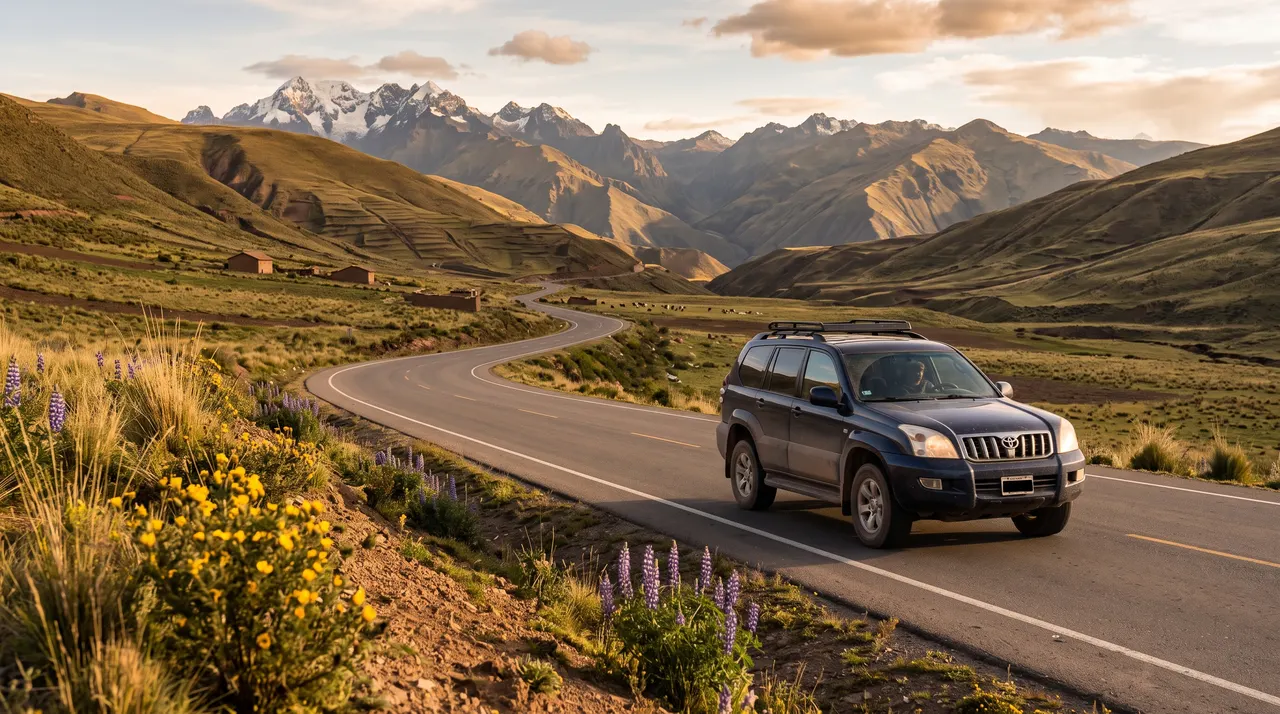
Ecuador and Peru share a land border you can cross by car. Keep your passport, national driving licence and International Driving Permit together, and check opening hours and any toll or vignette requirements before you travel.
Driving rules in Peru
- Aggressive city traffic — defensive driving essential.
- High-altitude routes (Cusco, Puno) affect engine performance.
- 0.05% alcohol limit.
- Carry original documents at all times.
What to see when you arrive in Peru
- Machu Picchu
- the Inca capital of Cusco
- the Nazca Lines
- Lake Titicaca
- the Sacred Valley
Once you're driving in Peru
Destination-specific detail sourced from national road authorities, motoring clubs and rental policies — the things that catch cross-border drivers out.
Driving on a foreign licence
Tourists may drive on a valid home licence for their authorized stay (up to 183 days). An IDP is required alongside it if the licence is not in Spanish/Roman script, and most rental firms require or strongly prefer an IDP or certified Spanish translation.
Tolls & road charges
Main highways (Panamericana and others) have frequent manned toll booths (peajes), typically a few soles each; many do not accept cards, so carry small-denomination soles in cash.
Parking in the cities
Avoid street parking; use guarded paid lots (playas de estacionamiento or 'cocheras') in cities like Lima and Cusco, both for security and to avoid towing/clamping in restricted central zones.
Fines & camera enforcement
Fines (papeletas) are graded by severity as fractions of the UIT tax unit; speeding, no seatbelt and phone use are penalized. Do not pay cash to officers on the roadside; legitimate fines are processed officially and rental firms pass camera/towing charges to the renter.
If you have an accident
Call the police on 105 (SAMU ambulance 106); do not move vehicles if there are injuries until police arrive. SOAT (compulsory insurance) covers only personal injury, not the rental car, so file a police report for the rental insurer.
Driving in the capital
Lima traffic is heavy and assertive; the central Cercado de Lima has restricted/pedestrianized areas and the Vía Expresa ('El Zanjón') and Javier Prado are notorious bottlenecks where lane discipline is loose.
Sources: remitly.com · tyremap.com · internationaltravelpermits.com · theonlyperuguide.com