Laos Cambodia
 Laos
Laos  Cambodia
Last reviewed July 2026
Crossing the border
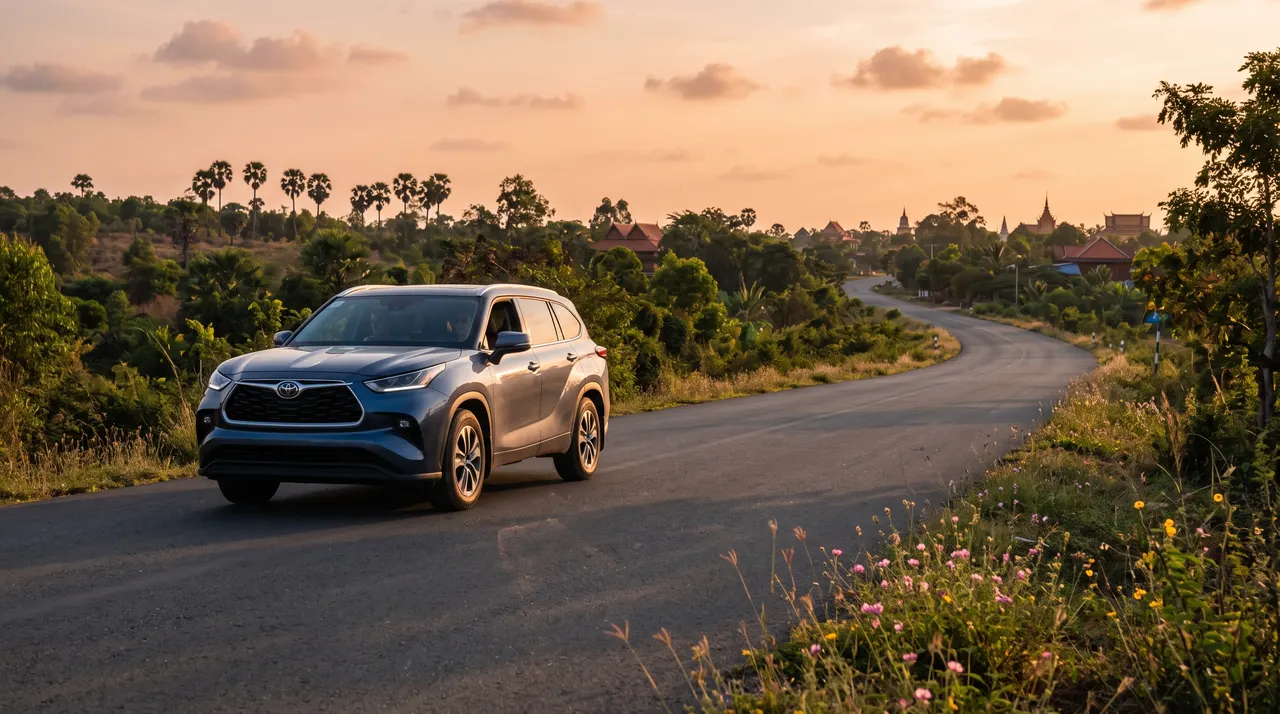
Laos and Cambodia share a land border you can cross by car. Keep your passport, national driving licence and International Driving Permit together, and check opening hours and any toll or vignette requirements before you travel.
Driving rules in Cambodia
- Drive on the right.
- Helmets mandatory for motorbikes.
- 0.05% alcohol limit.
- Carry passport, IDP and home licence.
What to see when you arrive in Cambodia
- the temples of Angkor Wat
- the Royal Palace in Phnom Penh
- the beaches of Sihanoukville
- the riverside town of Kampot
- the temple of Bayon
Once you're driving in Cambodia
Destination-specific detail sourced from national road authorities, motoring clubs and rental policies — the things that catch cross-border drivers out.
Driving on a foreign licence
Foreign tourists need their national licence plus a 1949 International Driving Permit, which Cambodia has accepted since 2020; carry the original licence as photocopies are not accepted. Long-stay drivers should convert to a Cambodian licence.
Tolls & road charges
National Road tolls and the country's first expressway, the Phnom Penh-Sihanoukville Expressway, use distance-based tolls (about USD 12 each way for a car), paid in cash, by ANPR plate-billing, or via an ETC on-board unit topped up through local banking apps.
Parking in the cities
In Phnom Penh park in guarded paid lots at malls and markets, where attendants give a ticket and may chock motorbikes; street parking is informal and congested, and illegally parked cars risk clamping or removal by district authorities.
Fines & camera enforcement
Speeding (the leading crash cause), no seatbelt/helmet and phone use draw fines that traffic police frequently collect on the spot in cash; enforcement and amounts vary, and fines were even temporarily suspended in 2025 amid fuel-price pressure.
If you have an accident
Dial 112 (or 117/119 for police/ambulance); do not move vehicles after a serious crash and wait for traffic police, as a report is needed and at-fault foreign drivers are often expected to negotiate on-the-spot compensation.
Driving in the capital
Phnom Penh traffic is dense and unpredictable, dominated by motorbikes and tuk-tuks that filter from all sides; vehicles often ignore lane markings and turn across traffic, so defensive driving is essential.
Sources: cambodia.embassy.gov.au · tyremap.com · tollguru.com · cambodianess.com