Liberia Ivory Coast
 Liberia
  Ivory Coast
Last reviewed July 2026
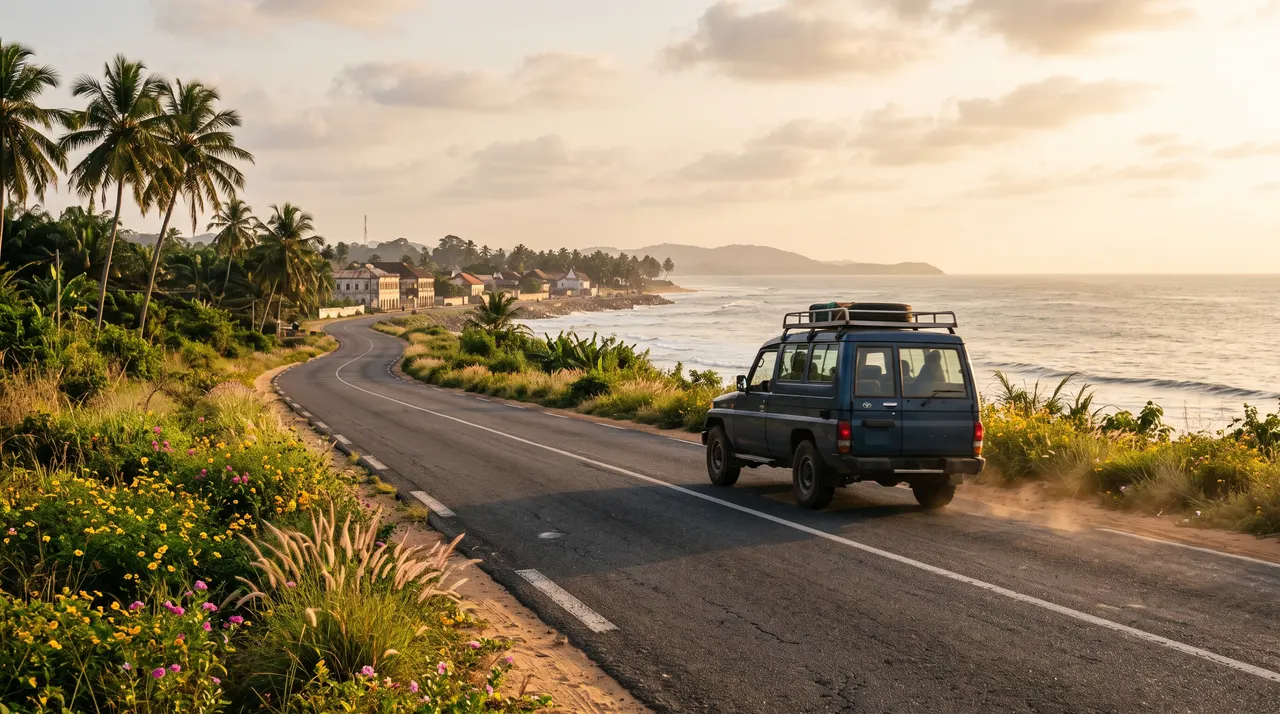
Crossing the border
Liberia and Ivory Coast share a land border you can cross by car. Keep your passport, national driving licence and International Driving Permit together, and check opening hours and any toll or vignette requirements before you travel.
Driving rules in Ivory Coast
- Drive on the right.
- Toll motorway between Abidjan and Yamoussoukro.
- 0.08% alcohol limit.
- Carry passport, IDP and home licence.
Once you're driving in Ivory Coast
Destination-specific detail sourced from national road authorities, motoring clubs and rental policies — the things that catch cross-border drivers out.
Driving on a foreign licence
Tourists can drive on a valid foreign licence for short stays (generally under 3-6 months), but rental firms and police routinely expect an International Driving Permit presented together with the home licence; after the permitted period an Ivorian licence is required.
Tolls & road charges
Abidjan's Henri Konan Bédié (HKB / Third) Bridge is a tolled expressway with a 21-lane plaza accepting cash and electronic tags, and tolls also apply on the Abidjan-Grand-Bassam and Yamoussoukro motorway sections; pay in CFA francs at the booths.
Parking in the cities
In Abidjan informal attendants control most street parking for a small CFA-franc fee, and parking on sidewalks or in front of hydrants risks fines or towing; formal metered zones and apps are largely absent.
Fines & camera enforcement
Roadside police checks are frequent; speeding, no-seatbelt and handheld-phone use draw on-the-spot CFA-franc fines often settled in cash, and rental firms pass on any speed-camera or toll penalties to the card on file.
If you have an accident
Call the police on 170 (or 111) and the fire/rescue service on 180; do not move vehicles after an injury crash and obtain a police report (constat), which rental companies require for any insurance claim.
Driving in the capital
Abidjan traffic is severe at peak hours and the HKB Bridge is the key bottleneck-relief route between Cocody/Riviera and Marcory; expect aggressive shared-taxi ('woro-woro') and gbaka minibus behaviour at major junctions.
Sources: internationaldriversassociation.com · en.wikipedia.org · internationaldrivingauthority.com