Niger Benin
 Niger
Niger  Benin
BeninLast reviewed July 2026
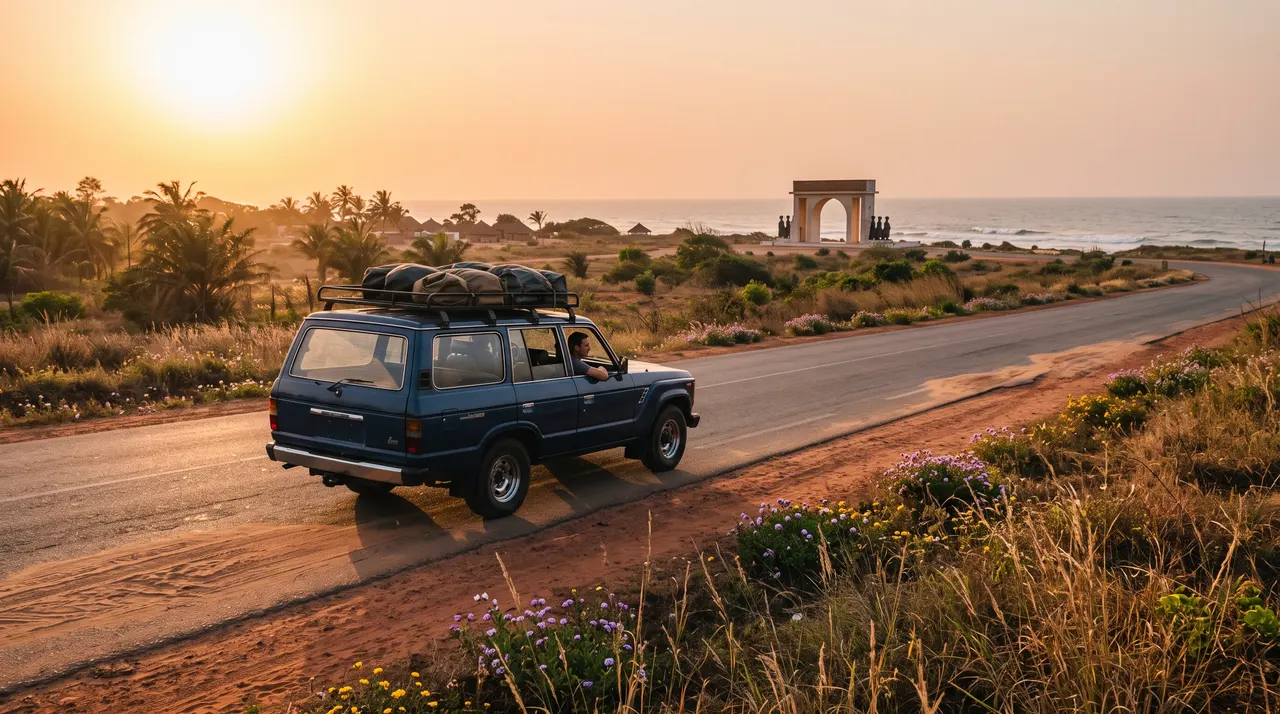
Crossing the border
Niger and Benin share a land border you can cross by car. Keep your passport, national driving licence and International Driving Permit together, and check opening hours and any toll or vignette requirements before you travel.
Driving rules in Benin
- Drive on the right.
- Watch for swarms of motorbike taxis.
- 0.05% alcohol limit.
- Carry passport, IDP and home licence.
Once you're driving in Benin
Destination-specific detail sourced from national road authorities, motoring clubs and rental policies — the things that catch cross-border drivers out.
Driving on a foreign licence
Foreign visitors may drive on a valid home licence for short stays, but an International Driving Permit (1949/1968) is strongly advised and routinely requested at police checkpoints and rental desks if the licence is not in French. Minimum driving age is 18, but most rental firms require drivers to be at least 21.
Tolls & road charges
Benin has no motorway-style toll network; the main paid road infrastructure is the port/border corridor and there are no electronic tags for tourists. Budget instead for frequent informal 'fees' at police and gendarmerie checkpoints rather than formal tolls.
Parking in the cities
Cotonou has no organised paid-zone system; parking is informal, often on packed-earth lots where attendants ('gardiens') expect a small CFA-franc tip to watch the car. Avoid leaving a vehicle unattended on busy streets where zemidjan motorbike traffic and theft are concerns.
Fines & camera enforcement
Traffic enforcement is largely on-the-spot by police/gendarmerie at the many roadside checkpoints, where licence, IDP, registration and insurance are checked and fines or 'arrangements' are paid in cash CFA francs. Seatbelt and phone-use rules exist but are loosely enforced; carry documents at all times to avoid delays.
If you have an accident
After a crash you must stop, not move the vehicles, and call the police/gendarmerie (commonly 117 for police, 118 for fire/rescue) and obtain a report (constat) for any insurance or rental claim. In serious or injury cases wait for the gendarmerie; do not flee the scene as crowds can gather quickly.
Driving in the capital
Cotonou's defining hazard is its estimated 70,000+ zemidjan motorbike taxis that weave unpredictably through every junction and ignore lanes, so drive slowly and expect bikes on all sides. The Étoile Rouge and Dantokpa market roundabouts are notoriously chaotic.
Sources: countryreports.org · en.wikipedia.org · internationaldriversassociation.com · tyremap.com