Oman Yemen
 Oman
Oman  Yemen
YemenLast reviewed July 2026
Crossing the border
Oman and Yemen share a land border you can cross by car. Keep your passport, national driving licence and International Driving Permit together, and check opening hours and any toll or vignette requirements before you travel.
Driving rules in Yemen
- Drive on the right.
- Frequent checkpoints.
- Carry passport, IDP and home licence.
- Drive defensively on intercity roads.
Once you're driving in Yemen
Destination-specific detail sourced from national road authorities, motoring clubs and rental policies — the things that catch cross-border drivers out.
Driving on a foreign licence
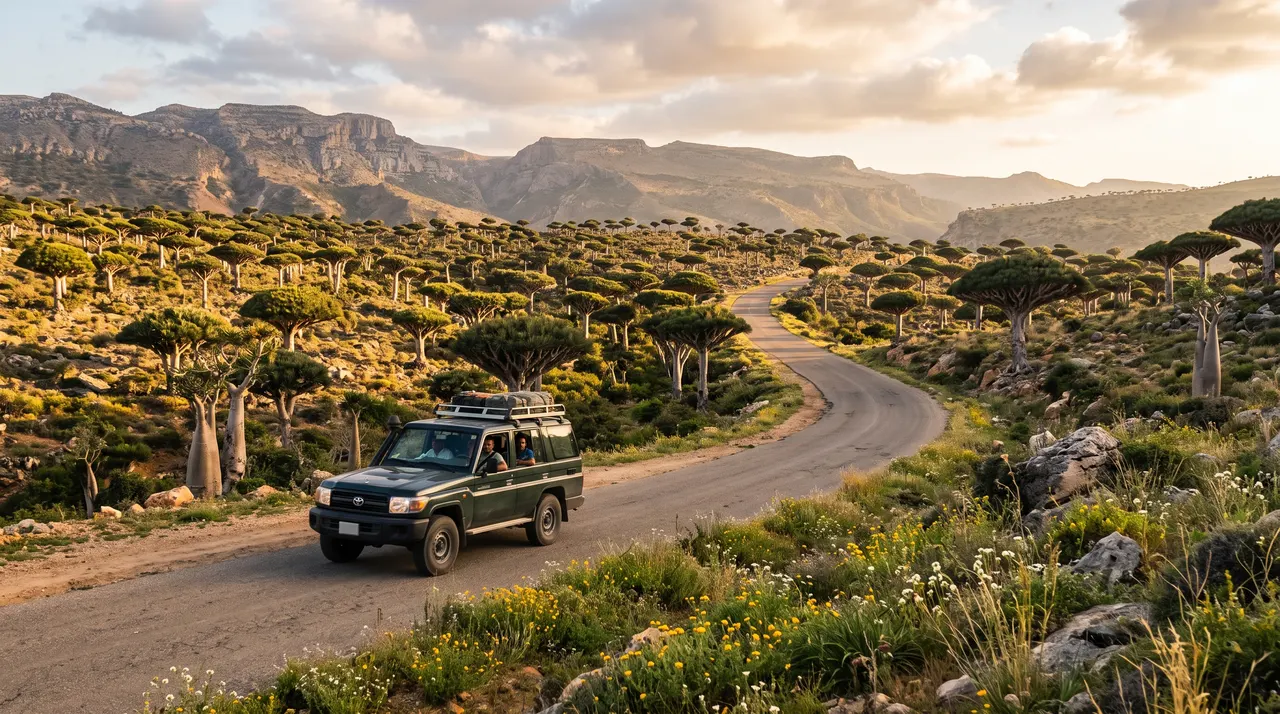
Yemen is a party to the UN road-traffic conventions and legally requires foreign drivers to carry a valid International Driving Permit (the Arabic-script multilingual format is genuinely useful at checkpoints) alongside the home licence to drive or rent a car. In practice nearly all Western governments advise against all travel to Yemen, so self-driving is for the very few permit-holding visitors (e.g. to Socotra).
Tolls & road charges
There is no developed motorway or electronic toll network; long-distance routes instead pass through numerous military and tribal checkpoints where informal payments or document checks, rather than formal tolls, are the norm. Carry cash and copies of your IDP, passport and any travel permits at every checkpoint.
Parking in the cities
There are no organised paid parking zones or apps; in Sana'a and Aden you simply park on the street, ideally in a guarded hotel compound or where an attendant watches the car for a tip. Vehicle theft and carjacking are real risks, so never leave a car unattended in an unsecured spot.
Fines & camera enforcement
Formal traffic-fine enforcement is weak and inconsistent amid the conflict; the bigger risks are detention or fines at checkpoints for missing permits, and a strict nationwide alcohol ban means any drink-driving is treated severely. Do not photograph checkpoints, police or military.
If you have an accident
Stop and do not move the vehicles; there is no reliable single emergency line nationwide, so contact local police or the nearest checkpoint/military post, which often handle incidents. Obtain whatever written report you can for insurance, and be aware that injury crashes can trigger tribal blood-money (diya) claims that are settled locally.
Driving in the capital
In Sana'a, near-permanent fuel queues spill across roads and traffic-rule enforcement is minimal, so junctions are congested and chaotic; armed checkpoints ring the city and you must stop, dim lights and present documents calmly at each one.
Sources: gov.uk · travel.state.gov · middleeasteye.net · internationaldrivingpermit.org