Pakistan India
 Pakistan
  India
IndiaLast reviewed July 2026
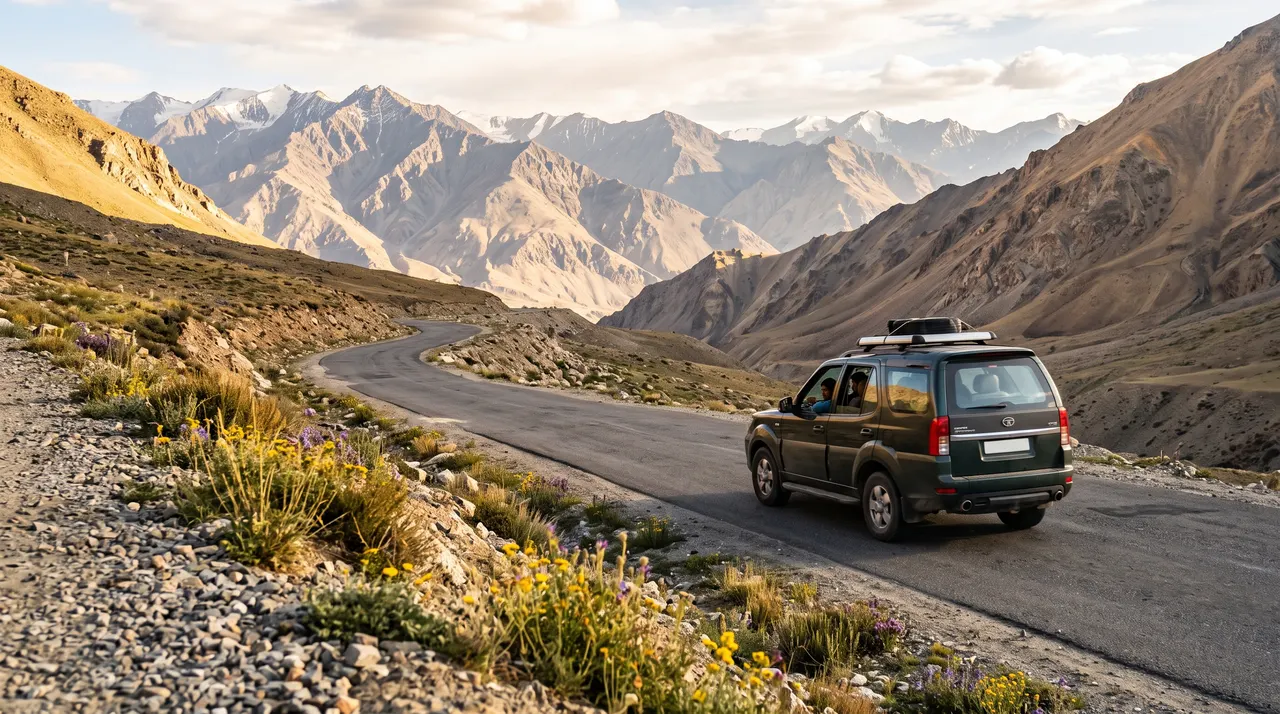
Crossing the border
The Wagah–Attari crossing between Amritsar and Lahore is the only road border, known for its flag ceremony.
Driving rules in India
- Drive on the left amid dense, unpredictable traffic.
- Horn use is routine.
- 0.03% alcohol limit.
- Inter-state toll plazas common.
What to see when you arrive in India
- the Taj Mahal in Agra
- the forts and palaces of Jaipur
- the ghats of Varanasi
- the backwaters of Kerala
- the beaches of Goa
Once you're driving in India
Destination-specific detail sourced from national road authorities, motoring clubs and rental policies — the things that catch cross-border drivers out.
Driving on a foreign licence
Per the Ministry of Road Transport, visitors may drive on a Geneva Convention IDP carried with the original licence; nationals of several countries (incl. USA, UK, Australia, Canada, Japan, Singapore, UAE) may use a valid English-language home licence for up to 3 months. Carrying an IDP is strongly advised everywhere to avoid trouble at police checks.
Tolls & road charges
National highways run on the FASTag electronic toll system; most rental vehicles already carry a windscreen FASTag linked to a prepaid wallet, and lanes are FASTag-only so cash is largely phased out. Confirm at pickup whether tolls are prepaid in the rental or billed to you; typical highway tolls run tens to a few hundred rupees per plaza.
Parking in the cities
Use authorised paid lots and attended parking; unauthorised or 'no-parking' kerbside parking risks clamping, towing and fines in metros like Delhi and Mumbai. Many malls, stations and markets have ticketed multi-level or attended lots charging roughly 20-50 INR per hour.
Fines & camera enforcement
Under the amended Motor Vehicles Act, speeding is fined ~1,000-2,000 INR, no-seatbelt and phone use ~1,000-5,000 INR, and drink-driving (limit 0.03% BAC) brings heavy fines or jail; traffic police can issue on-the-spot e-challans or cash fines. Camera challans and tolls are passed to the renter with a fee.
If you have an accident
Call the all-in-one emergency number 112 (or 100 police / 108 ambulance); for any injury, third-party claim or significant damage you must report to police and an FIR may be filed. Do not move an injured person improperly, but be aware crowds can gather - prioritise reaching a police station/hospital safely.
Driving in the capital
Delhi periodically runs an 'odd-even' number-plate rationing scheme during high-pollution spells, bans many trucks/commercial vehicles from entering by day, and now files FIRs for wrong-side driving; lane discipline is loose and constant horn use is normal.
Sources: revv.co.in · tripcabinet.com · discoverindiabycar.com · epic.uchicago.edu